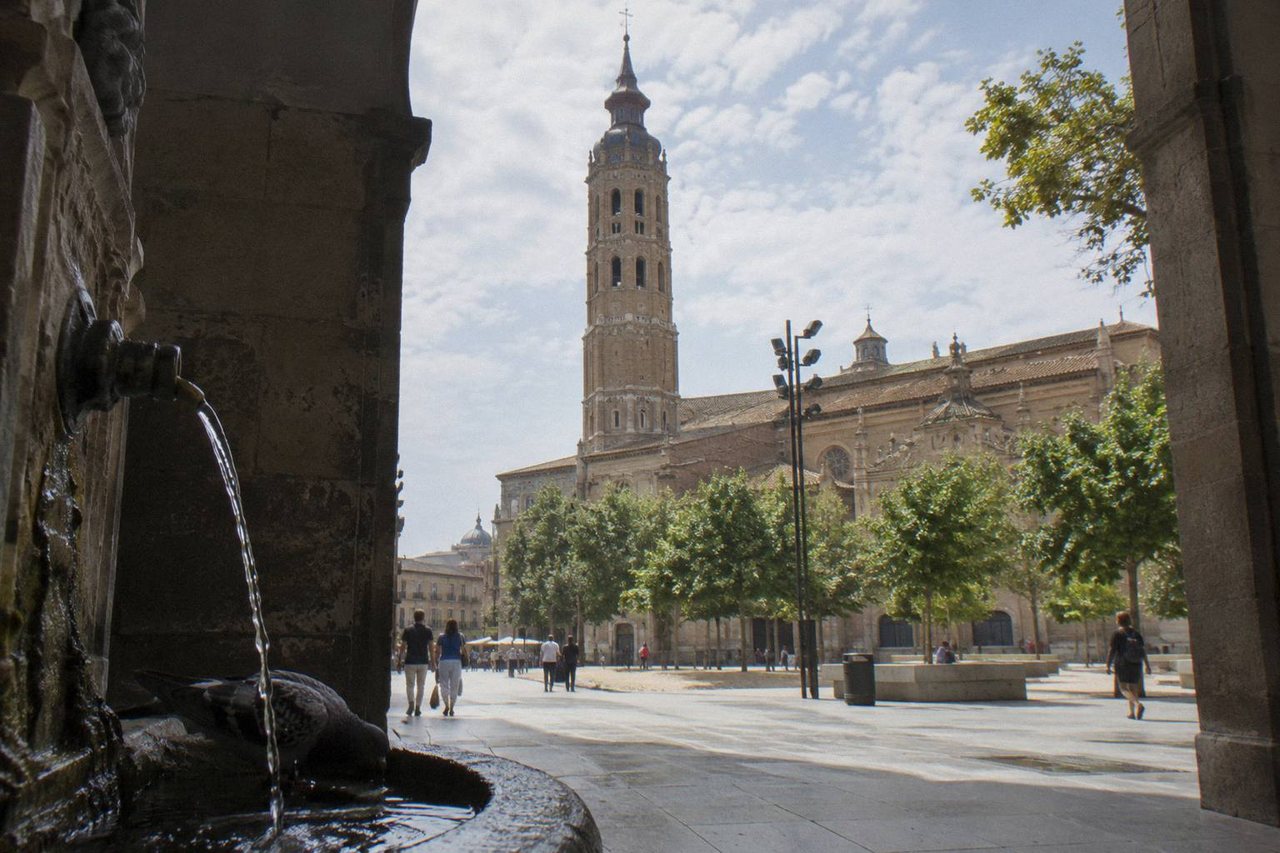
Caesaraugusta: A Free Walking Route Through Zaragoza's Roman Ruins
Zaragoza was Caesaraugusta, a Roman colony founded under Augustus, and large pieces of it survive in the open street. The walls, a gate and the street-level remains cost nothing to see, the four site museums are cheap and free on the first Sunday of the month, and the whole route is walkable.
In Short
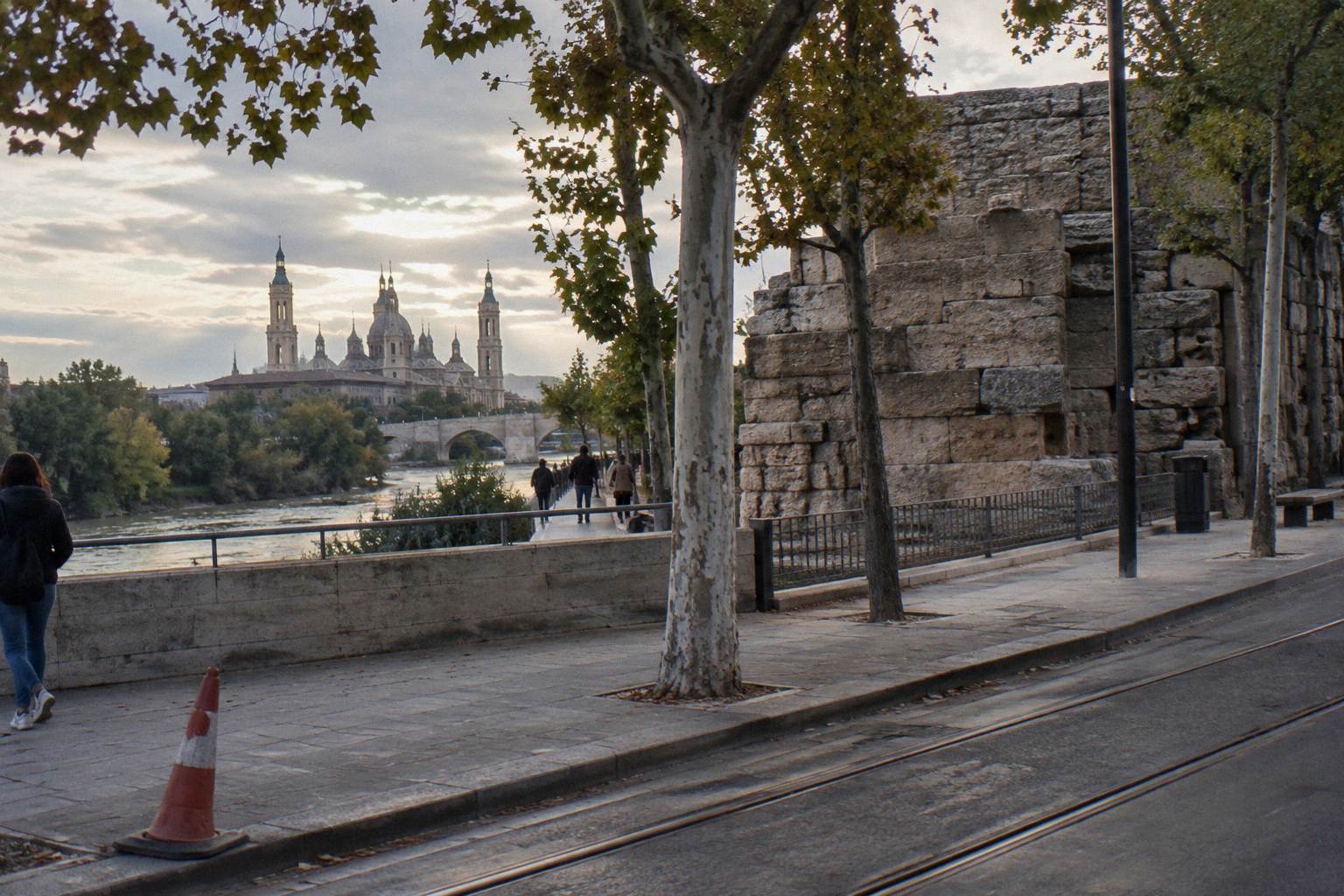
You can see the Roman walls of Caesaraugusta, the Puerta del Carmen and the street-level remains of the forum, river port, baths and theatre area for free, at any hour, from public streets. The four covered museums cost 3 to 4 EUR each, or 7 EUR for the Bono 4 Museos, and every one of them is free on the first Sunday of the month.
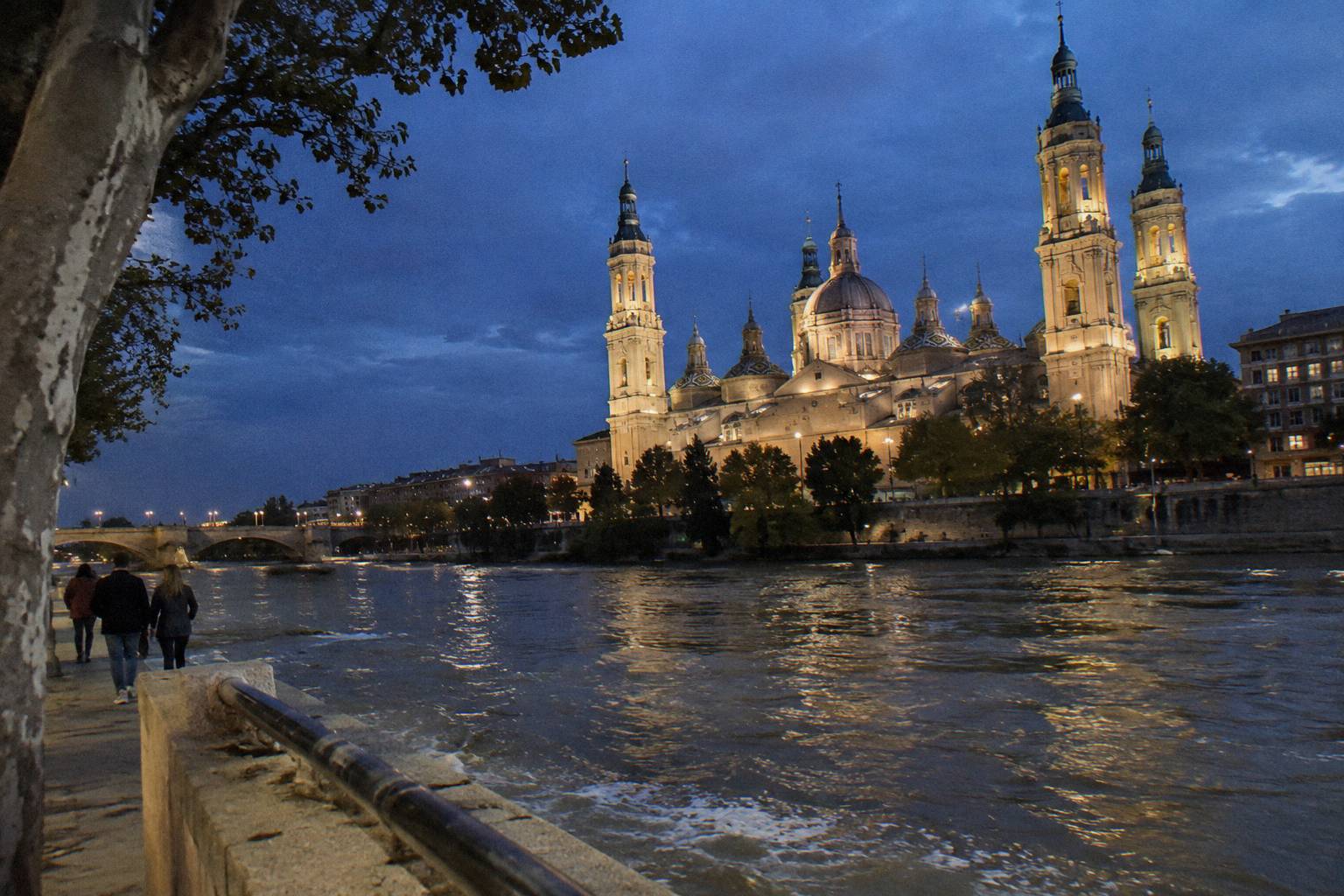
Zaragoza wears its Roman name lightly. The city was founded as Caesaraugusta, a colony named for Augustus himself, and unlike many Roman cities its remains sit in the middle of the modern streets rather than outside them. A stretch of wall stands beside a busy avenue, a monumental gate traffic flows around, and the forum, the river port, the baths and the theatre each have their own footprint a short distance from the Plaza del Pilar.
The name itself is the reason the city exists where it does. A Roman colonia on the Ebro, laid out under the first emperor, grew into the medieval city and then the modern one, and each layer built on the same ground. That continuity is why the archaeological record here is vertical rather than spread across a field outside town, and why a walker moving between the remains crosses the same few blocks again and again. You are not commuting to a ruin; you are circling inside one.
Part of the Free Things To Do In Zaragoza guides series, this page sets out the whole Roman route, what genuinely costs nothing, where the paid museums start and how their free days work.
Quick Facts
| Question | Answer |
|---|---|
| Roman sights free from the street | Roman walls of Caesaraugusta, Puerta del Carmen, street-level remains of the forum, river port, baths and theatre |
| Covered site museums | Foro, Puerto Fluvial, Termas Publicas, Teatro de Caesaraugusta, 3 to 4 EUR each |
| Multi-museum ticket | Bono 4 Museos, 7 EUR |
| Free-entry day for all four museums | First Sunday of the month |
| Always free at the museums | Under 16, teachers, unemployed, disability 33 percent or more, over 65 |
| Free guided walks in English | 3 free walking tours in English (1 on GuruWalk, 2 on freetour.com) |
| Cathedral nearby, for contrast | La Seo, 10 EUR general ticket, free for Aragon residents on the 5th, 10th, 17th and 24th |
Which Roman Remains In Zaragoza Can You See Free?
The Roman walls of Caesaraugusta and the Puerta del Carmen are free, always visible public monuments, and the street-level remains of the forum, river port, baths and theatre can be viewed from public ground without a ticket. Nothing on this list requires entry, a booking or a fee. The covered interpretation museums attached to four of the sites are separate and ticketed.
That is the shape of the whole route: an open-air Roman city you can read entirely from the pavement. The walls survive at street level along a modern avenue, and they belong to that category of monument that never closes. The Puerta del Carmen is the same: a public monument standing on a street, always visible, no fence, no desk, no ticket. Between them, the modern city has grown up around the footprints of the forum, the river port where goods arrived by boat, the public baths and the theatre, and each of those footprints can be appreciated from the public street before you decide whether the museum underneath is worth 3 or 4 EUR to you.
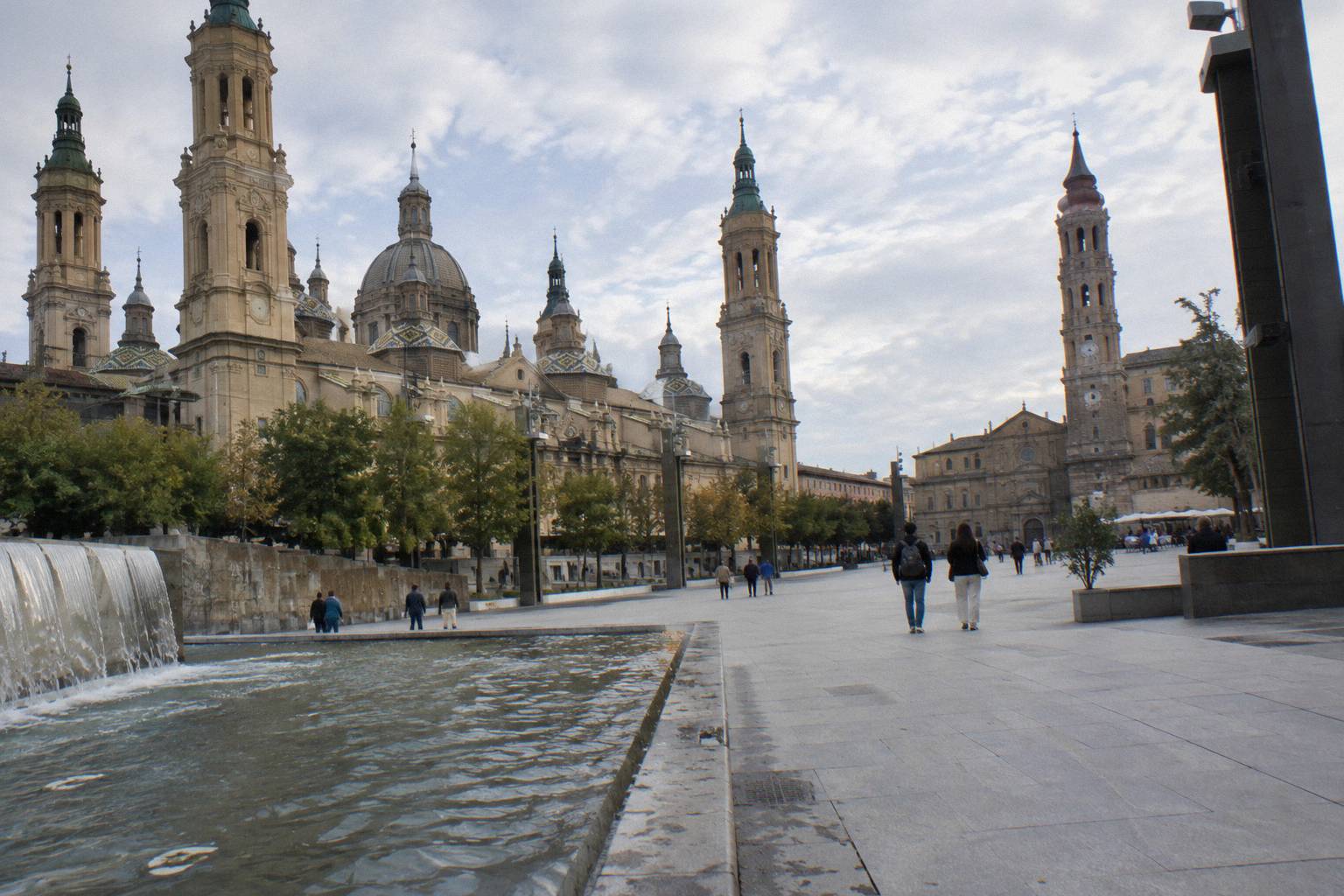
This free-from-the-street principle is worth holding on to, because it is not how every city works. In plenty of places the Roman layer is fenced, gated or pushed out to an archaeological park with an entrance fee. In Zaragoza the remains are woven into the centre, a short distance from the Plaza del Pilar and the Plaza de la Seo, and a walker moving between them passes shops, tapas streets and churches the whole way. The route through them is described in detail in Zaragoza walking tour routes, stops and free guides, which covers how the Roman stops string together with the medieval ones.
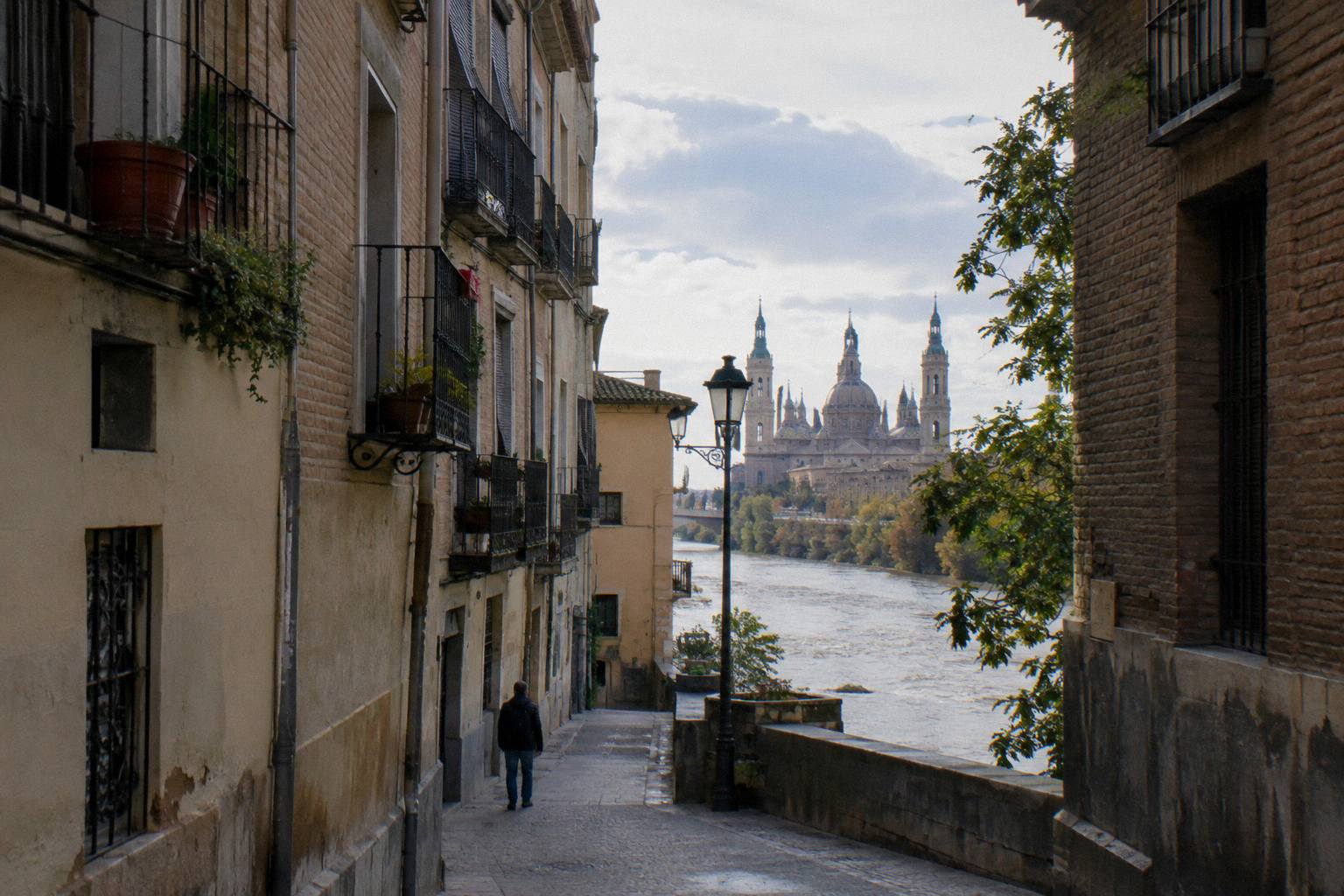
There is a second, quieter pleasure in the free layer: the contrasts. The Roman wall stands beside a contemporary avenue, and the theatre footprint sits in a block where ordinary city life continues over and around it. The Ebro itself, spanned by the free public Puente de Piedra and Puente de Hierro, is the same river that made the river port worth building in the first place. Looking at the port remains from the street and then at the water gives the site its logic without a single explanatory panel, though the museum under it does that job properly for those who pay.
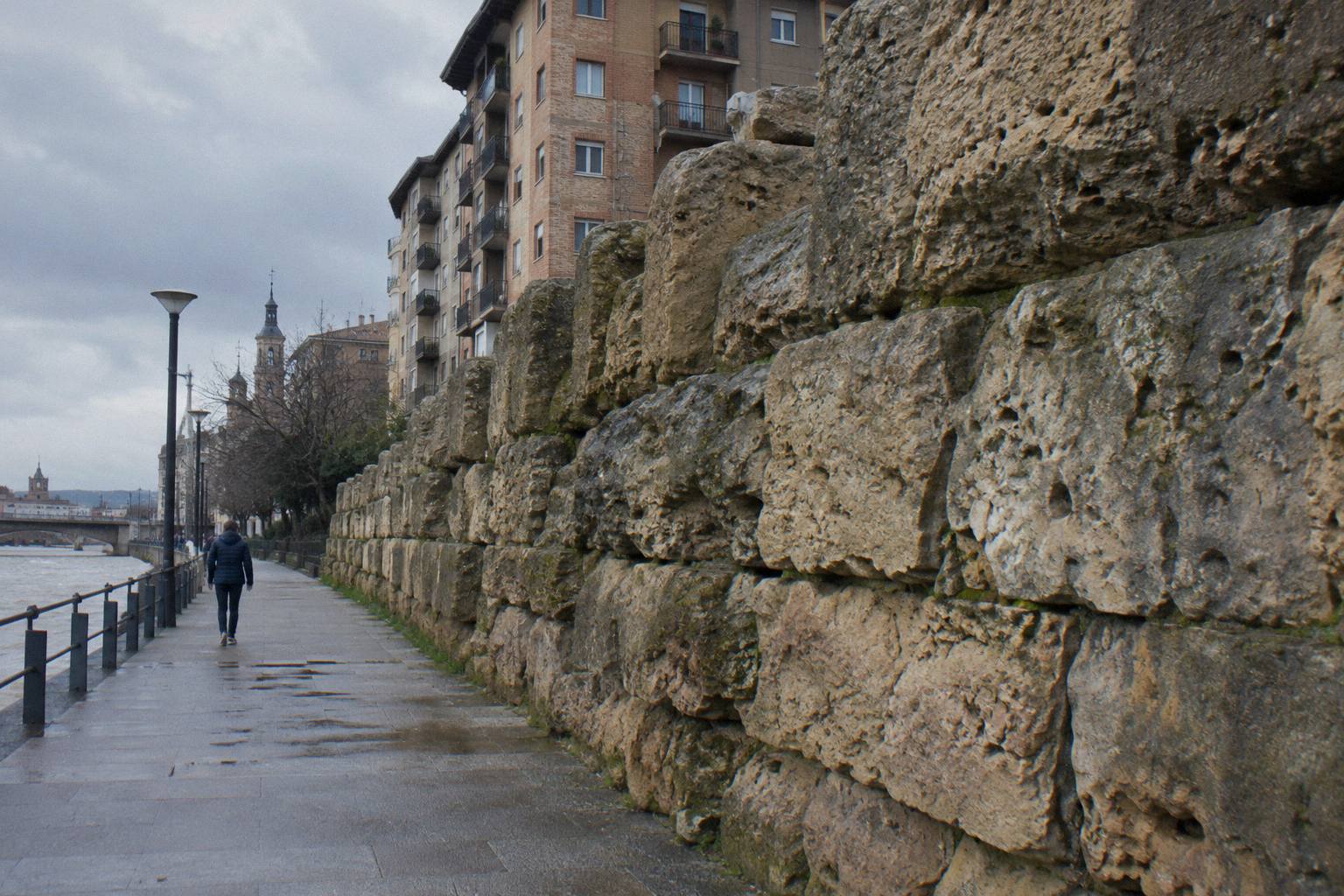
A note on honesty, because the tourist web often blurs this line. The free part of Caesaraugusta is the street level: the walls, the gate, and the visible remains. The museums under the forum, port, baths and theatre are paid attractions, cheap ones at 3 to 4 EUR, and their free days are specific. Anyone who tells you Roman Zaragoza is entirely free is describing the outside, not the excavations.
For visitors assembling a whole free day rather than a single theme, the Roman layer combines neatly with the rest of the no-cost inventory: the Plaza del Pilar and the Plaza de Espana are always-open public squares, the Paseo de la Independencia is a free public promenade, and the Basilica del Pilar's temple entry is free. A full plan along those lines is laid out in one free day in Zaragoza as a walking itinerary, which slots the Roman stops into a wider loop.
| Roman sight | Free status | How to see it |
|---|---|---|
| Roman walls of Caesaraugusta | Free, street-level remains | Always visible from the public street |
| Puerta del Carmen | Free, public monument | Always visible, on a street |
| Forum remains (exterior) | Free from the street | Street level, museum is separate and paid |
| Puerto Fluvial remains (exterior) | Free from the street | Street level, museum is separate and paid |
| Termas Publicas remains (exterior) | Free from the street | Street level, museum is separate and paid |
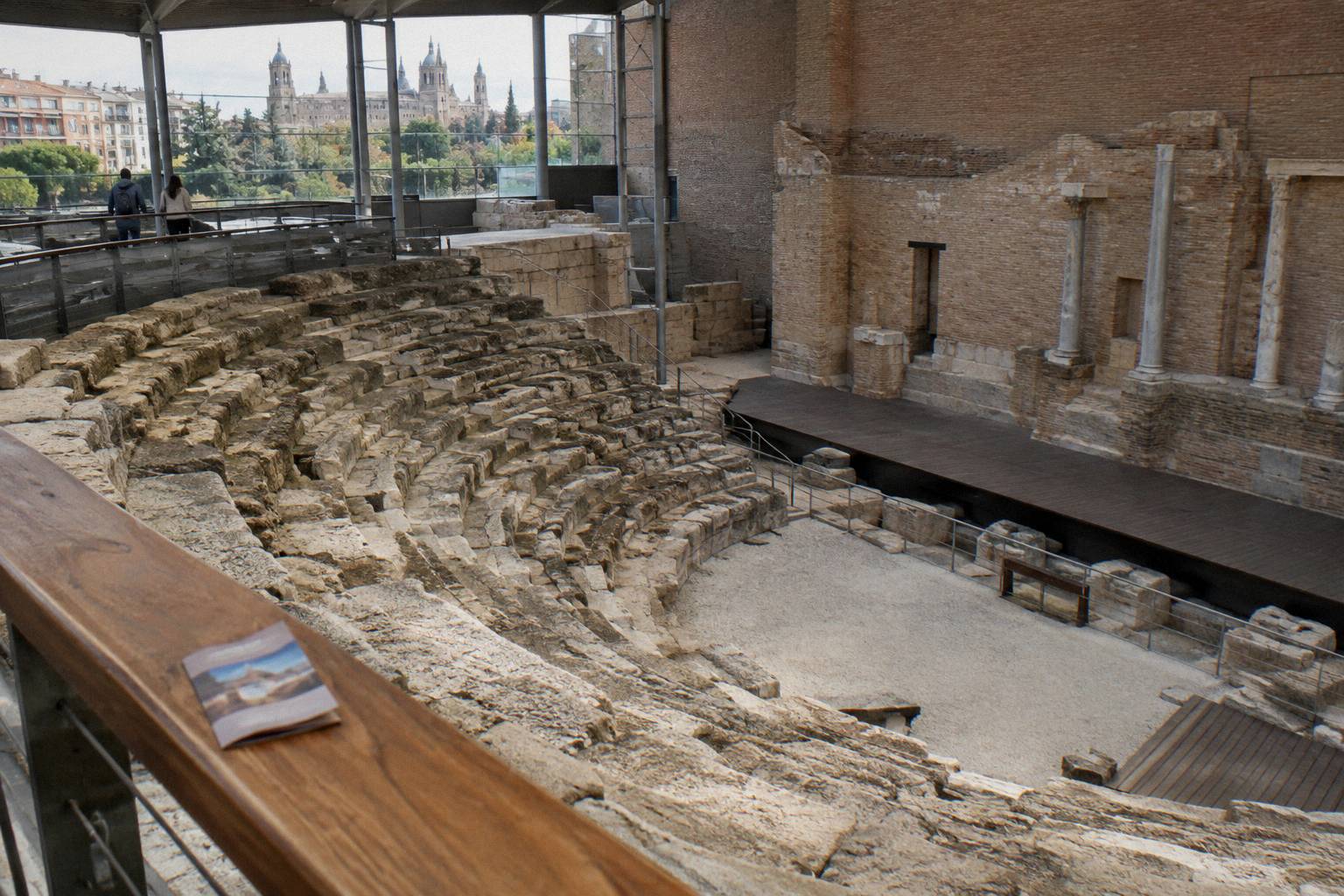
| Theatre remains (exterior) | Free from the street | Street level, museum is separate and paid |
Which Roman Museums Charge Entry And When Are They Free?
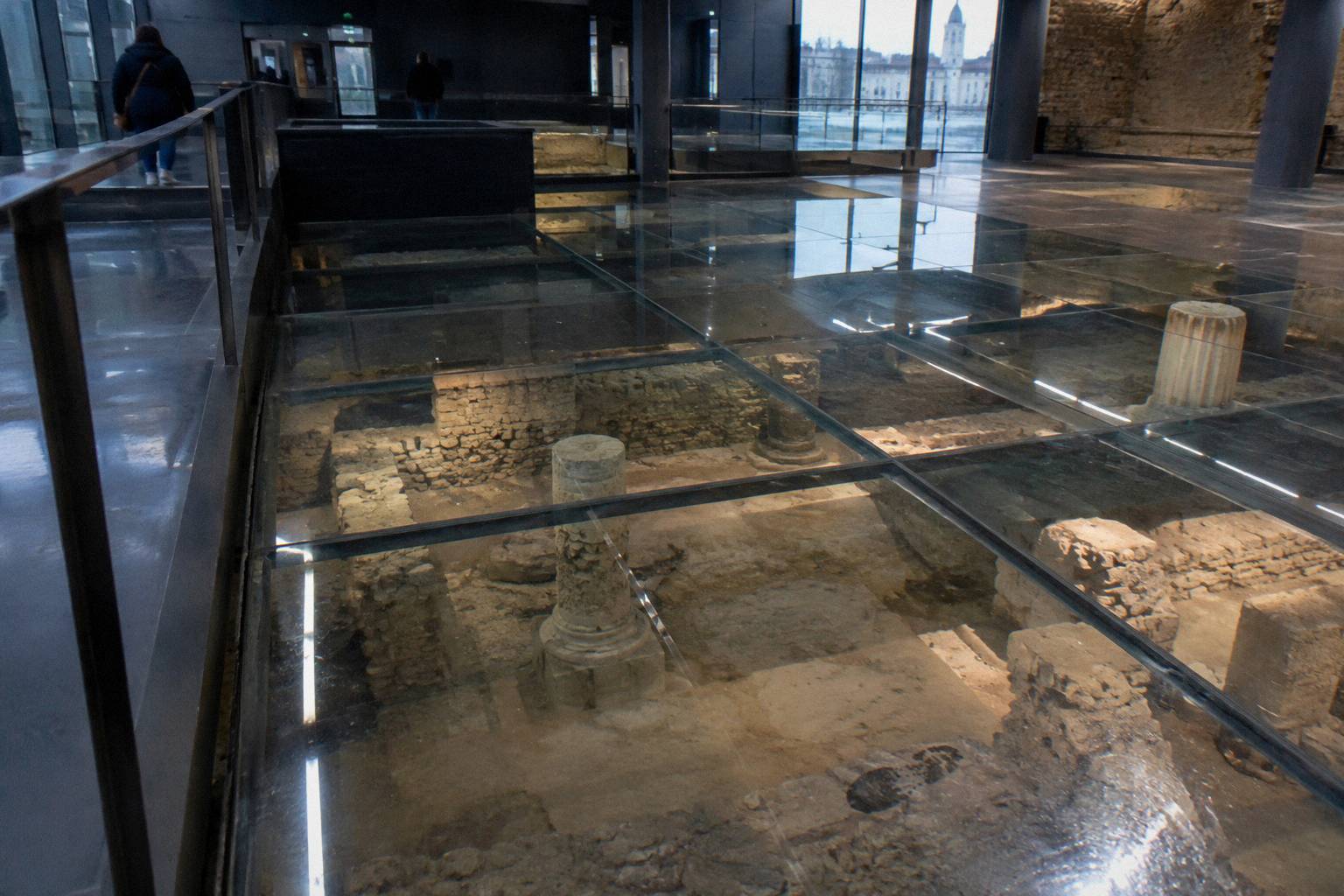
Each of the four Caesaraugusta museums charges entry: the Foro and the Teatro are 4 EUR general with a 3 EUR reduced rate, the Puerto Fluvial and the Termas Publicas are 3 EUR general with a 2 EUR reduced rate. Every one of the four is free on the first Sunday of each month, and free at all times for visitors under 16, teachers, unemployed visitors, visitors with a disability of 33 percent or more, and visitors over 65.
Those free conditions belong to the municipal museums, and they are the strongest in the city. It is not one attraction offering a day: the Foro, the Puerto Fluvial, the Termas Publicas and the Teatro de Caesaraugusta all share the same first-Sunday rule and the same always-free groups. Plan a first-Sunday visit and the entire excavated Roman city, four museums deep, costs nothing at all.
The Foro carries the fullest hours in the official sheet: Tuesday to Saturday 10:00 to 14:00 and 17:00 to 21:00, Sundays and holidays 10:00 to 14:30. Check each museum's own page before setting out, because the other three do not publish identical windows. The evening session on weekdays, 17:00 to 21:00, is the one to note for planning: it makes a museum visit possible after a full afternoon of open-air walking, so a paying day does not have to choose between the excavations and the streets.
The always-free groups deserve a second read, because they are wider than many visitors expect. A teacher with credentials pays nothing on any day. A visitor over 65 pays nothing, on any day, at any of the four museums. An unemployed visitor pays nothing, and a visitor with a certified disability of 33 percent or more pays nothing. Children under 16 enter free everywhere in the municipal group. If anyone in your party fits one of those categories, the paid-versus-free calculation changes completely, and no free Sunday is needed.
The reduced rates matter for everyone else. Students and other eligible visitors pay 3 EUR at the Foro and the Teatro instead of 4 EUR, and 2 EUR at the Puerto Fluvial and the Termas Publicas instead of 3 EUR. A party that qualifies for reductions at all four sites pays 10 EUR in total as singles, which still loses to the 7 EUR bono, but a party visiting only two reduced sites pays 5 or 6 EUR and beats it. Run the sums against your own itinerary before buying anything.
If you want the monuments explained rather than simply seen, the Monumental Walk on freetour.com is the natural companion to this route. It is listed on freetour.com, run by Paraguas Rojos, rated 9.2 out of 10 across 65 freetour.com reviews, lasts 1 hour 45 minutes, runs in English and Spanish, and meets at the Plaza de la Seo, next to the facade of La Seo. It is free to join, pay what you want, reserved on freetour.com's own page for the walk.
The Spanish-language walks of Zaragoza exist too, but the English-facing edition of this city is served by 3 free walking tours in English (1 on GuruWalk, 2 on freetour.com), and each meets in the old-town core the Roman route passes through. The full picture of how these pay-what-you-want walks work, and what to make of the model, is in free museums and free-entry days in Zaragoza, which also covers the non-Roman free museums if your first-Sunday timing opens other doors: the IAACC Pablo Serrano, the Centro de Historias, the La Lonja exhibitions and the Palacio de Sastago exhibitions are free on ordinary days, no free Sunday needed, which makes them the perfect filler on a paying Roman day.
| Museum | General | Reduced | Free day | Always free for |
|---|---|---|---|---|
| Museo del Foro de Caesaraugusta | 4 EUR | 3 EUR | First Sunday of the month | Under 16, teachers, unemployed, disability 33%+, over 65 |
| Museo del Puerto Fluvial | 3 EUR | 2 EUR | First Sunday of the month | Under 16, teachers, unemployed, disability 33%+, over 65 |
| Museo de las Termas Publicas | 3 EUR | 2 EUR | First Sunday of the month | Under 16, teachers, unemployed, disability 33%+, over 65 |
| Museo del Teatro de Caesaraugusta | 4 EUR | 3 EUR | First Sunday of the month | Under 16, teachers, unemployed, disability 33%+, over 65 |
How Do You Walk Along The Roman Walls?
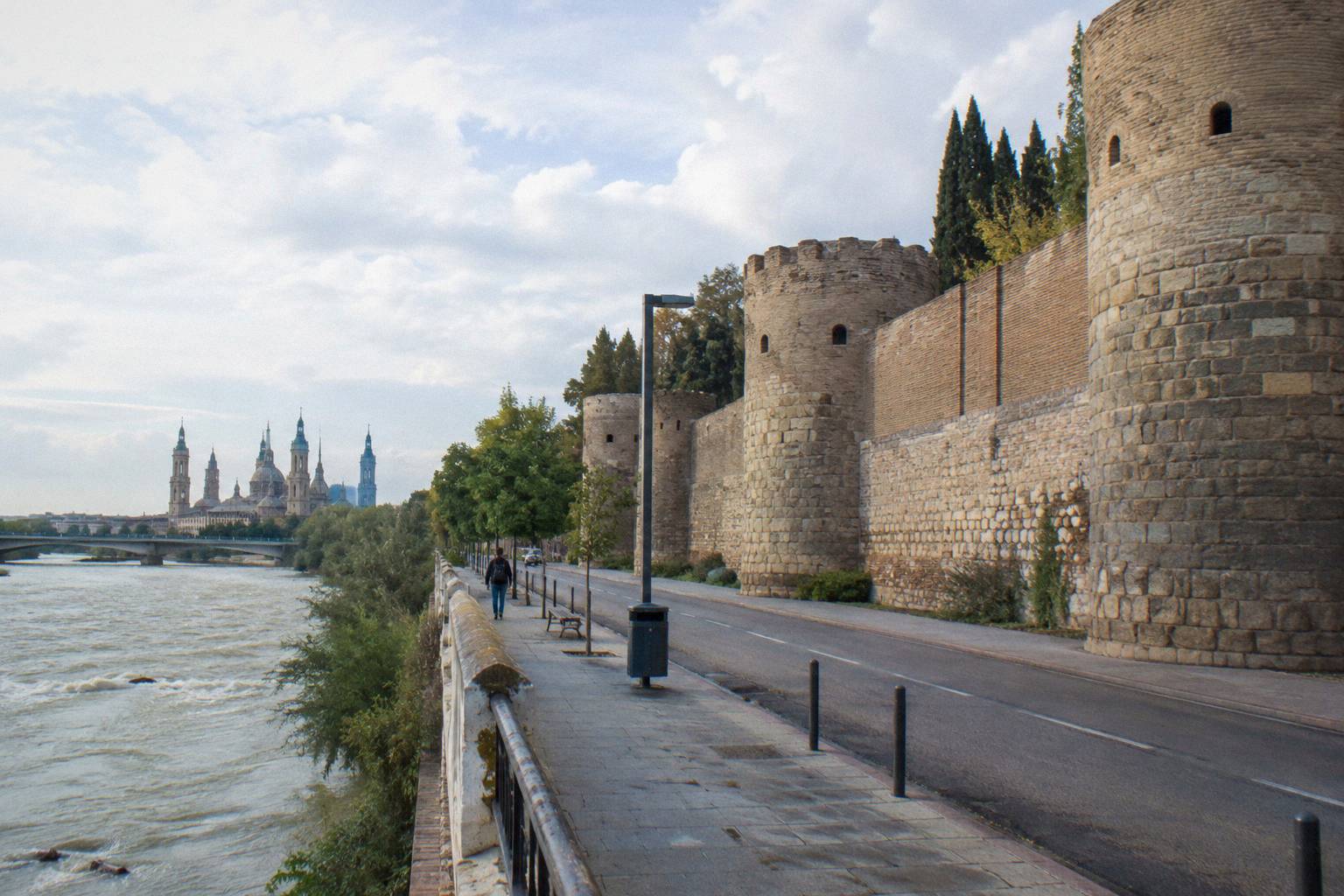
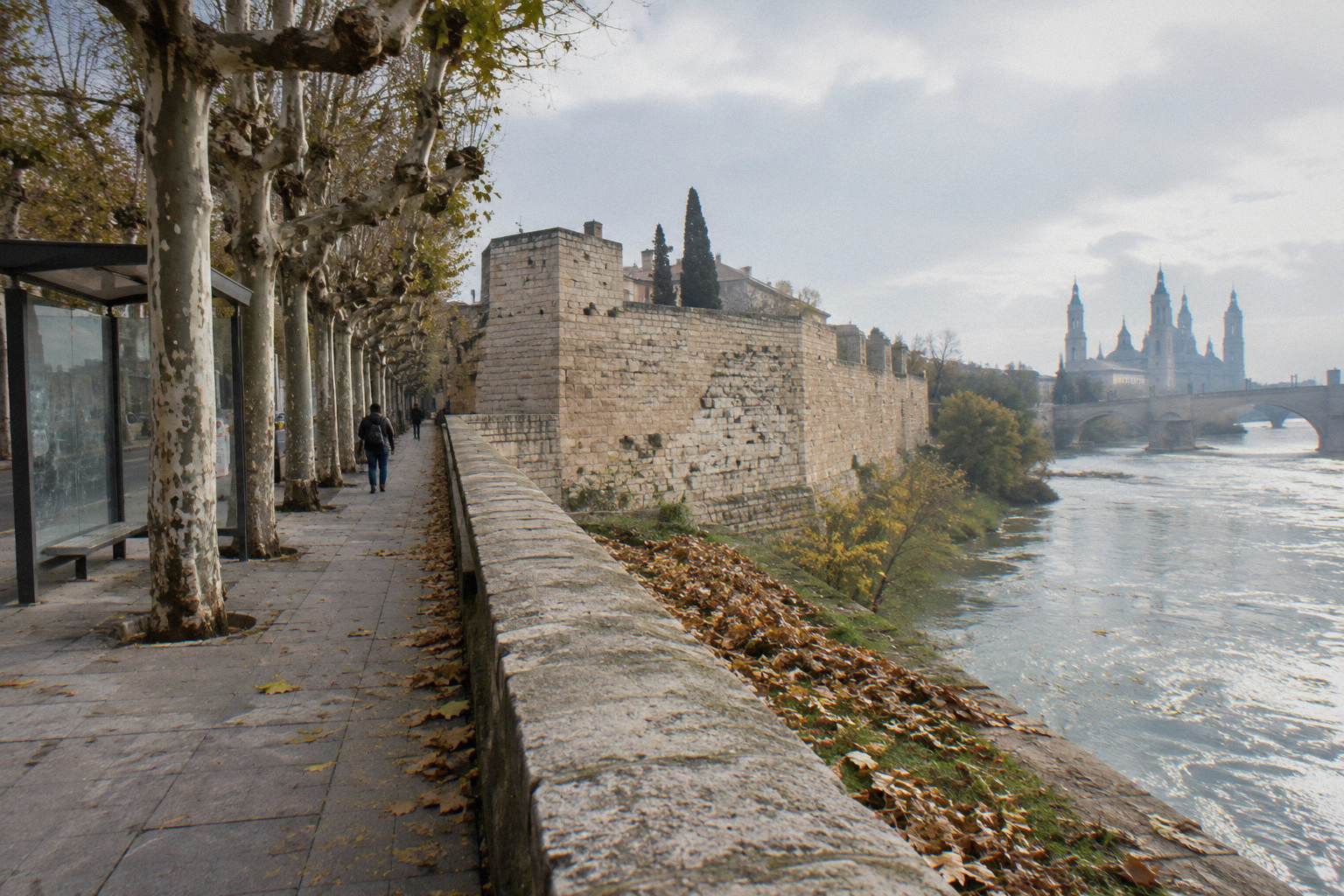
The Roman walls of Caesaraugusta stand at street level along a modern avenue and are always visible from the public street, so there is no route, ticket or opening time to plan around. Walk the avenue at the pace you like, view the wall from the pavement, and carry on to the Puerta del Carmen, another free public monument, from there.
The walls are the most generous of Zaragoza's Roman gifts precisely because they demand nothing. No queue, no hours, no desk. The stone sits beside the city traffic, and you can stand as close to it as you like for as long as you like. For orientation, the Old Town Walk on GuruWalk, run by Paseicos, rated 4.96 out of 5 across 591 GuruWalk reviews, meets at the Statue of Caesar Augustus on Avenida de César Augusto 115, which places its starting point right in the wall's company: a 2-hour walk, in English and Spanish, free to join, pay what you want, reserved on GuruWalk's own page for the walk. The full index of guides sits on Free Things To Do In Zaragoza.
The meeting point is a clue to how the route holds together. The statue of the emperor and the wall that carried his city's name stand in the same stretch of avenue, and from there the old-town core with the forum, port, baths and theatre footprints begins. Anyone who prefers a self-guided pace can take the same ground alone, and anyone who wants the stories attached to it, the legends and photo spots rather than the archaeology, can look at the Unforgettable Zaragoza Free Tour on freetour.com, run by Mystic Xperience, rated 9.4 out of 10 across 78 freetour.com reviews: 2 hours 30 minutes, English and Spanish, meeting at El Caballito de la Lonja, Calle de Don Jaime I.
From the walls, the free route continues by public monument. The Puerta del Carmen is exactly what it sounds like, a gate standing on a street, always visible, no fee and no barrier. The Puente de Piedra over the Ebro is a public bridge, always open, and gives a river-level view back toward the Basilica del Pilar, whose temple entry is also free, though its tower lift, the Torre Mirador, is a separate 6 EUR ticket and never free with the temple. Keeping those pairs straight, free outside and paid inside, is the single most useful habit in this city, and it is unpacked attraction by attraction in whether La Seo costs money and what is free.
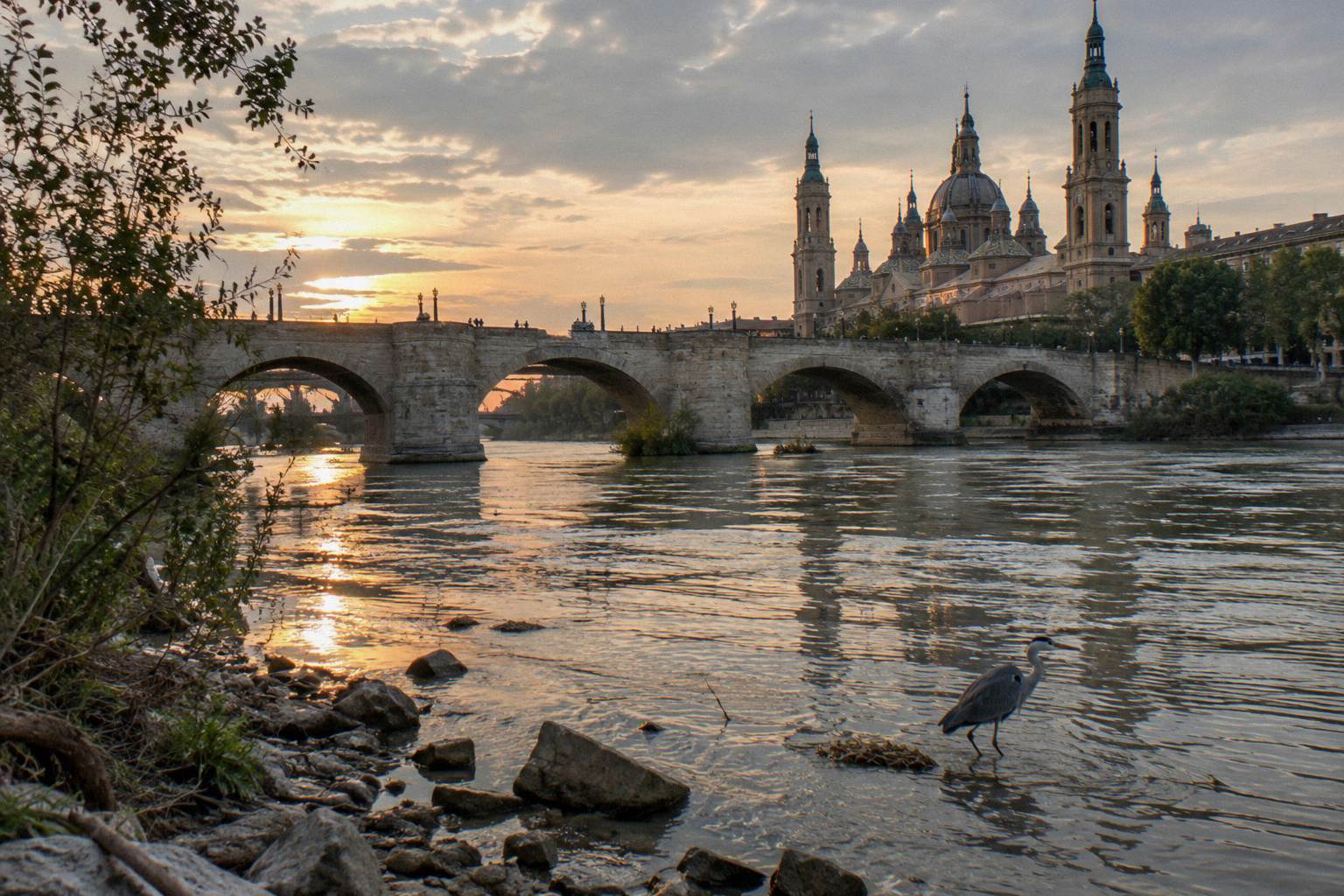
What the walk looks like in practice is simple: walls first, then the gate, then the bridge, with the forum, port, baths and theatre footprints threaded between them in the old-town core. Every leg of it is public street. Nothing on this itinerary has a closing time, which makes it the most weather-and-clock-proof free day in Zaragoza: an evening walk sees exactly what a morning walk sees. For questions of timing and light, the piece on the best time of day for a free walking tour in Zaragoza covers the same trade-offs for the guided side of the city.
One more free companion sits at the route's edge: the Torreon de la Zuda, listed free on the official sheet, open Monday to Saturday 10:00 to 14:00 and 16:30 to 20:00 and Sunday 10:00 to 14:00, with the Mirador de las cuatro culturas on its fifth floor and last entry 15 minutes before closing. It is the one Roman-adjacent stop with both an indoor interior and a viewpoint, and it costs nothing on any day, no first Sunday required.
What Does The Bono 4 Museos Cover?
The Bono 4 Museos is a 7 EUR combined ticket covering all four Caesaraugusta museums: the Foro, the Puerto Fluvial, the Termas Publicas and the Teatro. Bought separately the four cost 14 EUR at general rates, so the bono halves the total. It does not cover La Seo, the Aljaferia or any non-Roman attraction, and the free first Sunday beats it if your dates allow.
The arithmetic is the whole pitch. Foro 4 EUR, Teatro 4 EUR, Puerto Fluvial 3 EUR, Termas Publicas 3 EUR: fourteen euros apart, seven together. If you intend to visit all four museums on a paying day, the bono is the cheaper path, and it turns a scattered set of small admissions into one decision made once. If you only want two of the four, check the sums yourself: two of the cheaper museums cost 6 EUR as singles, less than the bono.
A three-museum visit is the borderline case worth spelling out. Three general singles cost 10 or 11 EUR depending on which three, so the bono still wins by 3 or 4 EUR, and the margin only shrinks if your party qualifies for reduced rates, where three reduced singles cost 7 or 8 EUR and roughly match the bono. In practice the bono makes most sense for the visitor who wants the complete Roman set on a paying day, and no sense at all for the visitor choosing between the free Sunday and the always-free groups.

Who the bono does not serve: anyone in the always-free groups, under 16, teachers, unemployed, disability 33 percent or more, over 65, who pays nothing anyway; and anyone whose visit falls on the first Sunday of the month, when all four are free and the bono buys nothing. It also does not reach beyond the Roman group. La Seo's 10 EUR general ticket, which includes the Museo de Tapices and the Museo Pilarista, is a separate purchase, and the Aljaferia is a separate 7 EUR general ticket with contested free-day wording that this page will not repeat. Treat each governing body's prices and days as its own facts.
A paying museum day and a free walk pair well, and the timing is yours to set. The Monumental Walk meets at the Plaza de la Seo and runs 1 hour 45 minutes in English and Spanish, which leaves room in a day for museum visits before or after; the meeting point sits in the same old-town core as all four Roman footprints, so nothing needs a vehicle. Reserve on freetour.com's page for the walk, and set your museum expectations from the hours above.
| Option | Cost | What it covers | Best for |
|---|---|---|---|
| Four single tickets | 14 EUR | Each museum once | Visiting one or two only |
| Bono 4 Museos | 7 EUR | All four Caesaraugusta museums | Visiting all four on a paying day |
| First Sunday | 0 EUR | All four museums | Any visit that lands on the first Sunday |
| Always-free groups | 0 EUR | All four museums, any day | Under 16, teachers, unemployed, disability 33%+, over 65 |
Mistakes That Trip People Up At Caesaraugusta
The recurring mistakes are treating the museums as free when only the street level is, assuming one free day covers the whole city, paying full price at La Seo or the Aljaferia when a condition applies, expecting a walk to include a paid interior, and skipping the reduced and bono maths. Each mistake is avoidable with one fact, and the facts are all short.
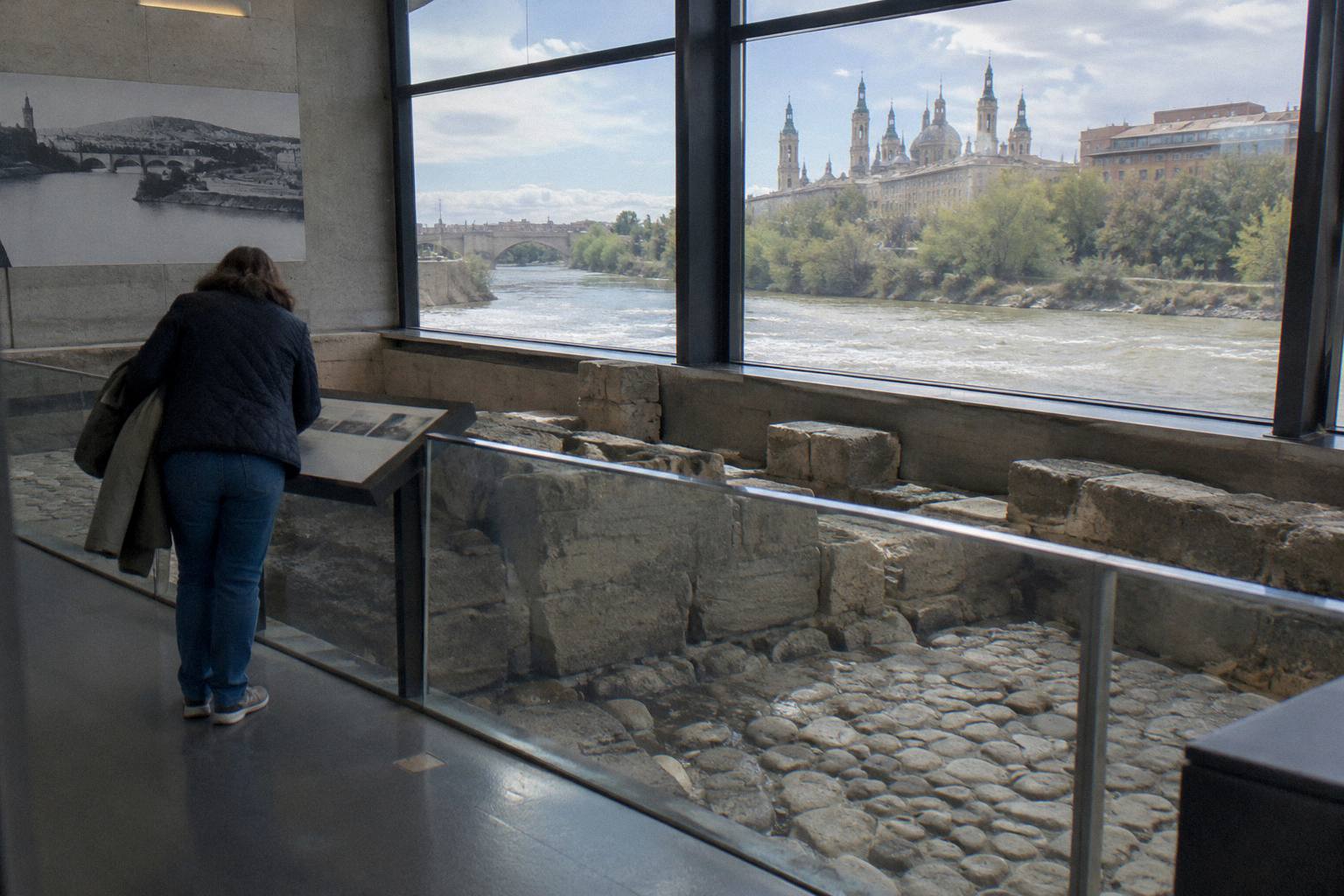
The first mistake is merging the free exterior with the paid museum. The street-level remains are free; the excavations under them are 3 or 4 EUR each. A sentence like "the Roman forum is free" is only true at street level, and the same trap repeats all over the city: the Basilica temple is free while the Torre Mirador is 6 EUR, the Pabellon Puente bridge is free while Mobility City inside is 10 EUR, and the Centro de Historias is free while the Museo del Origami under the same roof is 3 EUR. Two facts, every time, never one.
The second mistake is stacking free days. First Sunday belongs to the municipal museums including the four Caesaraugusta sites, the Fuego museum and the Origami. First Wednesday belongs to the Ibercaja venues and Mobility City. La Seo's free days are only for Aragon residents, on the 5th, 10th, 17th and 24th. There is no city-wide free day, and a plan built on one will meet a closed wallet at the second stop. The Aljaferia's free-day wording is printed ambiguously on the official sheet, so confirm on its own page before counting on it.
The third mistake is paying single tickets without checking the bono and the reductions. Families in particular should do the arithmetic twice, once for the adults and once for the under-16s, who pay nothing at any of the four museums on any day. A two-adult family with two children pays 14 EUR in singles or 7 EUR with the bono for the adults alone, and nothing for the children either way; the first Sunday reduces the whole party to zero. There is no family bono to buy because the child price is already zero.
The fourth mistake is expecting a walking tour to include a paid interior. Entry to a ticketed interior is always a separate purchase, never included with or free with any walk, and the same honesty applies to food: no walk on this site is described with a food stop, a tasting or anything payable, because no walk's own page confirms one. The fifth mistake is the reverse error, skipping a walk because you assume a free tour must be thin: each of the 3 free walking tours in English runs close to or past two hours, which is longer than many paid city tours.
The last mistake is walking the route backwards against your own energy. The walls and the Puerta del Carmen ask nothing of your schedule, so put the museums, with their hours and their first-Sunday clock, at the centre of the plan and let the open-air pieces fill the edges. An evening weekday session at the Foro, 17:00 to 21:00, exists precisely for that shape of day.
Common Questions About Caesaraugusta
Which Roman Remains In Zaragoza Can You See Free?
The Roman walls of Caesaraugusta, the Puerta del Carmen and the street-level remains of the forum, river port, baths and theatre are all free to see from public streets, at any hour, with no ticket or booking. The four covered museums attached to those sites are separate paid attractions at 3 to 4 EUR each.
Which Roman Museums Charge Entry And When Are They Free?
The Foro and the Teatro charge 4 EUR general with a 3 EUR reduced rate; the Puerto Fluvial and the Termas Publicas charge 3 EUR general with a 2 EUR reduced rate. All four are free on the first Sunday of each month, and free every day for under 16s, teachers, unemployed visitors, visitors with a disability of 33 percent or more, and over 65s.
How Do You Walk Along The Roman Walls?
The walls stand at street level beside a modern avenue and are always visible from the public street, so no route, ticket or opening time is needed. Walk the pavement at your own pace. For a guided version, the Old Town Walk on GuruWalk meets at the Statue of Caesar Augustus, Avenida de César Augusto 115, and runs 2 hours in English and Spanish.
What Does The Bono 4 Museos Cover?
The Bono 4 Museos is a 7 EUR combined ticket covering the Foro, the Puerto Fluvial, the Termas Publicas and the Teatro de Caesaraugusta. Separately the four cost 14 EUR at general rates, so the bono halves the total. It covers no other attraction: La Seo, the Aljaferia and every non-Roman museum are separate purchases.
Is The First Sunday Free For Everything In Zaragoza?
No. The first Sunday of the month is free at the four Caesaraugusta museums, the Museo del Fuego y de los Bomberos and the Museo del Origami, which is also free on the first Tuesday. The Ibercaja venues and Mobility City use the first Wednesday instead, and La Seo is free only for Aragon residents on the 5th, 10th, 17th and 24th.
Do Free Walking Tours Include The Roman Museums?
No. The free walks cover ground, not paid interiors: entry to any ticketed site is a separate purchase and never included with a walk. The 3 free walking tours in English (1 on GuruWalk, 2 on freetour.com) are free to join, pay what you want, and each is reserved on its own platform page.