Zaragoza Walking Tour Routes, Stops And Free Guides
A Zaragoza walking tour runs through squares, bridges and Roman walls that cost nothing, with only a handful of interiors charging admission. Here is the route, the free stops, the paid ones and how to cover it on foot.
In Short
A Zaragoza walking tour centers on the Plaza del Pilar, the Roman walls of Caesaraugusta, the Puente de Piedra and the tapas streets of El Tubo, and all of those are free. Only interiors charge: the Torre Mirador del Pilar costs 6 EUR, La Seo 10 EUR with its museums, and the Aljaferia 7 EUR. The city itself is compact and walkable, and 3 free walking tours in English (1 on GuruWalk, 2 on freetour.com) cover the old town.
Part of the Free Things To Do In Zaragoza guides series.
Quick Facts
| Question | Answer |
|---|---|
| What is free on the route | Plaza del Pilar, Basilica temple entry, Roman walls of Caesaraugusta, Puente de Piedra, Puente de Hierro, El Tubo streets |
| What costs money inside | Torre Mirador del Pilar 6 EUR, La Seo 10 EUR general ticket, Aljaferia 7 EUR general |
| Always-free museums on foot routes | Centro de Historias, IAACC Pablo Serrano, La Lonja exhibitions, Torreon de la Zuda |
| Free walks in English | 3 free walking tours in English (1 on GuruWalk, 2 on freetour.com) |
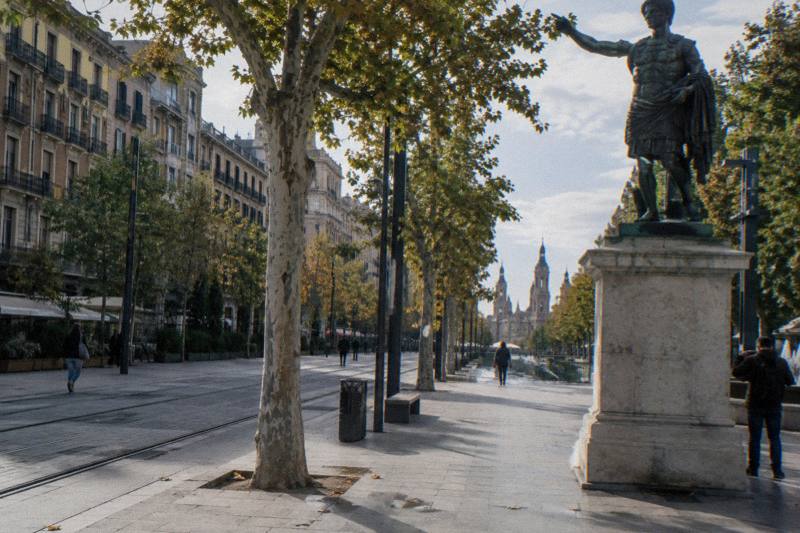
| Hero walk meeting point | Statue of Caesar Augustus, Avenida de César Augusto 115 |
| Walkable city | Yes, the old town, the Ebro bridges and the Paseo de la Independencia link up on foot |
Which Stops Make Up A Walking Tour Of Zaragoza?
A Zaragoza walking tour is built around the Plaza del Pilar, the Basilica del Pilar, the Roman walls of Caesaraugusta, the Puente de Piedra, La Seo and the tapas streets of El Tubo. Every one of those stops is a street, square or exterior you can stand in for free, and the paid moments are all interiors: a tower lift, a cathedral ticket and a palace across town.
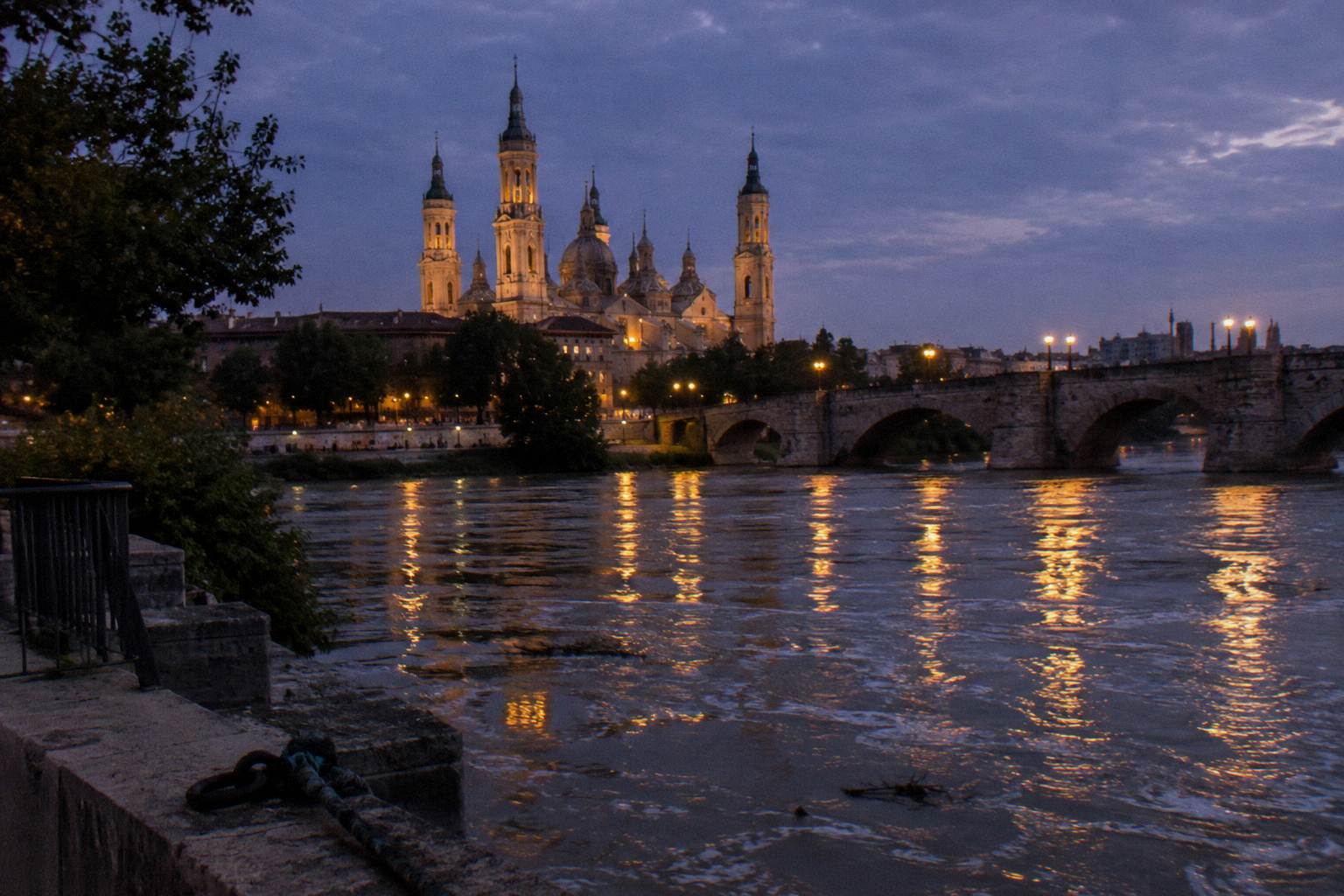
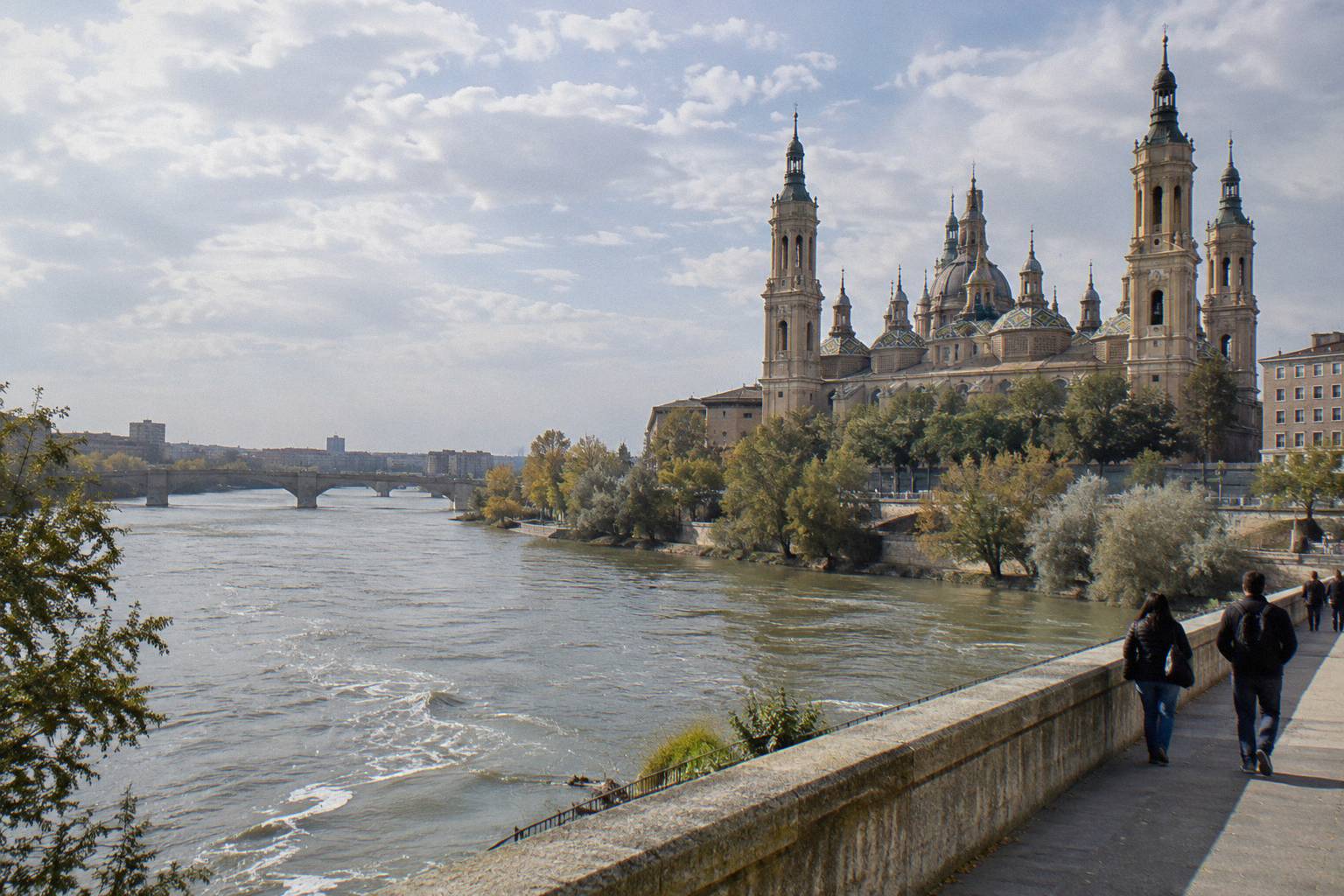
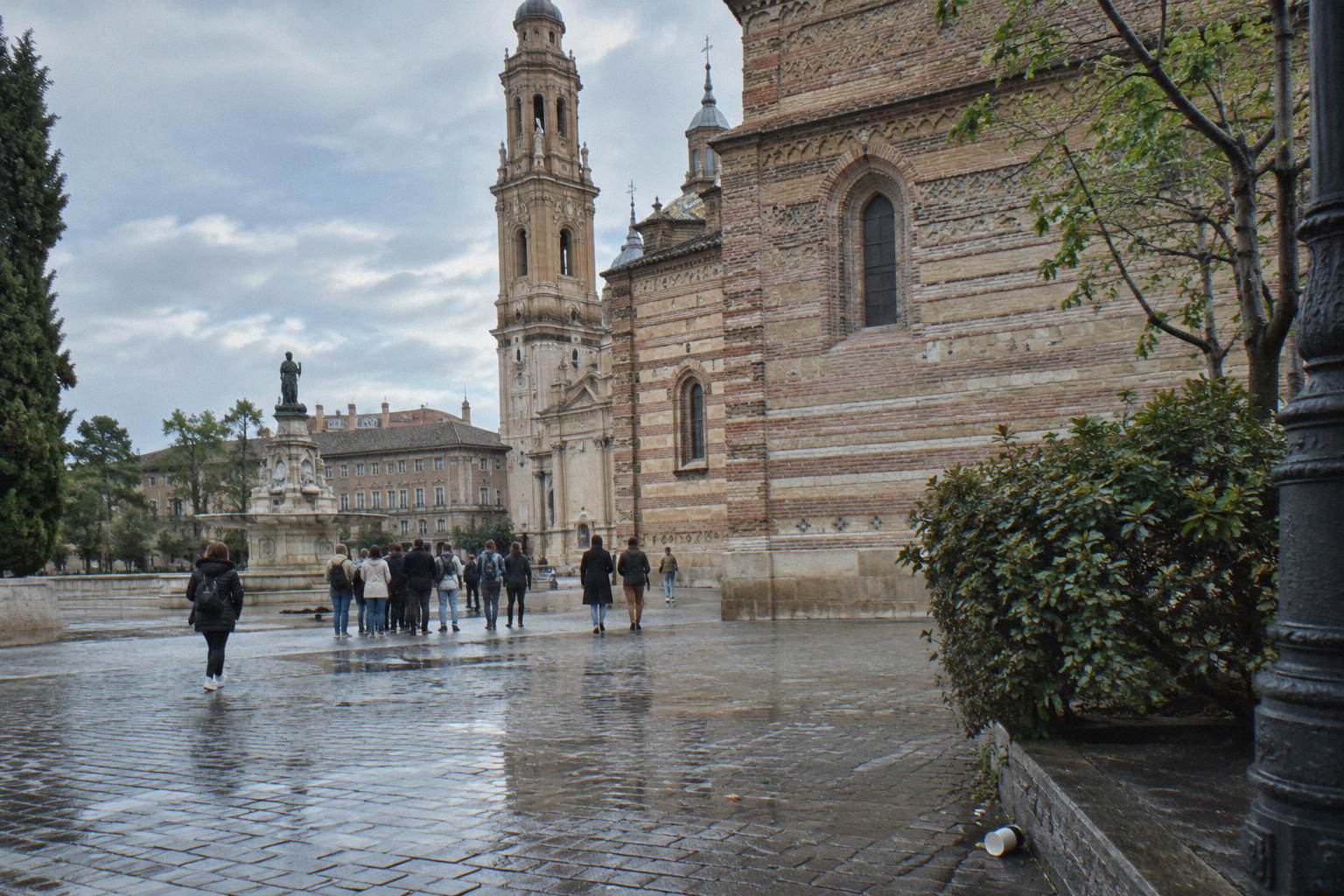
The heart of any route is the Plaza del Pilar, the open square where the Basilica del Pilar, La Seo and the La Lonja exhibition hall all face each other. It is a public square, always open, and it works as the natural orientation point for the whole city: stand here and the old town spreads out on one side, the Ebro on the other. Entry to the Basilica temple itself is free, officially stated as free access to the temple, with the Santa Capilla open 8:00 to 20:30 daily. The tower beside it is a separate ticket, covered in the admission section below.
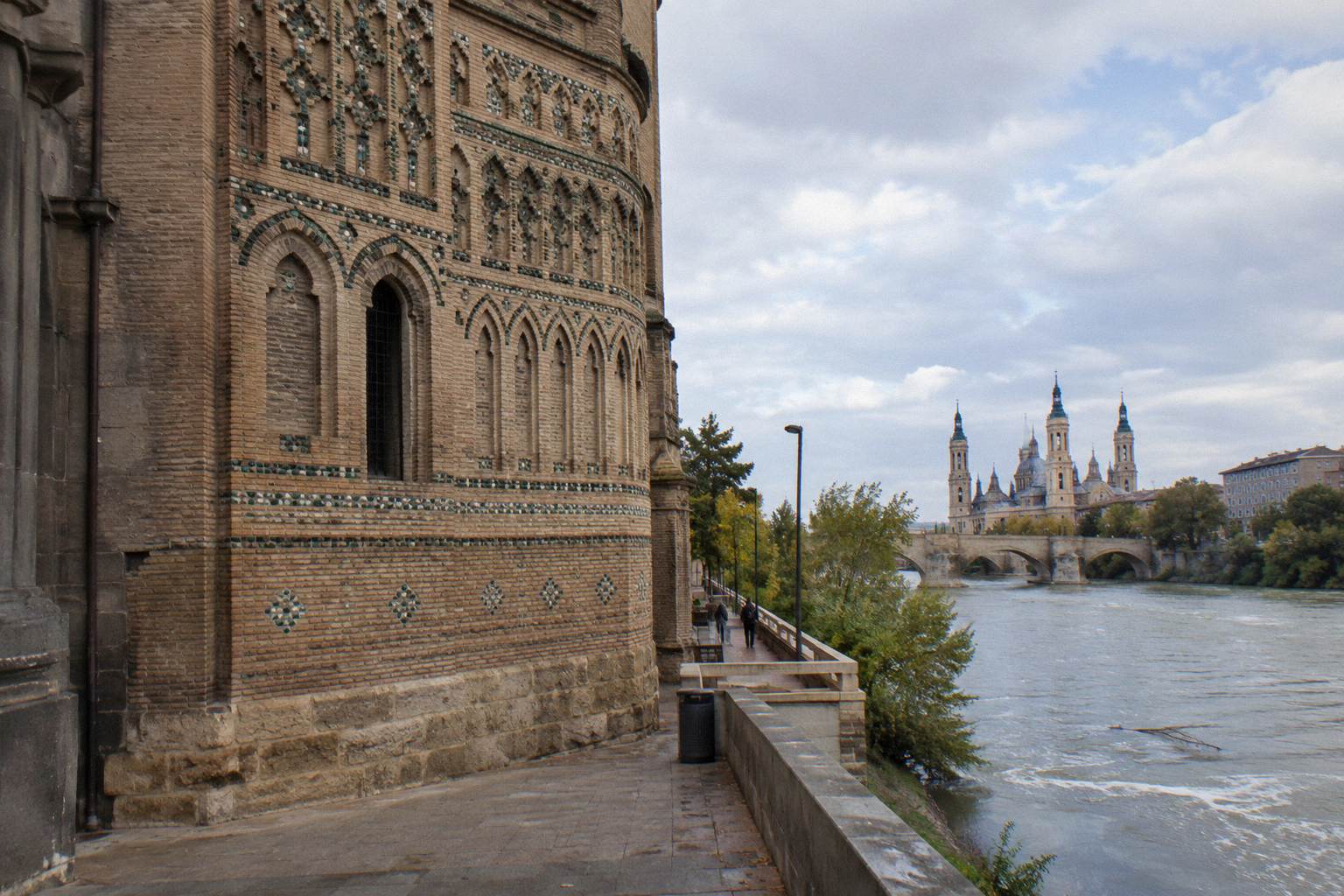
From the square, the Roman walls of Caesaraugusta are street-level remains visible from the public street at any hour, no ticket and no fence between you and them. The Puerta del Carmen is the same kind of stop, a public monument standing on a street, always visible. These two carry the Roman layer of the city without a single euro changing hands, which is why almost every route threads them in.
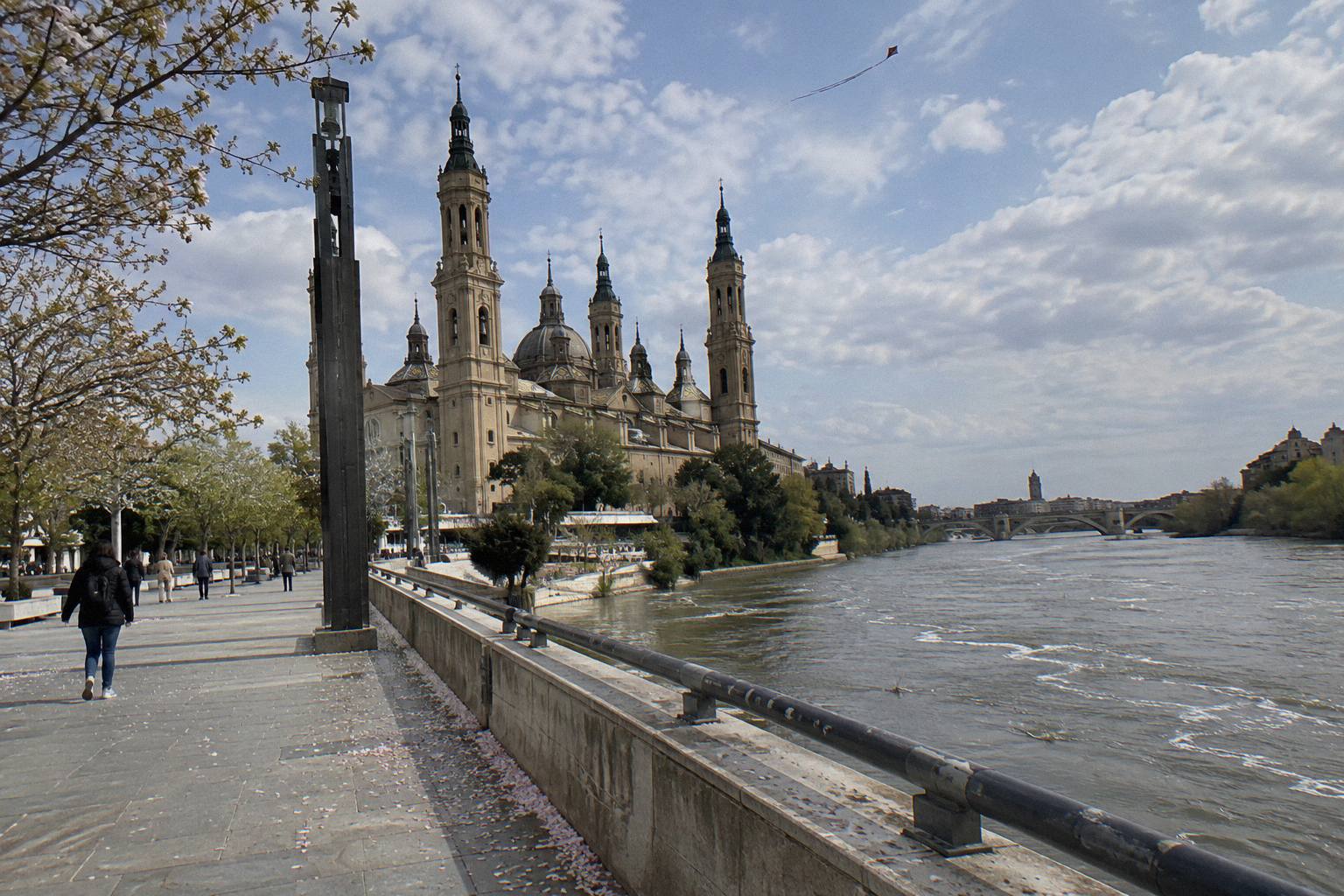
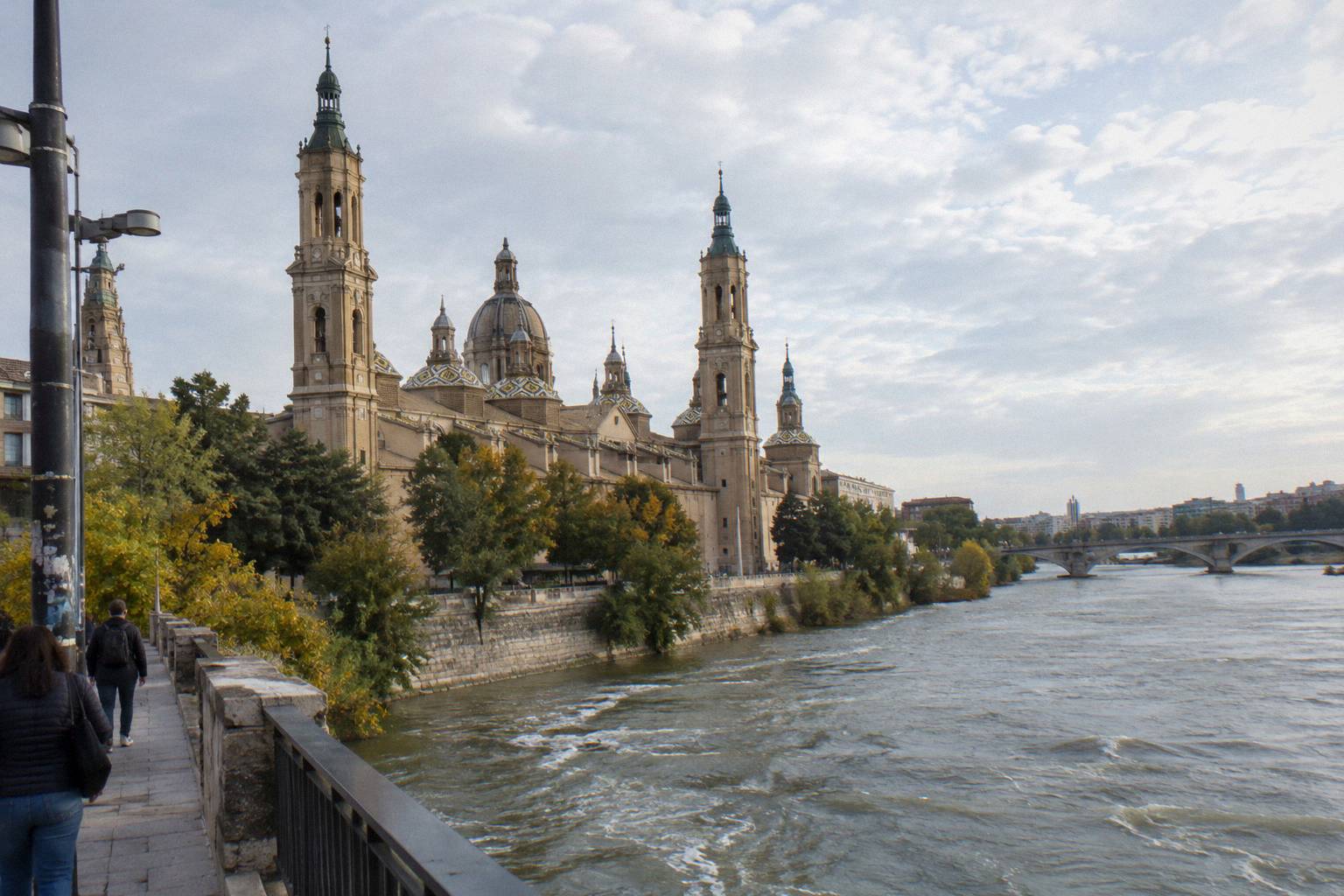
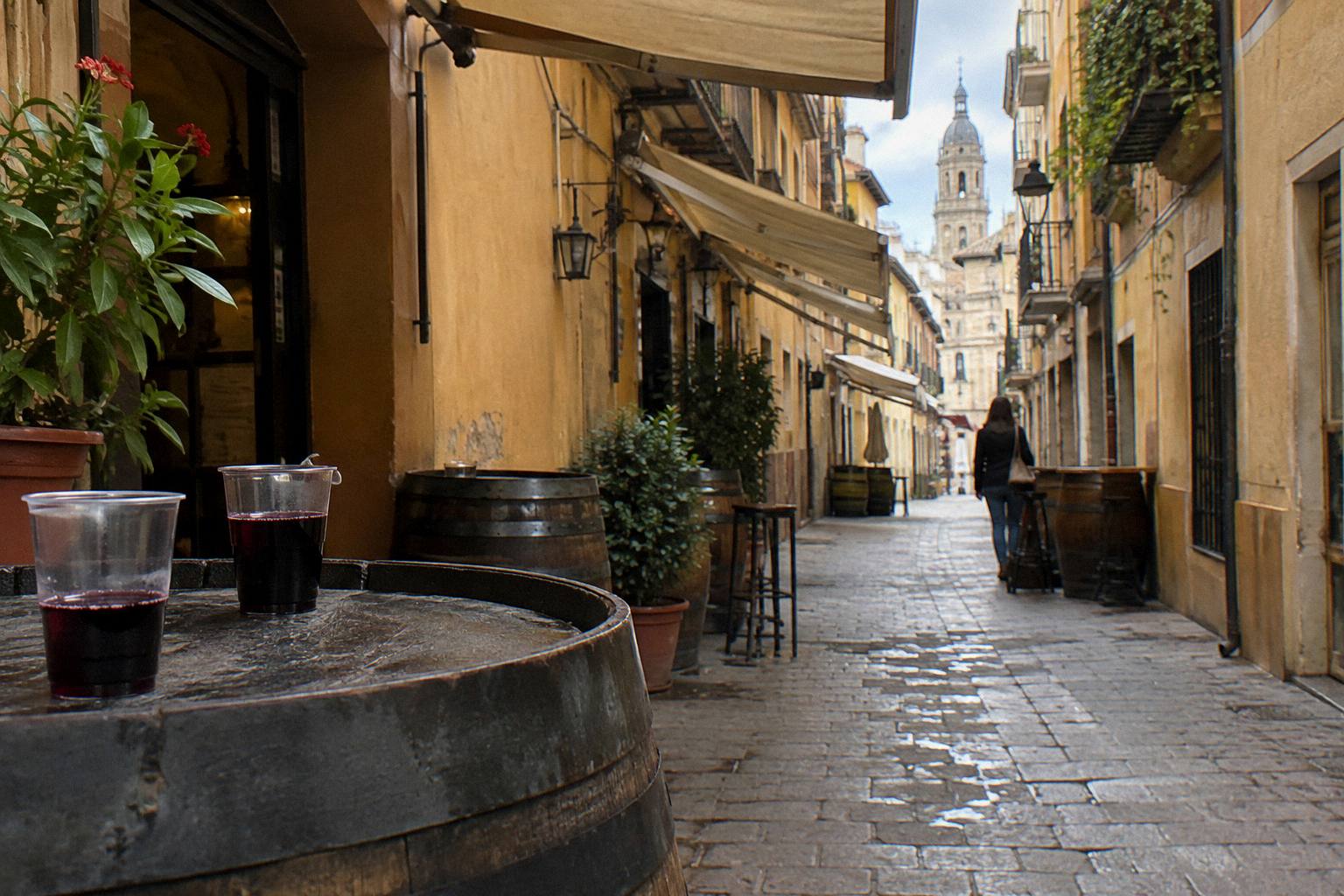
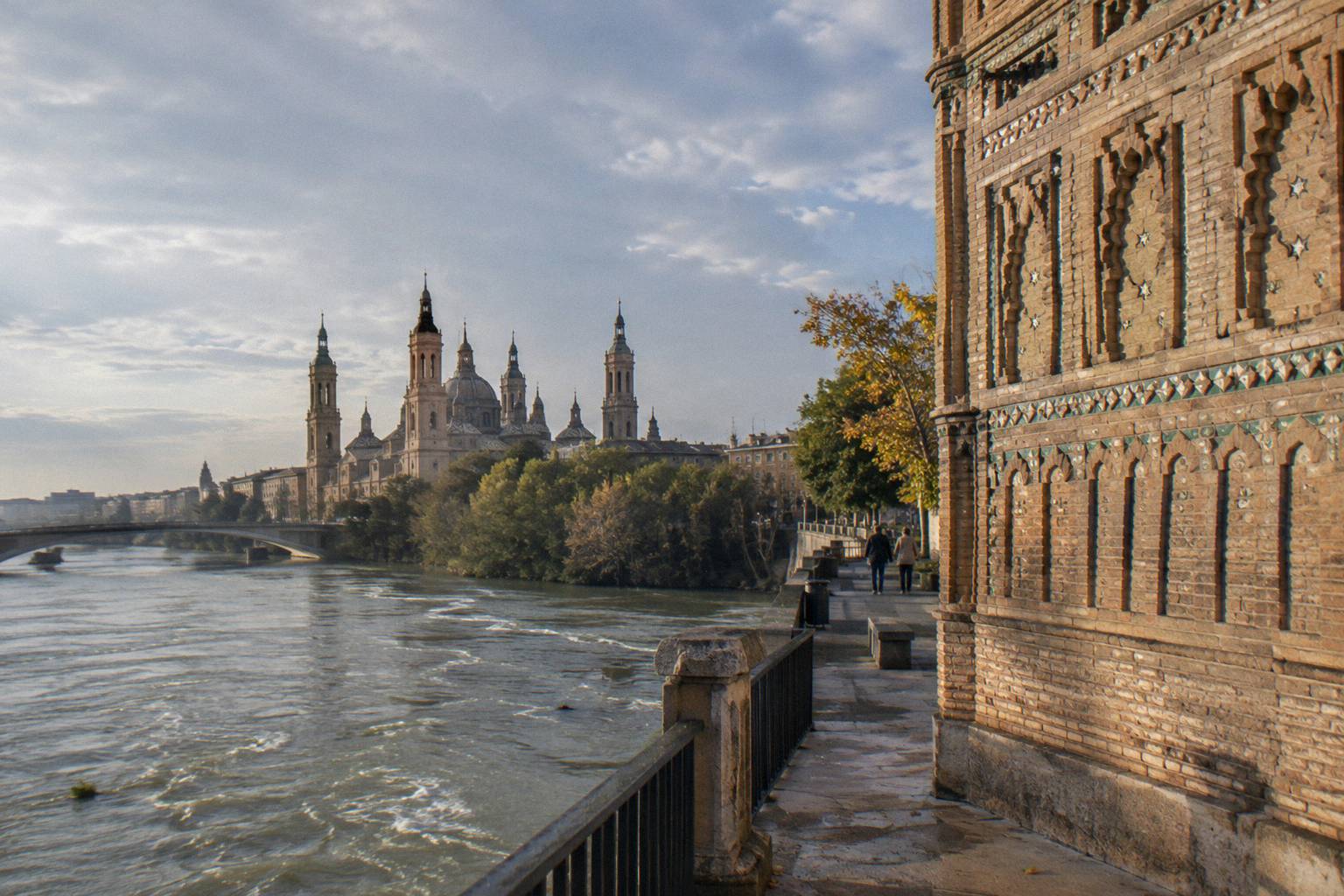
Cross to the river and the route reaches the Puente de Piedra, the public bridge over the Ebro, always open, and the Puente de Hierro, also a public bridge, also always open. Between the two banks you get the river views back toward the Basilica that most people associate with the city. Back on the old-town side, El Tubo, the tapas streets, are public lanes that are always open to walk, with food and drink as the only paid part of that stop.
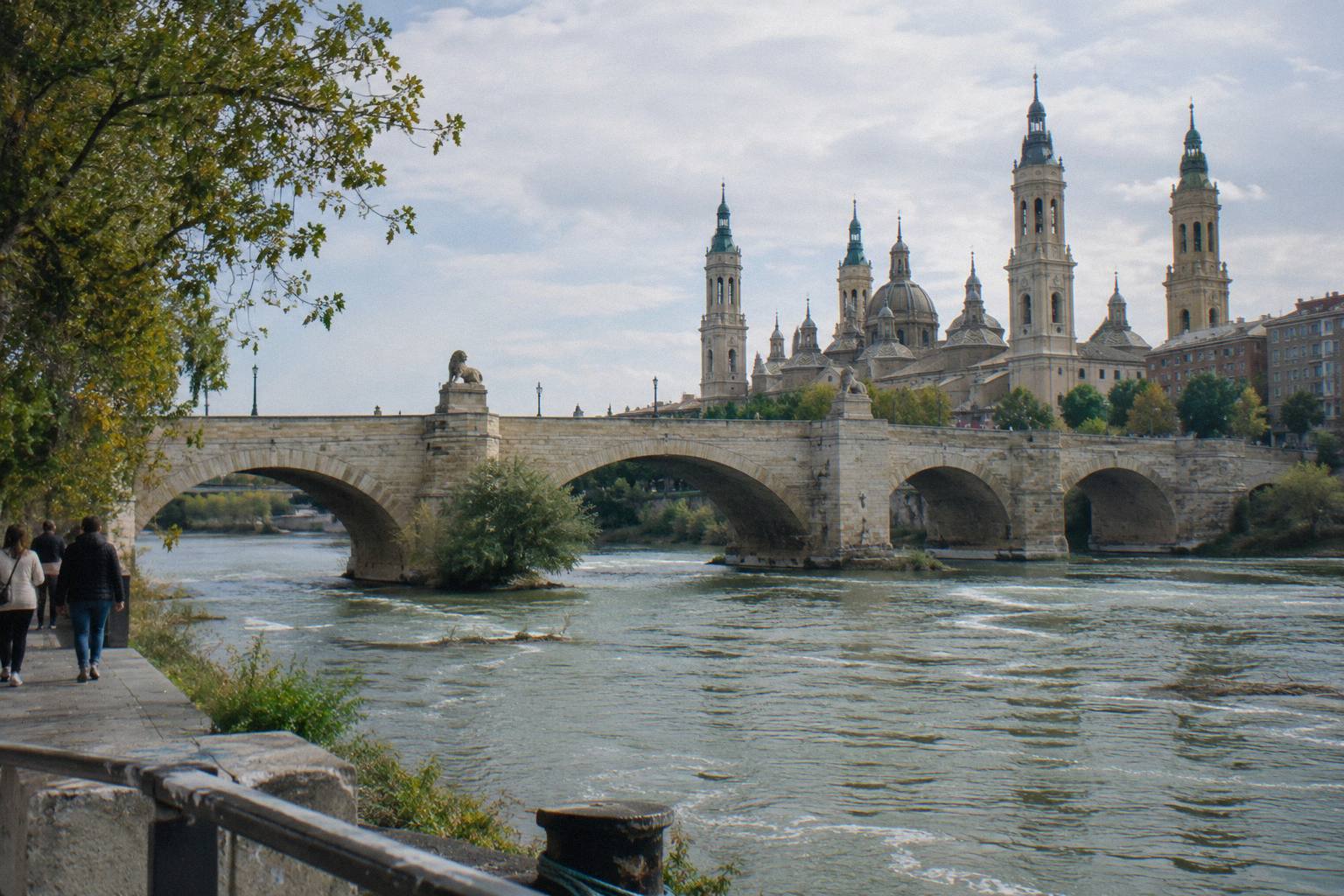
The guided version of this route exists. The Old Town Walk by Paseicos, titled "Indispensable Zaragoza Free Tour: Old Town", is listed on GuruWalk, rated 4.96 out of 5 across 591 GuruWalk reviews, runs 2 hours in English and Spanish, and meets at the Statue of Caesar Augustus, Avenida de César Augusto 115. It is free to join, pay what you want. For the full picture of how these walks work, see how tip-based tours work and which run in English.
Beyond the old town, a longer route picks up the Paseo de la Independencia, a public promenade always open, and the Plaza de Espana, another public square. The Mercado Central is free to enter as a covered market, with only food purchases paid. These stops stretch the walk toward the wider city without adding any admission, and they connect naturally toward the Parque Grande Jose Antonio Labordeta for anyone with a longer afternoon.
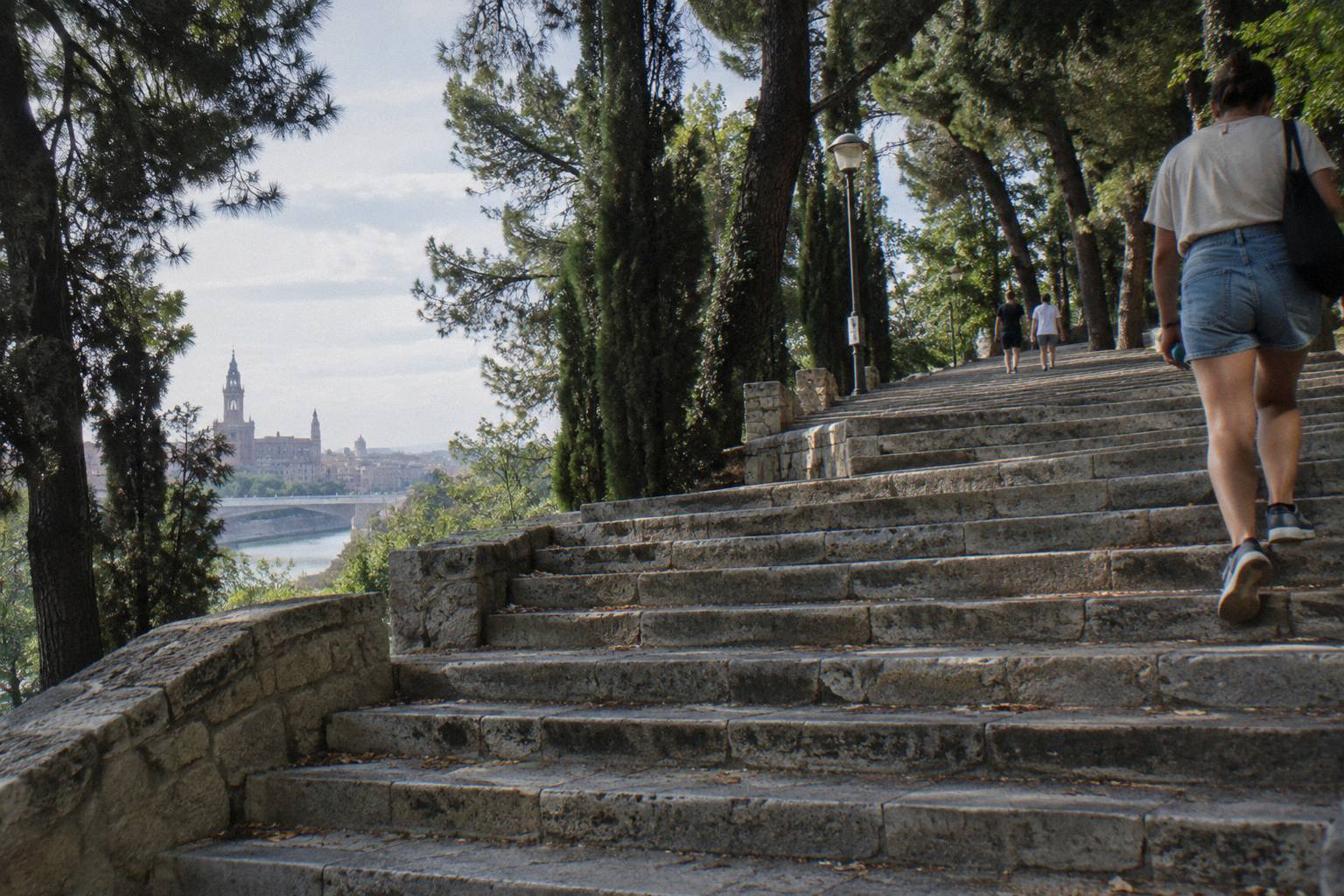
For a day-length plan built on exactly these stops, the one free day walking itinerary puts them in order with timings and meeting points.
Which Of Those Stops Are Free To Enter?
Most of the route costs nothing: the Plaza del Pilar, Puente de Piedra, Puente de Hierro, the Roman walls of Caesaraugusta, the Puerta del Carmen, the streets of El Tubo, the Mercado Central and the Paseo de la Independencia are all free, the Basilica temple is free to enter, and the Centro de Historias, IAACC Pablo Serrano and La Lonja exhibitions charge no admission.
The open public spaces need no planning at all. The Plaza del Pilar and the Plaza de Espana are squares, the bridges are bridges, and the Roman walls and the Puerta del Carmen are visible from the street at any hour. El Tubo is a district of public lanes. None of these has a gate, a window or a closing time in any meaningful sense, and together they carry most of what a visitor comes to see.
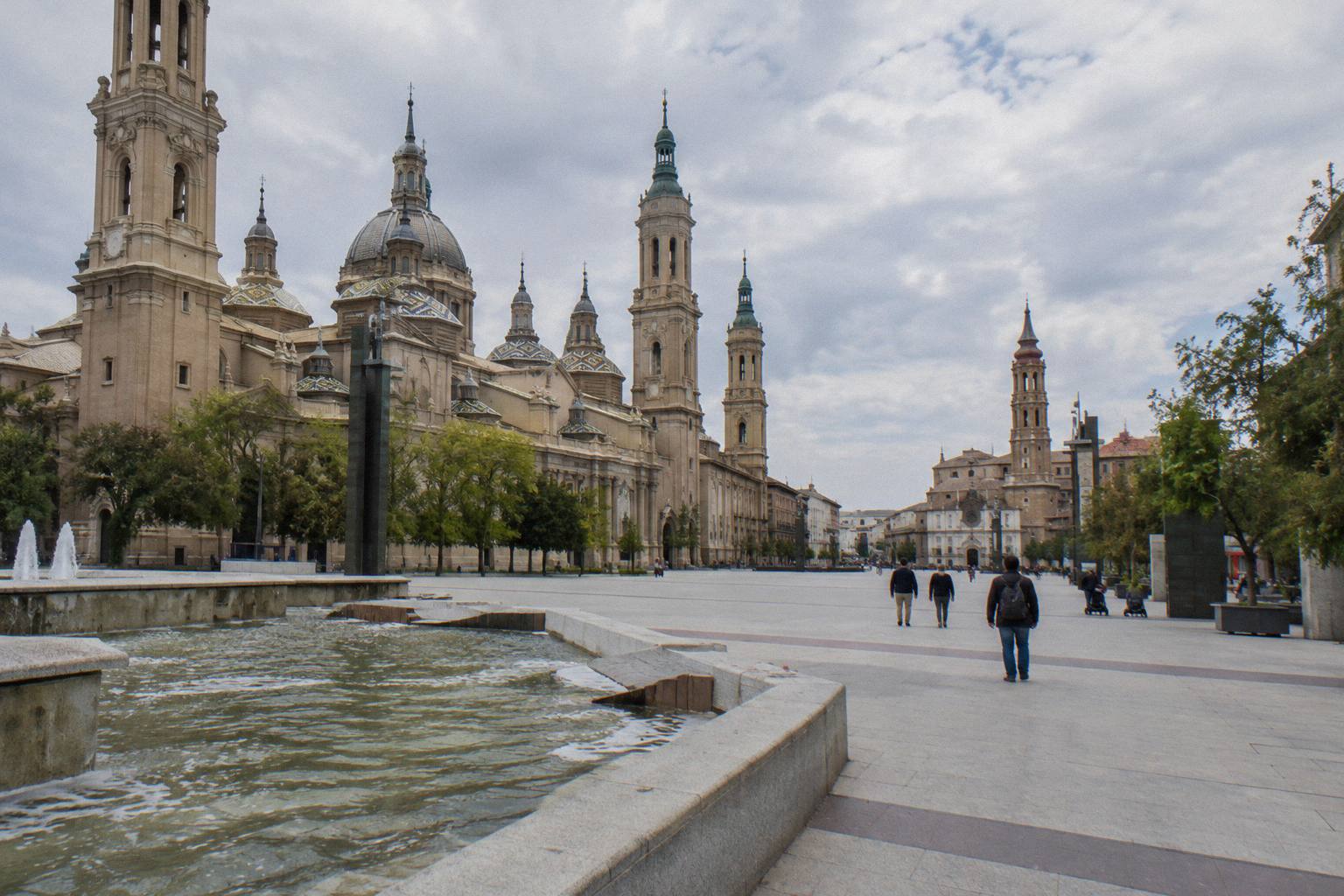
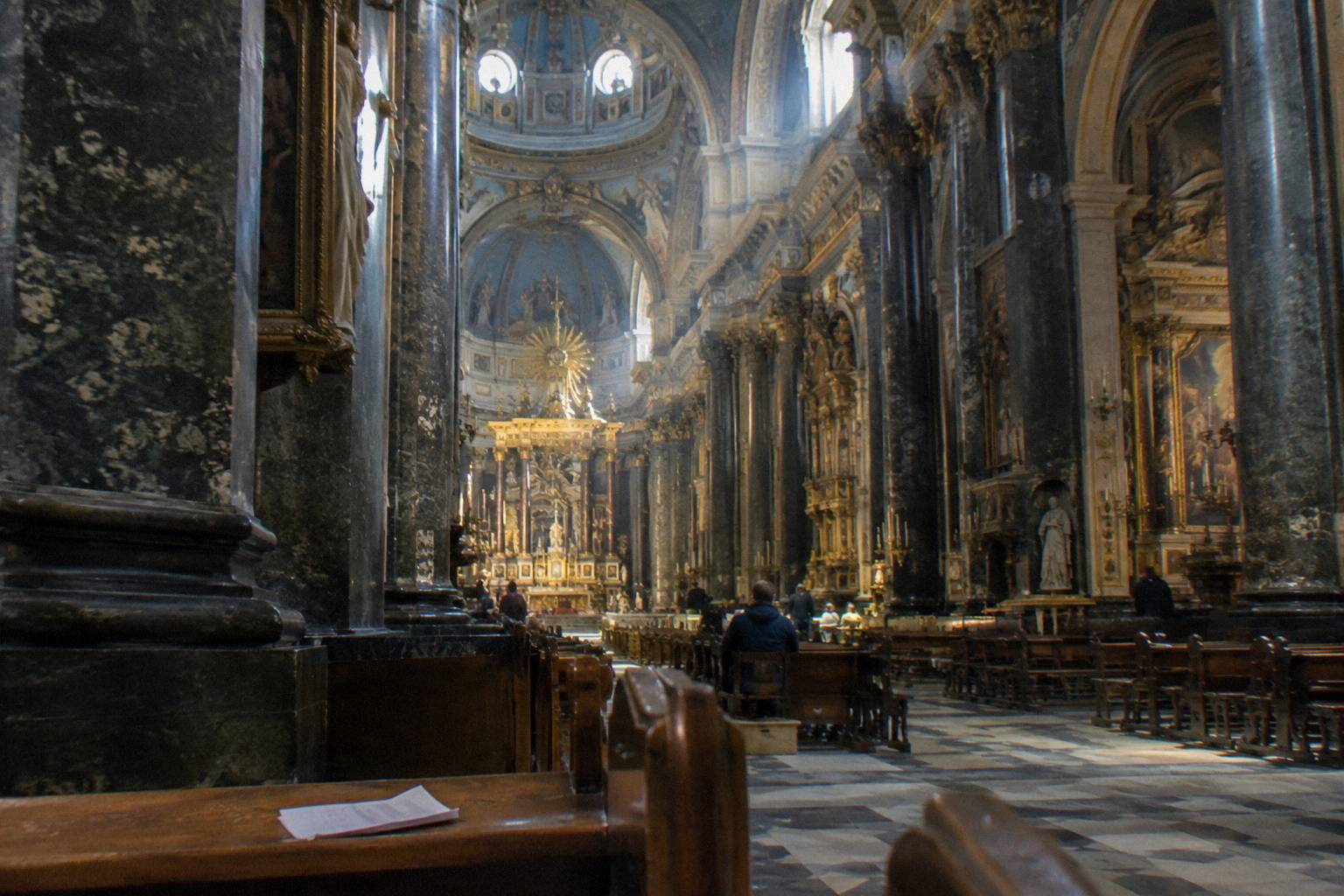
The Basilica del Pilar deserves its own sentence because it splits in two. Entry to the temple is free, officially free access to the temple, with published hours for the Santa Capilla (8:00 to 20:30) and the main altar area. The free part is the church itself. The tower beside it, the Torre Mirador del Pilar, is a separate 6 EUR lift, and the Museo Pilarista sits inside the general La Seo ticket, so the free status of the temple never transfers to either. For the full breakdown, the Basilica free entry guide covers hours and what costs extra.
The free museums sit inside walking range of the square. The Centro de Historias is free, open Tue-Sat 10:00-14:00 and 17:00-21:00, Sun and holidays 10:00-14:30, with exhibitions running to 10 January. The IAACC Pablo Serrano is free, Tue-Sat 10:00-14:00 and 17:00-21:00, Sun and holidays 10:00-14:00. The La Lonja exhibition hall, right on the Plaza del Pilar, is free, with a current show running 19 November to 24 January. The Palacio de Sastago exhibitions are free too, Tue-Sat 11:00-14:00 and 18:00-21:00, Sun and holidays 11:00-14:00.
One pairing needs care: the Centro de Historias is free, but the Museo del Origami under the same roof is ticketed at 3 EUR, free only on the first Tuesday and first Sunday of the month. A square or a building never passes its free status to the attraction inside it. The free museums and free entry days guide lists every condition by attraction and by day.
| Stop | Free scope | Condition or hours |
|---|---|---|
| Plaza del Pilar | Entire square | Always open, public space |
| Basilica del Pilar temple | Church interior | Free entry, official free access |
| Roman walls of Caesaraugusta | Street-level remains | Visible from the public street, any hour |
| Puente de Piedra and Puente de Hierro | Both bridges | Public bridges, always open |
| El Tubo | The tapas streets | Public lanes; food and drink paid |
| Centro de Historias | Exhibitions | Free, Tue-Sat 10-14 and 17-21 |
| IAACC Pablo Serrano | Museum | Free, Tue-Sat 10-14 and 17-21 |
| La Lonja | Exhibitions | Free, current show to 24 January |
Which Stops Charge Admission Inside?
Four stops charge admission inside: the Torre Mirador del Pilar at 6 EUR, La Seo at 10 EUR general (including the Museo de Tapices and Museo Pilarista), the Aljaferia at 7 EUR general, and the Museo del Origami at 3 EUR. Each sits beside a free stop, so do not assume the free square, bridge, or church exterior extends inside or upward.
The Torre Mirador del Pilar is the clearest example of the pattern. The temple is free; the tower lift costs 6 EUR general, with 5 EUR for over 65s, visitors with a disability over 33 percent and Zaragoza residents, 4 EUR for ages 13-18, under 26s with a youth card or student card and groups of 20 or more, and free entry under 12 and for disability over 50 percent. Hours run Mon-Thu 10:30-14:00 and 15:00-19:30, with Fri-Sun opening at 10:00. The two facts travel separately: temple free, tower paid.
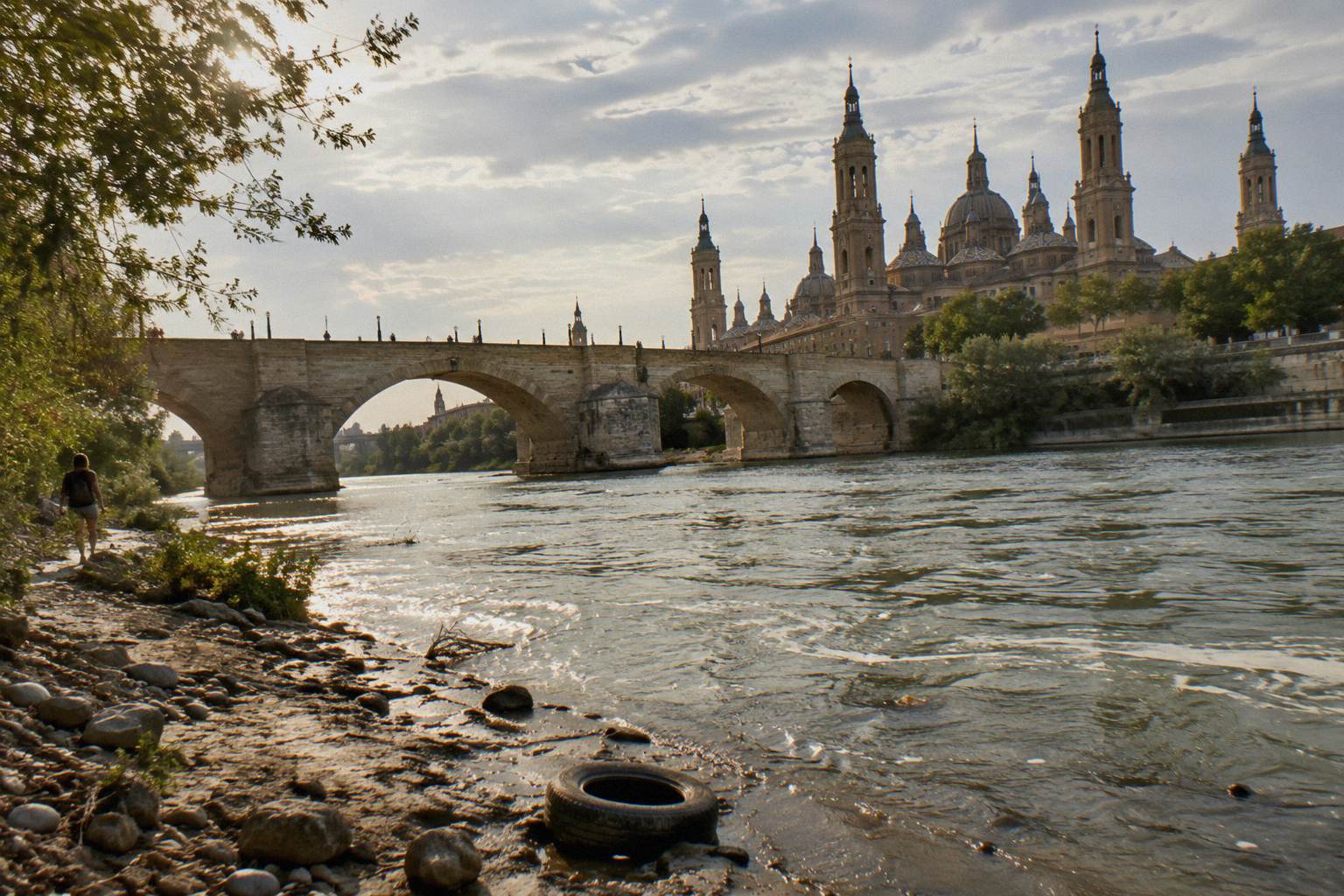
La Seo, the Cathedral of El Salvador, stands at the other end of the Plaza del Pilar from the Basilica and its square is free public space, but the cathedral itself charges 10 EUR general, a ticket that includes the Museo de Tapices, the Museo Pilarista and the Rosario de Cristal. Reduced rates exist at 9 EUR for over 65s and disability over 33 percent, 7 EUR for ages 13-18, under 26s, students and groups, free under 12, and free for residents of Aragon on the 5th, 10th, 17th and 24th of each month. The La Seo what-is-free guide works through every line of that ticket.
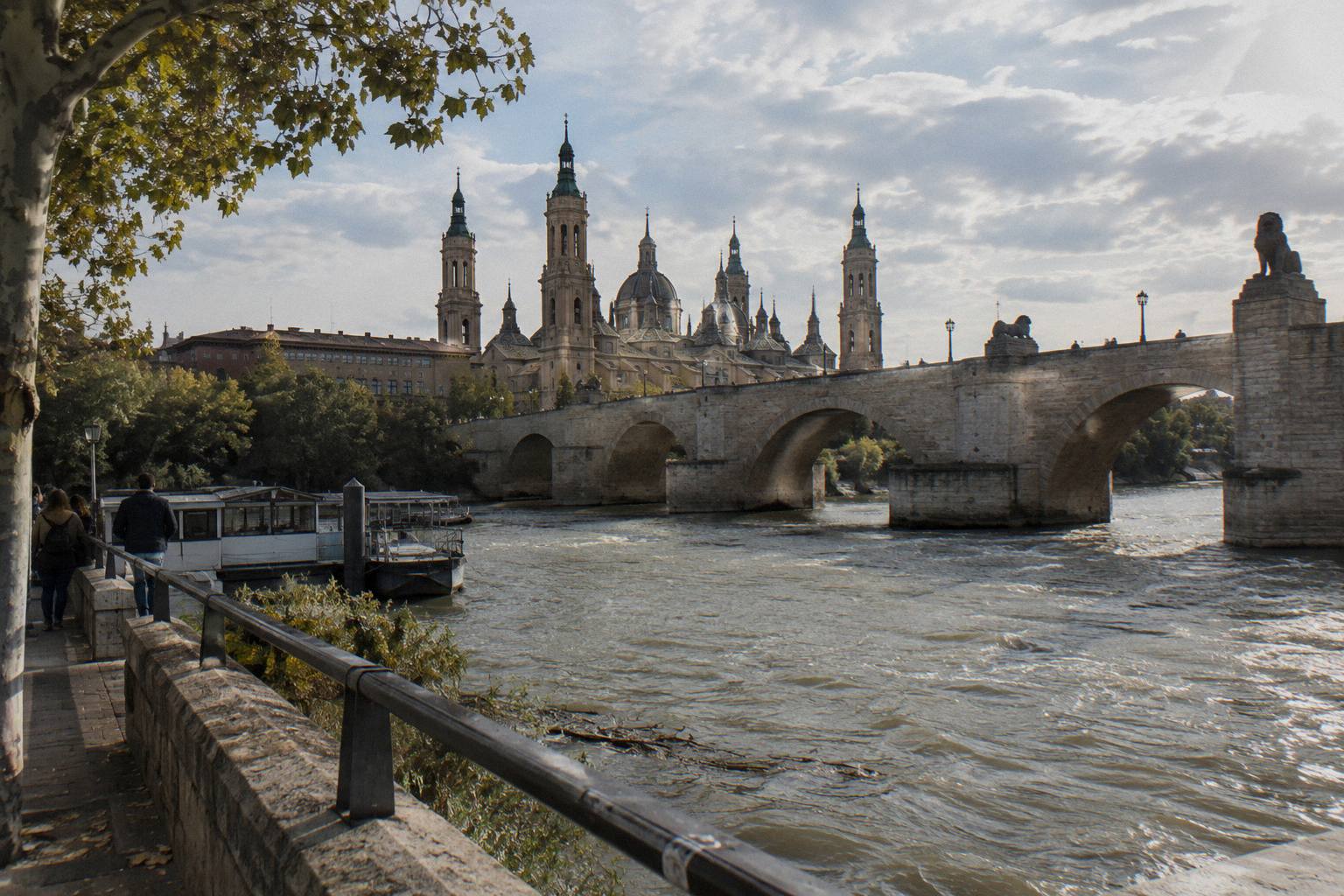
The Aljaferia is the one major paid stop that sits off the old-town core. Entry is ticketed at 7 EUR general, 9 EUR guided, 2 EUR for students, over 65s and youth card holders, with free entry for under 12s, large families, unemployed visitors and disability of 33 percent or more. Opening runs Mon-Sat 10:00-18:00 and Sun 10:00-14:00, last entry 45 minutes before close. Its free-day wording is printed ambiguously on the official sheet, so no free day is repeated here; the Aljaferia tickets guide explains what is confirmed.
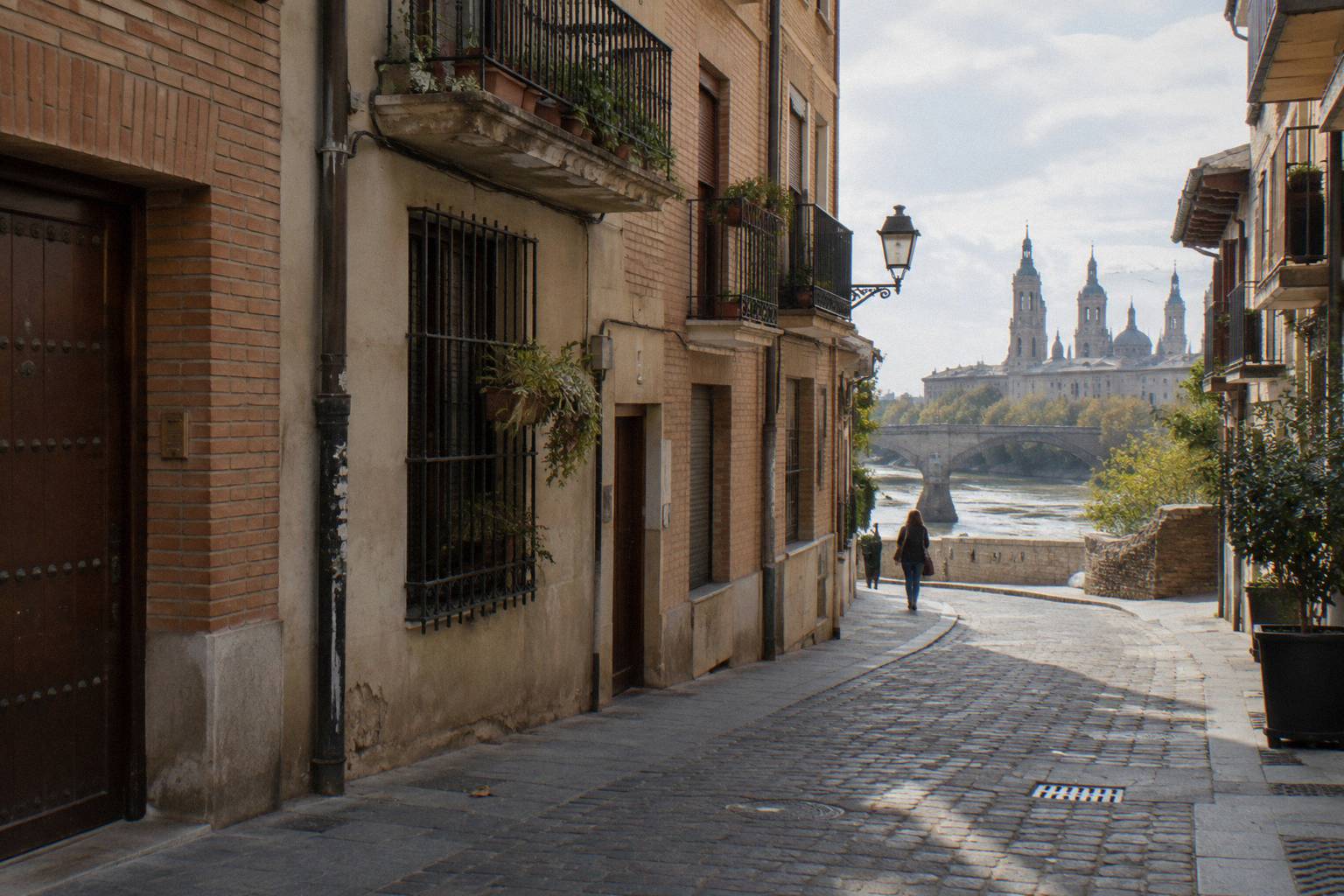
Other conditionally paid stops a route might brush past: the four Caesaraugusta museums (the Foro, Puerto Fluvial, Termas Publicas and Teatro) charge 3-4 EUR each but are free on the first Sunday of each month and always free for under 16s, teachers, unemployed visitors, disability over 33 percent and over 65s. The Museo del Origami is 3 EUR, free on the first Tuesday and first Sunday of the month. No walk on this site includes or enters any of these: a paid interior is always a separate ticket.
| Stop | General price | Who gets in free |
|---|---|---|
| Torre Mirador del Pilar | 6 EUR | Under 12s, disability over 50% |
| La Seo (with Museo de Tapices, Museo Pilarista) | 10 EUR | Under 12s; Aragon residents on the 5th, 10th, 17th, 24th |
| Aljaferia | 7 EUR | Under 12s, large families, unemployed, disability 33%+ |
| Museo del Origami | 3 EUR | First Tuesday and first Sunday of the month |
| Caesaraugusta museums (each) | 3-4 EUR | First Sunday of the month; under 16s always |
| Museo Goya Coleccion Ibercaja | 14 EUR | First Wednesday of the month; under 12s always |
Is Zaragoza A Walkable City?
Yes, Zaragoza is a walkable city for visitors, since the Plaza del Pilar, the Ebro bridges, the Roman walls, El Tubo, the Paseo de la Independencia and the Plaza de Espana link into one continuous walking circuit. Guided walks cover their ground on foot in under three hours, and no stop in the roster needs transport from the centre, except for the Aljaferia, which sits apart from the old town.
The evidence is in the walks. The Old Town Walk by Paseicos covers its ground in 2 hours on foot, meeting at the Statue of Caesar Augustus on Avenida de César Augusto. The Monumental Walk, listed on freetour.com by Paraguas Rojos, runs 1 hour 45 minutes and meets at the Plaza de la Seo, next to the facade of La Seo, rated 9.2 out of 10 across 65 freetour.com reviews. The longest, the Secrets, Legends and Photo Spots walk listed on freetour.com by Mystic Xperience, runs 2 hours 30 minutes and meets at El Caballito de la Lonja, Calle de Don Jaime I, rated 9.4 out of 10 across 78 freetour.com reviews. All three run in English and Spanish. Nobody designs a walking tour of ground that cannot be walked. The wider set of guides lives on Free Things To Do In Zaragoza.
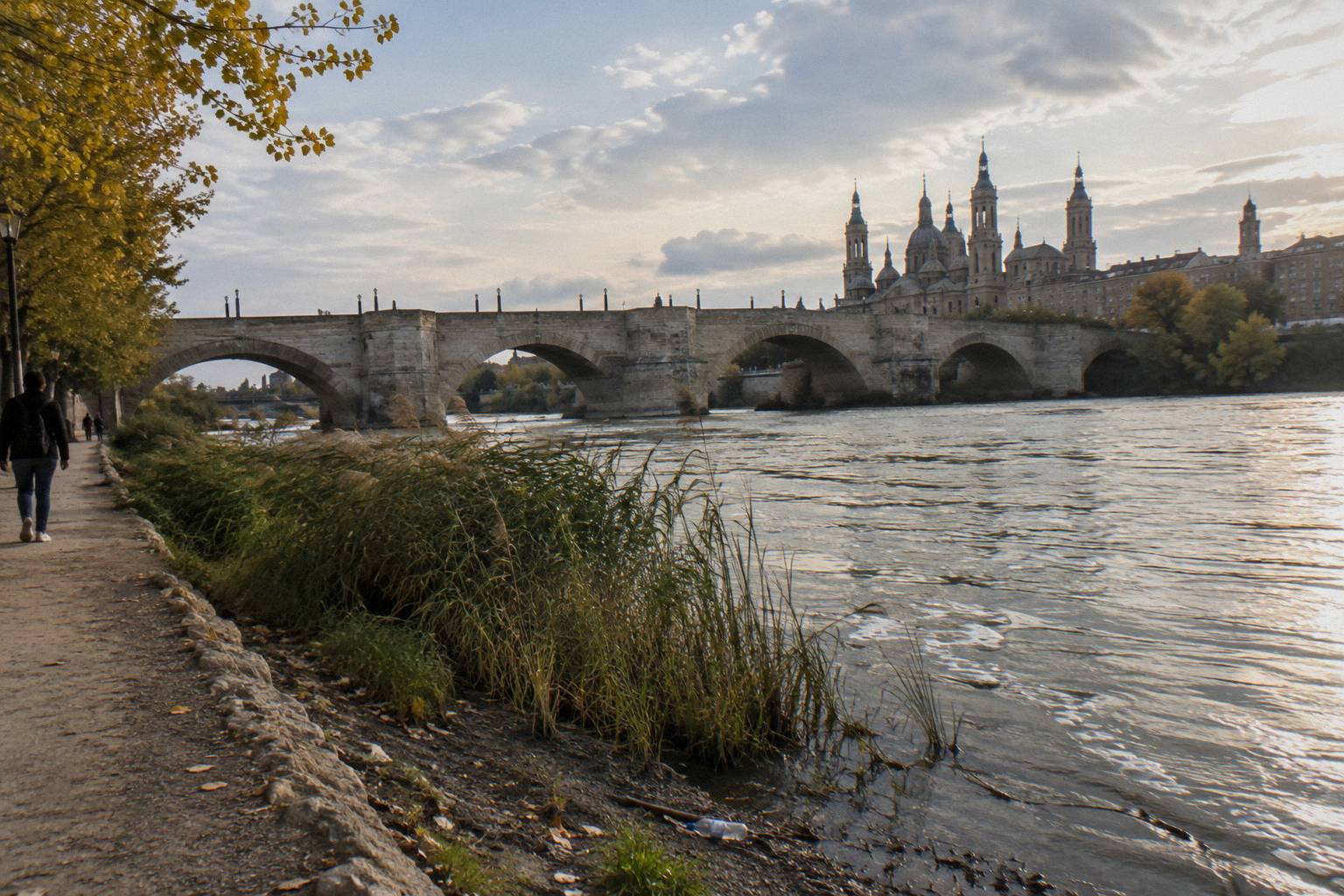
The free pieces reinforce it. The Puente de Piedra and the Puente de Hierro are pedestrian-accessible public bridges linking the two banks. The Paseo de la Independencia is a promenade built for walking. The Roman walls and the Puerta del Carmen are seen from the pavement. Even the riverside stretch toward the Pabellon Puente, the Zaha Hadid bridge, is free to walk across as a public footbridge, with only the Mobility City exhibition inside at 10 EUR (free on the first Wednesday of the month). The riverside walks and viewpoints guide maps that stretch.
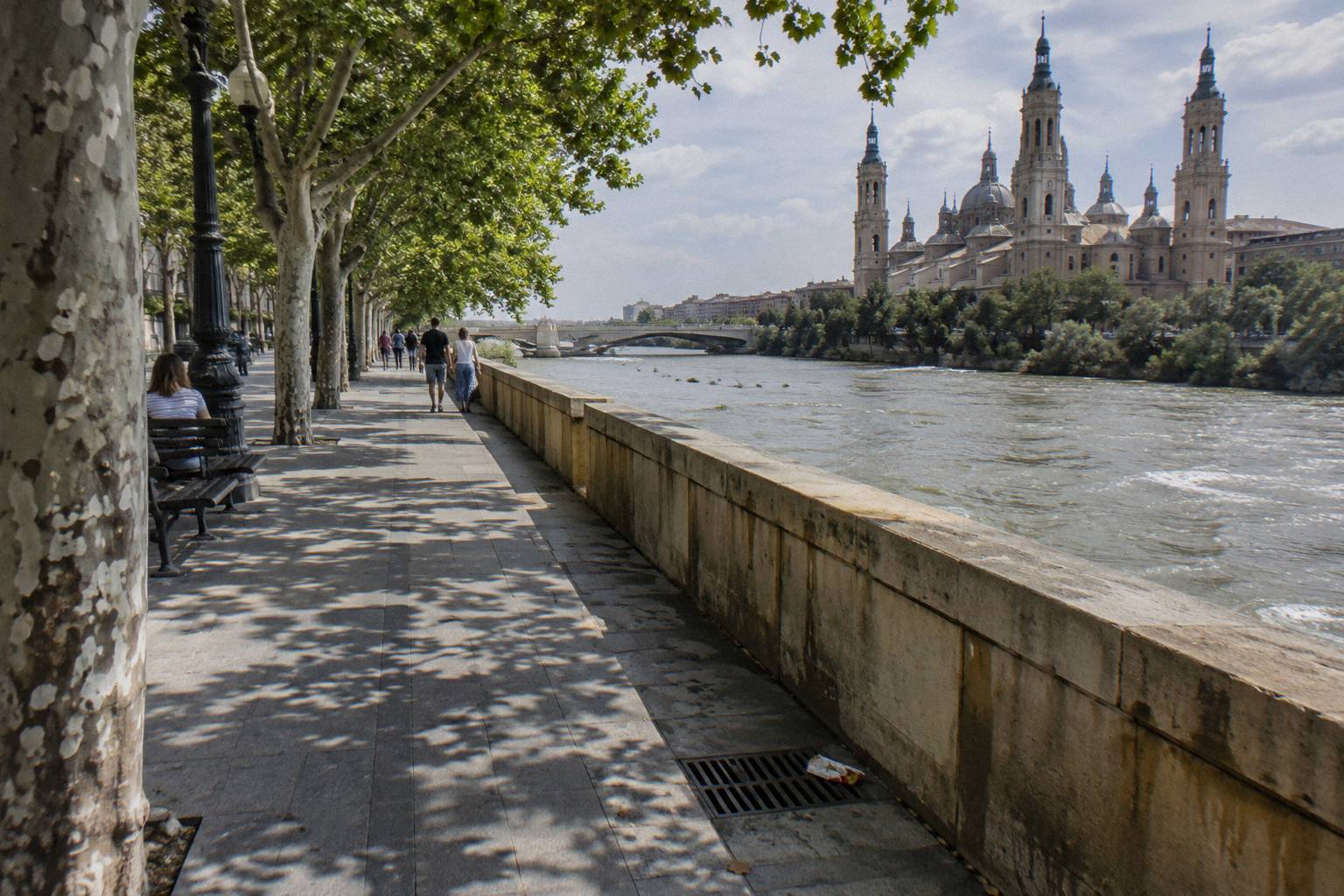
What the facts file does not support is advice on how to get around by bus, taxi or train, or walking times between distant points, and none of that is invented here. What it does state is the shape of the city: an old town strung along the Ebro, a square at its centre, bridges at either end and a promenade leading away from it. That shape is the reason a walking tour works, and it is also the reason the free list is so dense: most of the headline stops are exteriors, squares and streets, which are free by nature.
For anyone planning arrival logistics, the how to book a free tour guide collects the meeting points and the booking steps for all three English walks, and the day trip from Madrid on a budget guide covers fitting the route into a single day.

Where Can You Walk Without A Guide?
You can walk the entire free circuit without a guide: the Plaza del Pilar, the Roman walls, the Puerta del Carmen, both Ebro bridges, El Tubo, the Mercado Central, the Paseo de la Independencia and the free museums are all public or free-entry and need no booking. The Basilica temple is free to enter during its published hours. A guide adds stories and structure, not access.
Start at the Plaza del Pilar and work outward. The square itself, the La Lonja exhibitions inside it and the Basilica temple are all free. Walk east along the old town and the Roman walls of Caesaraugusta appear at street level. Continue to the Puerta del Carmen for the Roman gate. Loop back to the river, cross the Puente de Piedra for the view of the Basilica, return and drop into El Tubo for the lanes. That is a complete self-guided afternoon with zero admission, and the Roman Caesaraugusta free route and the El Tubo tapas streets walk each expand one half of it.
The Torreon de la Zuda adds a free indoor stop on this route: it is free, open Mon-Sat 10:00-14:00 and 16:30-20:00, Sun 10:00-14:00, with the Mirador de las cuatro culturas on its fifth floor and last entry 15 minutes before close. The free museums, the Centro de Historias, the IAACC Pablo Serrano and the Palacio de Sastago, each fit an hour and each has published hours in the table above. The official Zaragoza Turismo monuments sheet, referenced throughout this site's data, is the source for every hour printed here.
The case for a guide is not access but context. The 3 free walking tours in English (1 on GuruWalk, 2 on freetour.com) each add a layer: the Old Town Walk, Paseicos on GuruWalk, covers the old town and Pilar ground in 2 hours; the Monumental Walk by Paraguas Rojos on freetour.com runs 1 hour 45 minutes from the Plaza de la Seo; the Secrets, Legends and Photo Spots walk by Mystic Xperience on freetour.com runs 2 hours 30 minutes from El Caballito de la Lonja. All are free to join, pay what you want, reserved on their own platform. Whether a guide suits you is a fair question, and the free tour versus paid guided tour comparison and the review roundup of what travelers say work through it with real ratings.
Mistakes That Trip People Up At A Zaragoza Walking Tour
The classic mistakes are treating the free Basilica exterior as covering its tower, assuming La Seo's square makes the cathedral free, expecting the Aljaferia's free-day wording to be straightforward, and assuming a walking tour enters the monuments it passes. None of the 3 English walks includes a paid interior, and no walk on this site enters La Seo, the Aljaferia or the Torre Mirador. Each paid interior is a separate ticket bought on its own terms.
The first mistake is merging the free part with the paid part beside it. The Plaza del Pilar is free, the temple is free, but the Torre Mirador is 6 EUR and the Museo Pilarista sits in the 10 EUR La Seo ticket. The same pattern repeats at the Pabellon Puente, where the bridge is free to walk but Mobility City inside is 10 EUR. A route plan that budgets nothing for interiors is a route plan that skips them, which is a perfectly good choice, as long as it is a choice.
The second is stacking free days. The municipal Caesaraugusta museums, the Museo del Fuego y de los Bomberos and the Museo del Origami are free on the first Sunday of the month, the Origami also on the first Tuesday. The Ibercaja venues and Mobility City are free on the first Wednesday. La Seo is free only for residents of Aragon on the 5th, 10th, 17th and 24th of the month. There is no city-wide free day, so each attraction's condition has to be checked for the specific date of the walk.
The third is expecting the tour to include entry. A walk title that says monumental describes the ground, not the doors: no walk on the roster includes, enters or is free to enter any paid interior. The fourth is inventing routes: no walk has a verified route beyond its meeting point, so a reader should plan on the meeting point, the duration, the language and the neighbourhood, all of which are confirmed, rather than on a promised stop list. The GuruWalk page for the Old Town Walk and freetour.com's own pages for the other walks state what each walk covers.
The fifth is timing. Walk start times load dynamically on the walk pages and are never printed here, so the meeting point and the platform page are the two things to check before setting out. For the honest answer on what these walks cost in practice, are free walking tours really free covers it: every walk is free to join, pay what you want, freetour.com says tip based, and no amount is published on the GuruWalk or freetour.com pages.
Common Questions About A Zaragoza Walking Tour
What Stops Does A Zaragoza Walking Tour Cover?
The core stops are the Plaza del Pilar, the Basilica del Pilar, the Roman walls of Caesaraugusta, the Puente de Piedra, La Seo's square and El Tubo, with longer routes adding the Puerta del Carmen, the Mercado Central and the Paseo de la Independencia. Only each walk's own page states what it covers; the meeting point, duration and language are confirmed for all three English walks.
Which Stops On The Route Are Free?
The squares, bridges, Roman remains and El Tubo streets are free public space, entry to the Basilica temple is free, and the Centro de Historias, IAACC Pablo Serrano, La Lonja exhibitions and Torreon de la Zuda are free museums on the route. The Torre Mirador at 6 EUR, La Seo at 10 EUR and the Aljaferia at 7 EUR are separate paid tickets.
Does A Free Walking Tour Enter La Seo Or The Aljaferia?
No. No walk on this site includes, enters or is free to enter any paid interior, including La Seo, the Aljaferia and the Torre Mirador. A walk title that says monumental describes the ground, not the doors. Every paid interior is a separate ticket on its own terms.
Is Zaragoza Easy To Cover On Foot?
Yes. The old town, the Ebro bridges, El Tubo and the Paseo de la Independencia link up in one walking circuit, and the three English walks cover their ground in 1 hour 45 minutes to 2 hours 30 minutes on foot. The Aljaferia sits apart from the old-town core.
Can You Walk Zaragoza Without A Guide?
Yes. Every free stop on the route is public space or free entry, so the circuit needs no booking and no guide. The guided walks add context rather than access; the Old Town Walk by Paseicos on GuruWalk, rated 4.96 out of 5 across 591 GuruWalk reviews, is one option among the 3 free walking tours in English.
What Does A Free Walking Tour Cost?
Nothing to join. Every walk on this site is free, pay what you want, and freetour.com says tip based. No amount is published on the GuruWalk or freetour.com pages, and the reader decides. Ticket prices like the 6 EUR tower lift belong to the monuments, not to any walk.