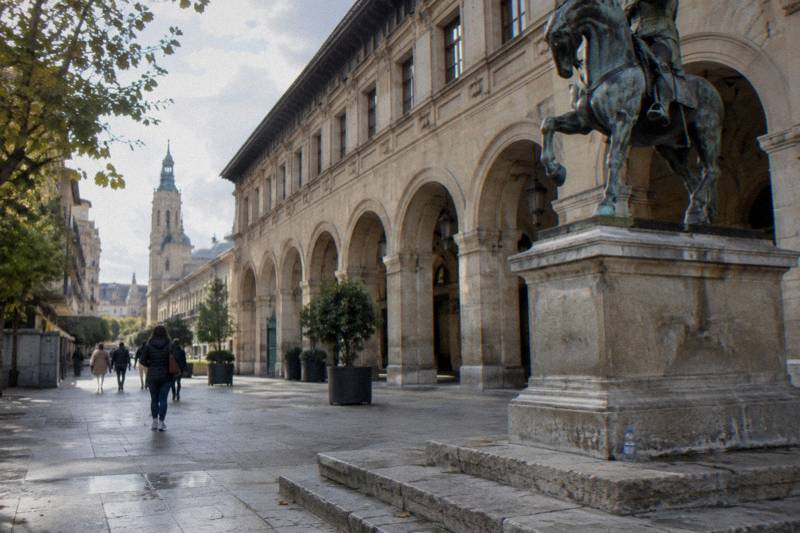
Zaragoza In Winter: Free Things To Do, Christmas Lights And Weather
Free winter activities in Zaragoza, what the verified facts say about cold-season hours, and how the free walking tours fit a short-day visit.
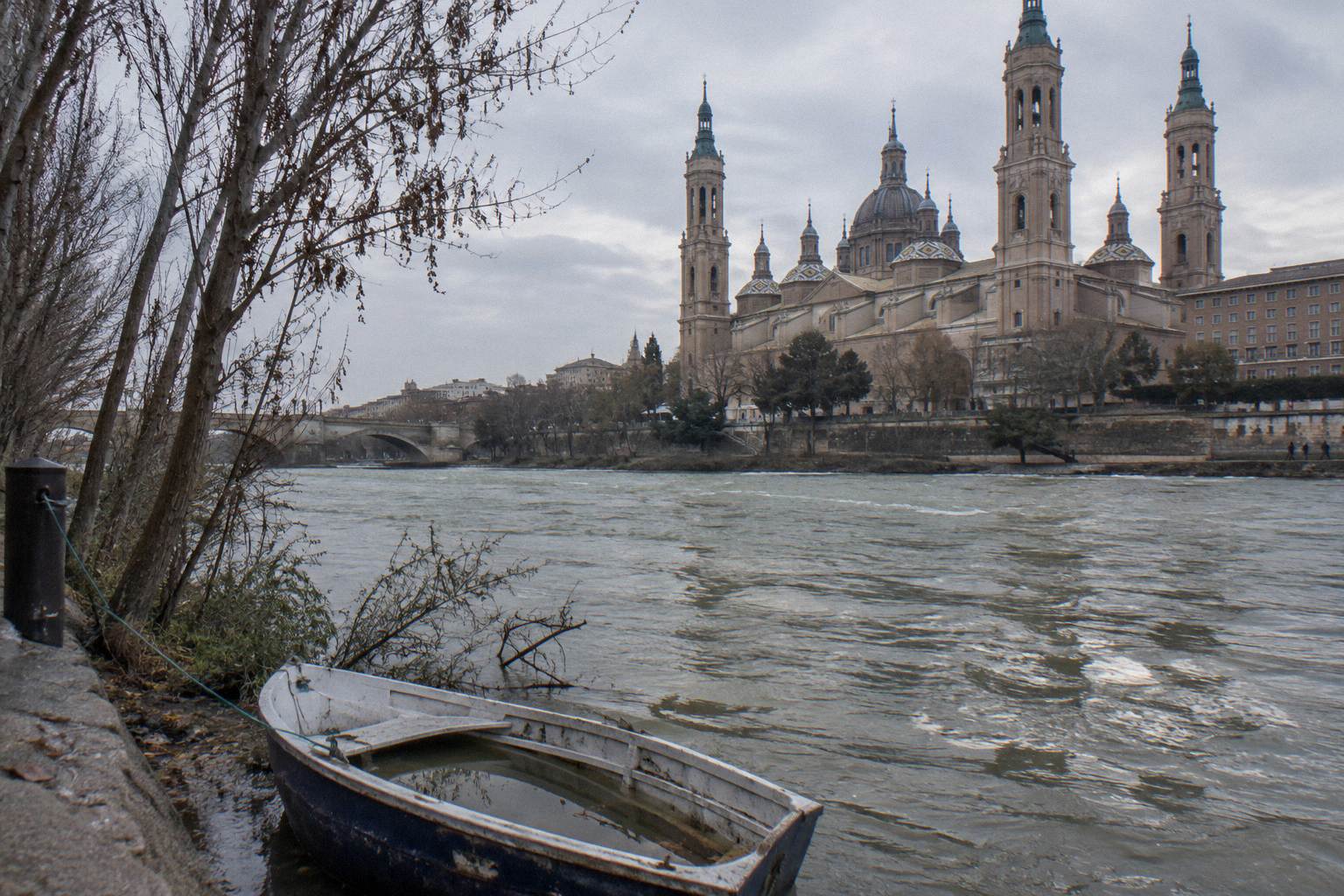
In Short
Zaragoza in winter costs almost nothing to enjoy. The Plaza del Pilar, the Puente de Piedra, the Puente de Hierro, the Roman walls of Caesaraugusta and the Puerta del Carmen are all free public spaces, open without a ticket. The Centro de Historias, IAACC Pablo Serrano, La Lonja exhibitions, the Palacio de Sastago exhibitions, the Sala de Etnologia y Ceramica and the Museo de Zaragoza are free museums. There are 3 free walking tours in English (1 on GuruWalk, 2 on freetour.com), every one free to join, pay what you want.
This question sits inside the free museums and free entry days guide.
What Is Free To Do In Zaragoza In Winter?
Most of Zaragoza's headline public spaces are free in winter, from the Plaza del Pilar, the Puente de Piedra and the Roman walls of Caesaraugusta to El Tubo, the Mercado Central and the Parque Grande Jose Antonio Labordeta. Entry to the Basilica del Pilar temple is free too, alongside six always-free museums and exhibition halls and 3 free walking tours in English (1 on GuruWalk, 2 on freetour.com).
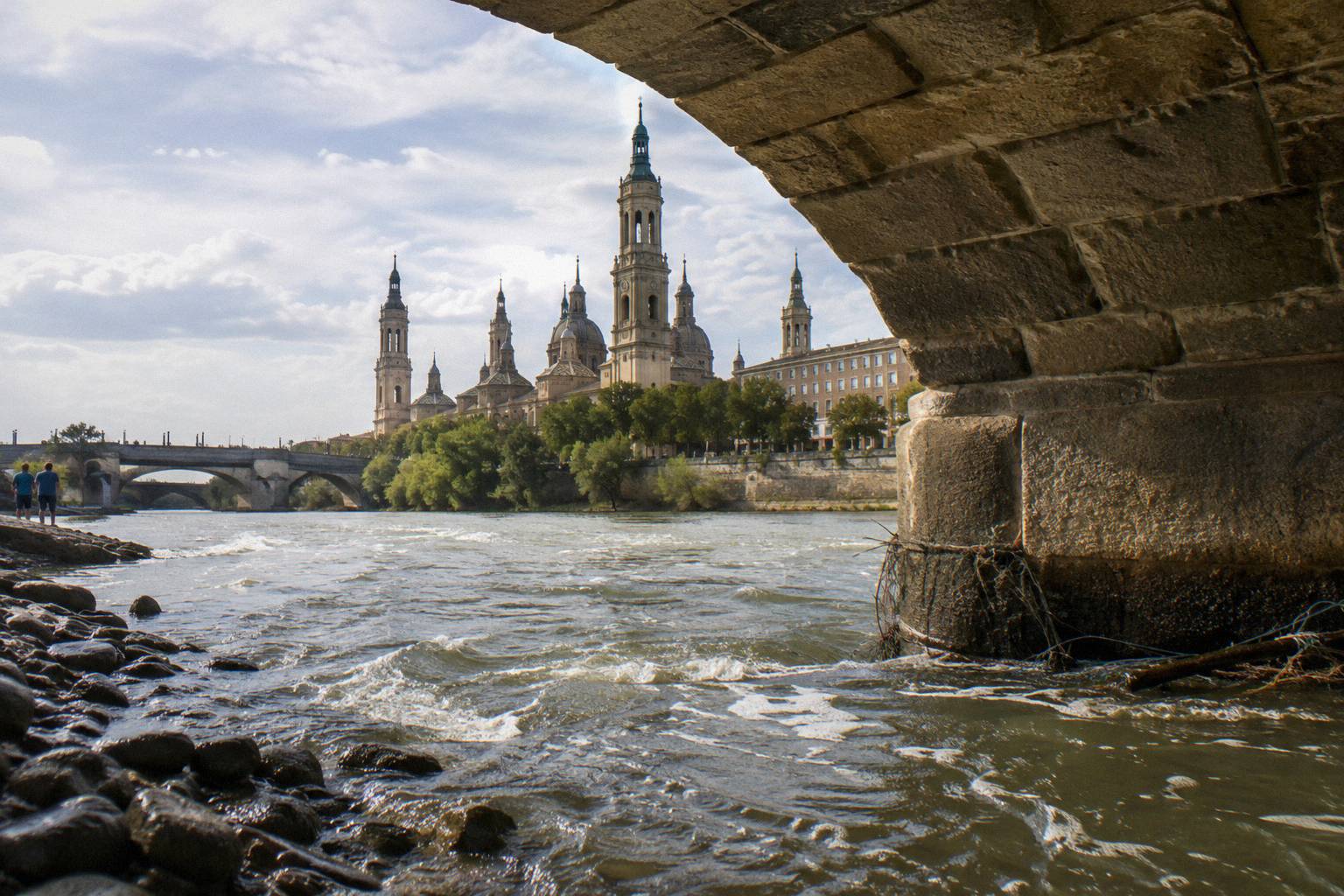
Winter changes very little of that, because almost none of it charges in summer either. The city's free core is public ground: squares you cross without thinking, two Ebro bridges you can walk end to end, Roman wall fragments standing at street level, and a stone gate on a public avenue. The parks are free to enter year round in the sense the records state: public park, free to enter. No season passes, no winter surcharge, no gate.
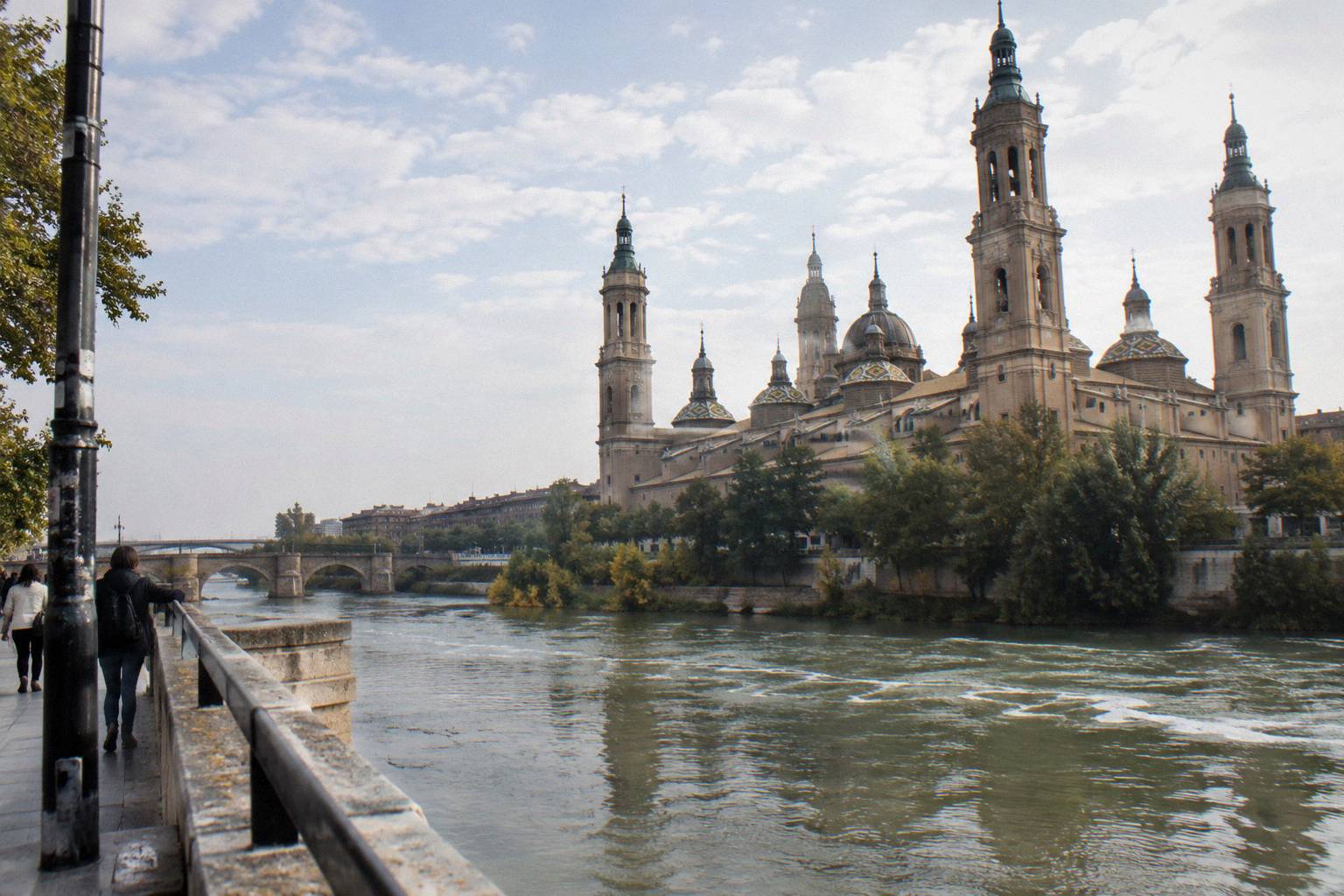
The walking tours are the same deal in December as in July. Every one of the three English walks is free to join, pay what you want, reserved on GuruWalk or freetour.com. The Old Town Walk by Paseicos is listed on GuruWalk, runs 2 hours, meets at the Statue of Caesar Augustus on Avenida de César Augusto 115, and is rated 4.96 out of 5 across 591 GuruWalk reviews. The Free Monumental Tour of Zaragoza, listed on freetour.com and provided by Paraguas Rojos, meets at the Plaza de la Seo next to the facade of La Seo and runs 1 hour 45 minutes.
The third walk fits a winter afternoon especially well. Unforgettable Zaragoza Free Tour: Secrets, Legends and Photo Spots, listed on freetour.com and provided by Mystic Xperience, runs 2 hours 30 minutes in English and Spanish and meets at El Caballito de la Lonja on Calle de Don Jaime I. It is rated 9.4 out of 10 across 78 freetour.com reviews, and it is free to join, pay what you want.
What is not free sits beside what is, and the pairs are worth keeping straight before you plan a day. The table below separates the free part from the paid part of each pairing, using the euro figures exactly as the official records state them.
| Free part | Paid part beside it |
|---|---|
| Basilica del Pilar temple entry, free | Torre Mirador del Pilar 6 EUR; Museo Pilarista inside the 10 EUR La Seo ticket |
| Pabellon Puente bridge, free to walk | Mobility City inside 10 EUR |
| Centro de Historias, free | Museo del Origami under the same roof 3 EUR |
| Plaza del Pilar and Plaza de la Seo, free | La Seo general ticket 10 EUR |
| Parque del Agua, free to enter | Acuario de Zaragoza 20 EUR |
A winter plan built only on the left column is a full plan: one square into the Basilica temple, one bridge loop, one museum morning, one walk. The right column exists for the days you want it, and nothing on this page depends on it.
How Cold And Windy Does It Get?
No temperature, wind or rainfall figure for Zaragoza appears in the verified facts behind this site, so this page prints none of them. What the records do show is the practical shape of a winter day: several attractions run split opening windows with a midday closure, and the Basilica's main altar area keeps separate morning and evening windows. Plan around opening windows rather than around a forecast.
That answer is deliberately narrower than the question. Plenty of pages will tell you a city is cold in January; almost none of them tell you which door closes at two in the afternoon. The verified data for Zaragoza is strong on the second point and silent on the first, and a planning page should be honest about which is which.
What the hours actually show is a city that runs on a split day for much of the year, not only in winter. The IAACC Pablo Serrano opens 10-14 and 17-21 Tuesday to Saturday. The Centro de Historias opens 10-14 and 17-21 Tuesday to Saturday, 10-14:30 on Sundays and holidays. La Lonja and the Palacio de Sastago keep their own windows, and the municipal Caesaraugusta museums run 10-14 and 17-21 Tuesday to Saturday, 10-14:30 on Sundays and holidays. A cold snap therefore matters less than a diary: an indoor morning, an outdoor walk in the early afternoon, an indoor evening.
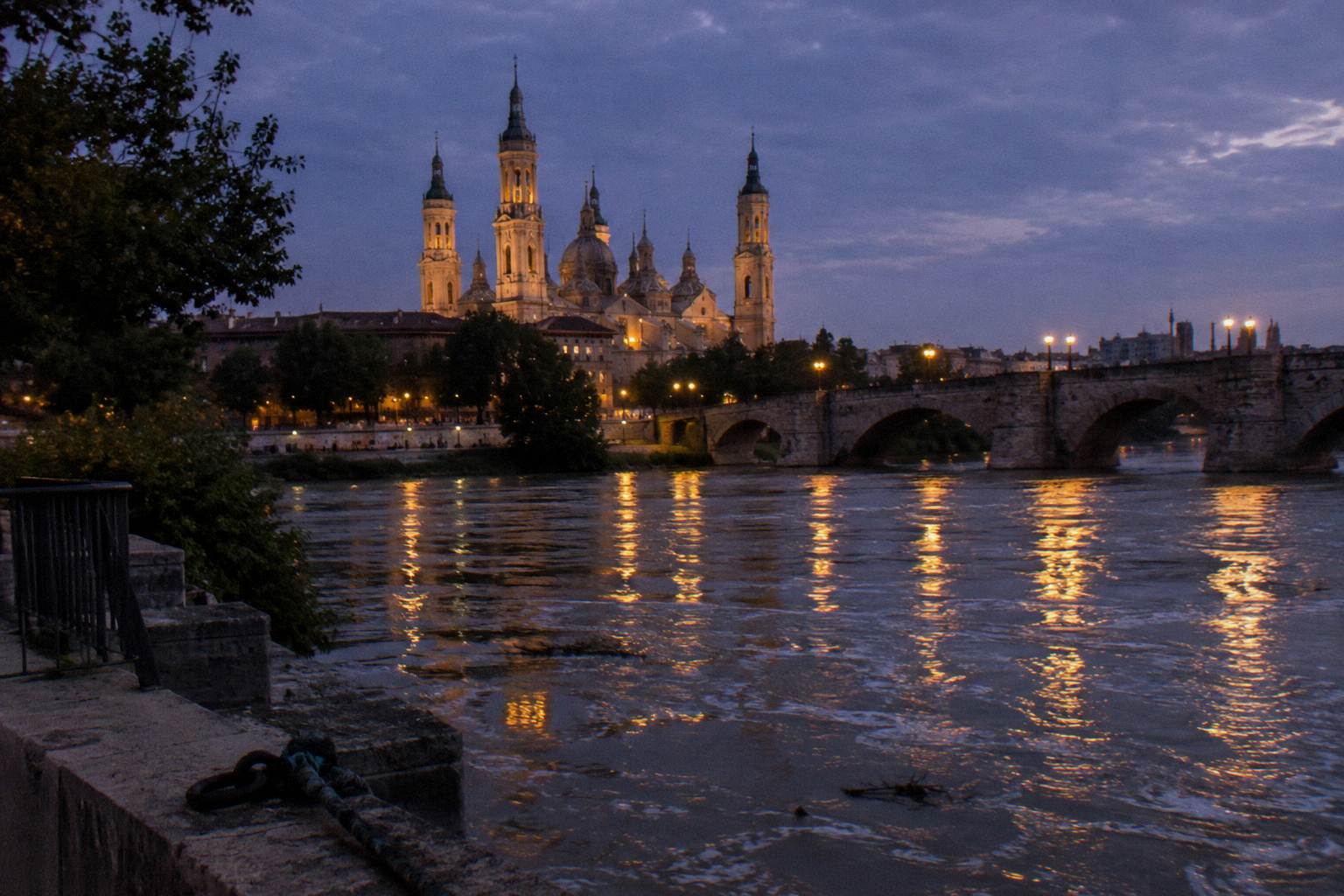
The Basilica del Pilar temple, free to enter, keeps its own rhythm: the Santa Capilla 8:00-20:30, the main altar area Monday to Saturday 7:30-13:30 and 16:30-20:15, Sunday 7:30-13:30 and 16:30-21:30, with Saturday weddings shortening the day. Those windows are the reason the temple works as a winter stop: it opens early and stays open late, whatever the light outside is doing.
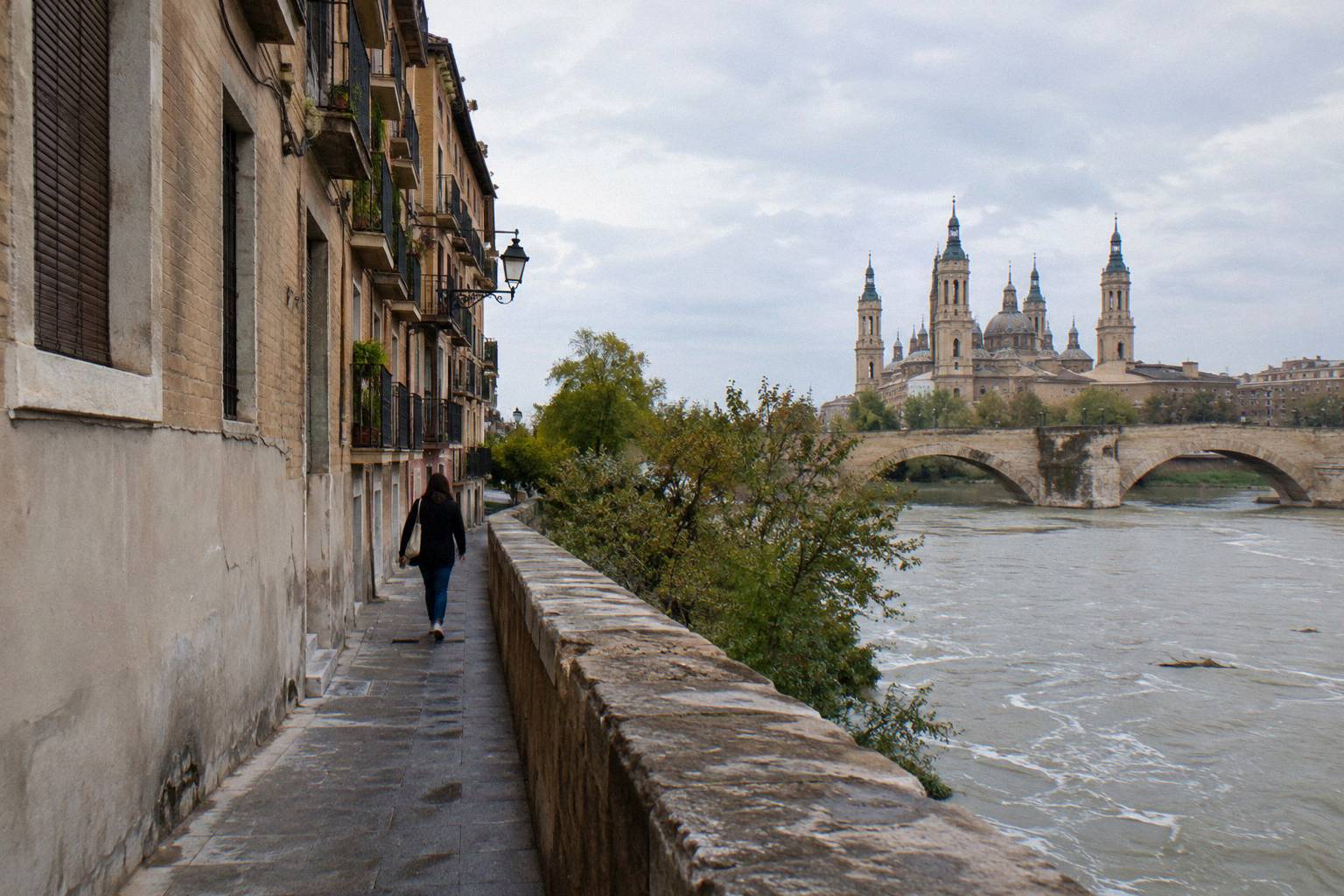
For outdoor time, the records confirm the spaces and nothing about conditions: the Puente de Piedra and the Puente de Hierro are public bridges over the Ebro, always open; the Roman walls of Caesaraugusta are street-level remains, always visible from the public street; the Puerta del Carmen is a public monument on a street, always visible. None of them has hours, none of them has a ticket, and none of them can be closed by weather in any sense a booking would notice.
If a cold day pushes you toward a guided walk rather than a self-guided loop, the winter-friendly option among the three English walks is the longest one, since it fills an afternoon without any ticket. Unforgettable Zaragoza Free Tour: Secrets, Legends and Photo Spots, listed on freetour.com, runs 2 hours 30 minutes in English and Spanish, meets at El Caballito de la Lonja on Calle de Don Jaime I, and is free to join, pay what you want. Its sibling walk, the GuruWalk Old Town tour, is covered in detail in how to book a free tour in Zaragoza.
Which Free Indoor Places Help On Cold Days?
Six indoor venues in Zaragoza are free without conditions: the Centro de Historias, the IAACC Pablo Serrano, the exhibition halls of La Lonja and the Palacio de Sastago, the Sala de Etnologia y Ceramica in the Parque Grande, and the Museo de Zaragoza on the Plaza de los Sitios. Check the museum's opening hours before you go. The Aljaferia is ticketed at 7 EUR general, free for under 12, large families, unemployed and disability 33 percent or more.
That is the honest indoor map. Five of the six you can walk into on any ordinary opening day, and the sixth, the Museo de Zaragoza, is listed free on the municipal facility page with hours the data does not confirm, so check its own page before committing a morning.
The Centro de Historias is the workhorse of a cold weekday: free, open Tuesday to Saturday 10-14 and 17-21, Sunday and holidays 10-14:30, with exhibitions running to 10 January. Under the same roof sits the Museo del Origami, which is 3 EUR general and free only on the first Tuesday and first Sunday of each month. Two venues, one door, two different prices, and a single sentence that treats both as free would be wrong.
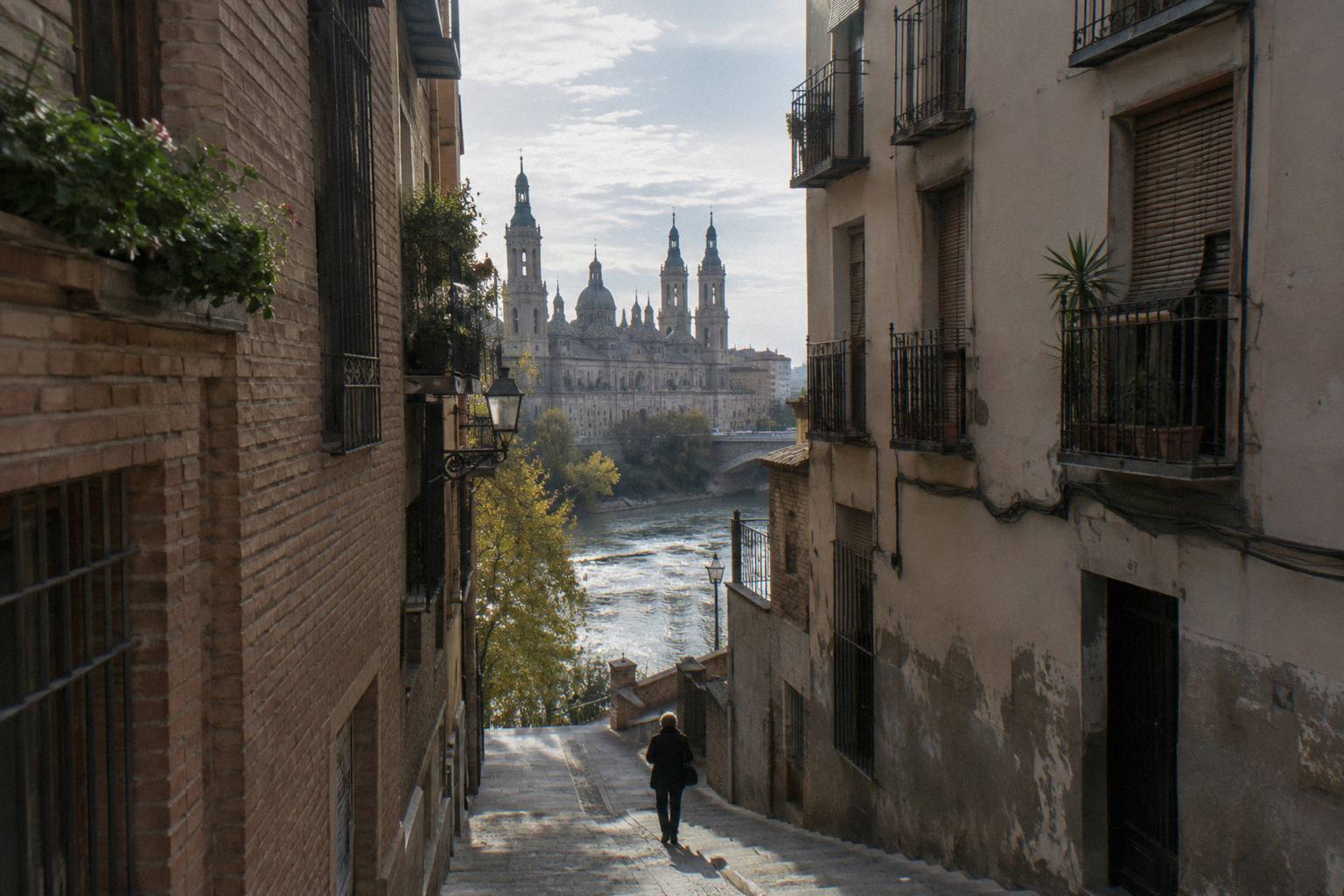
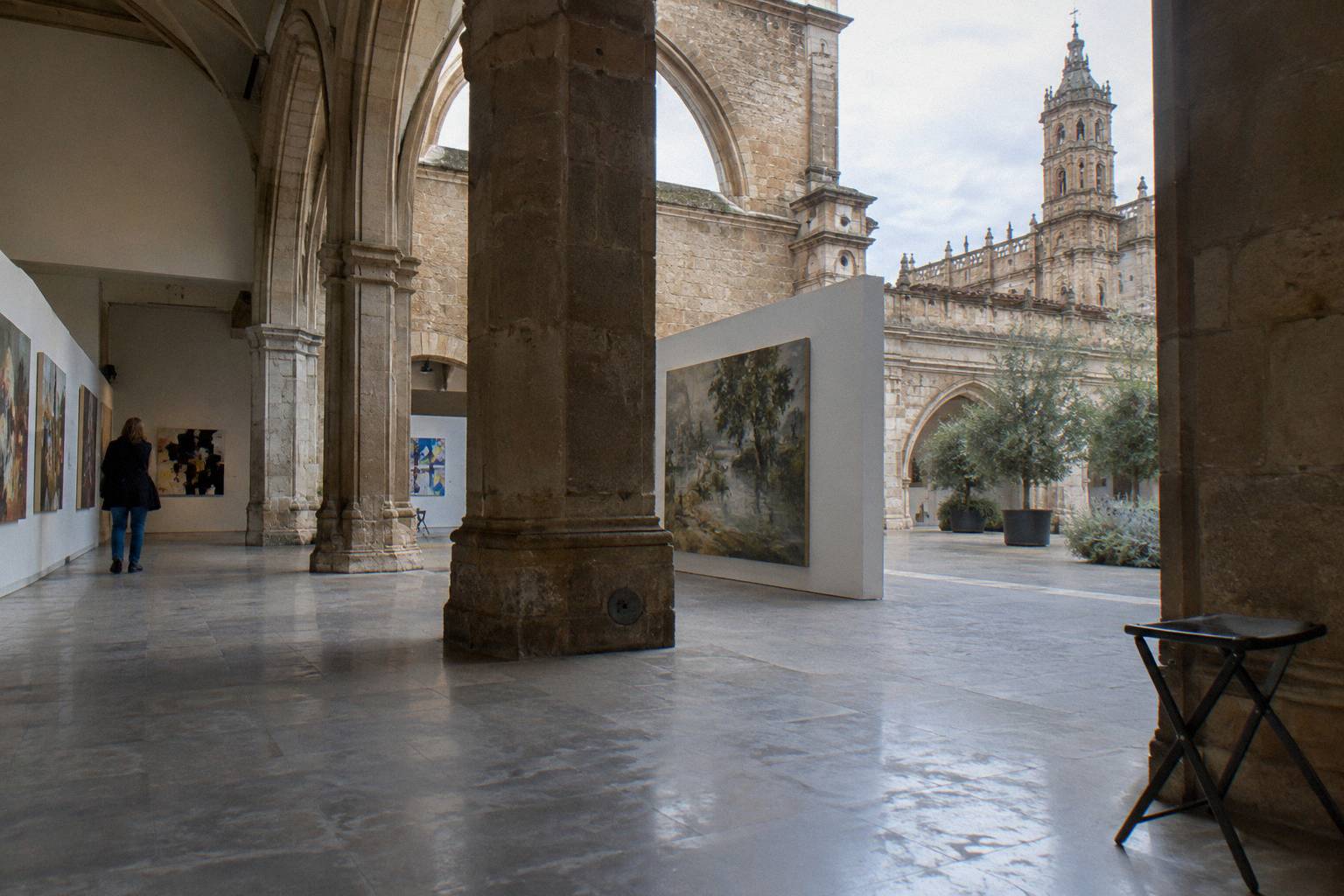
The IAACC Pablo Serrano keeps the same split day, 10-14 and 17-21 Tuesday to Saturday, 10-14 on Sundays and holidays. The Palacio de Sastago opens 11-14 and 18-21 Tuesday to Saturday, 11-14 on Sundays and holidays, with the current show running to 31 January. La Lonja, right in the old town, is free with its current show opening 19 November and running to 24 January, so a winter visit lands squarely inside an exhibition season at all three halls.
| Free indoor venue | Opening window | Notes |
|---|---|---|
| Centro de Historias | Tue-Sat 10-14 and 17-21, Sun 10-14:30 | Free; Museo del Origami inside is 3 EUR, free first Tuesday and first Sunday |
| IAACC Pablo Serrano | Tue-Sat 10-14 and 17-21, Sun 10-14 | Free |
| La Lonja exhibitions | Free; current show 19 Nov to 24 Jan | Exhibition hall |
| Palacio de Sastago exhibitions | Tue-Sat 11-14 and 18-21, Sun 11-14 | Current show to 31 Jan |
| Sala de Etnologia y Ceramica | Tue-Sat 10-14 and 17-20, Sun 10-14 | Free, in the Parque Grande |
| Museo de Zaragoza | Hours not confirmed | Listed free on the municipal page |
The Aljaferia deserves its own paragraph because it is the one winter indoor sight people most often get wrong. The palace is ticketed: 7 EUR general, 9 EUR guided, 4 EUR with the tourist bus, 2 EUR for students, over 65s and youth card holders, and free for under 12, large families, unemployed visitors and disability of 33 percent or more, open Monday to Saturday 10-18 and Sunday 10-14 with last entry 45 minutes before closing. The official sheet also prints a free-day line whose wording is ambiguous, and because it is ambiguous this page prints no Aljaferia free day at all. What the palace costs, and who gets in free, is covered fully in Aljaferia tickets, opening hours and who gets in free.
If the indoor list and the walking tours are both in your plan, the pairing that needs the least coordination is the Plaza de la Seo meeting point of the freetour.com Monumental walk with a free exhibition at La Lonja, which sits in the same old-town block. The Monumental walk, provided by Paraguas Rojos, runs 1 hour 45 minutes, is rated 9.2 out of 10 across 65 freetour.com reviews, and is free to join, pay what you want.
A cold-day itinerary can therefore be built entirely from verified free pieces: a morning museum with a split-day window, the Basilica temple in its free hours, an afternoon walk reserved on GuruWalk or freetour.com, and a bridge at dusk, which costs nothing and closes never. None of that requires a forecast, a ticket or a reservation except the walk itself.
When Do The Christmas Lights Switch On?
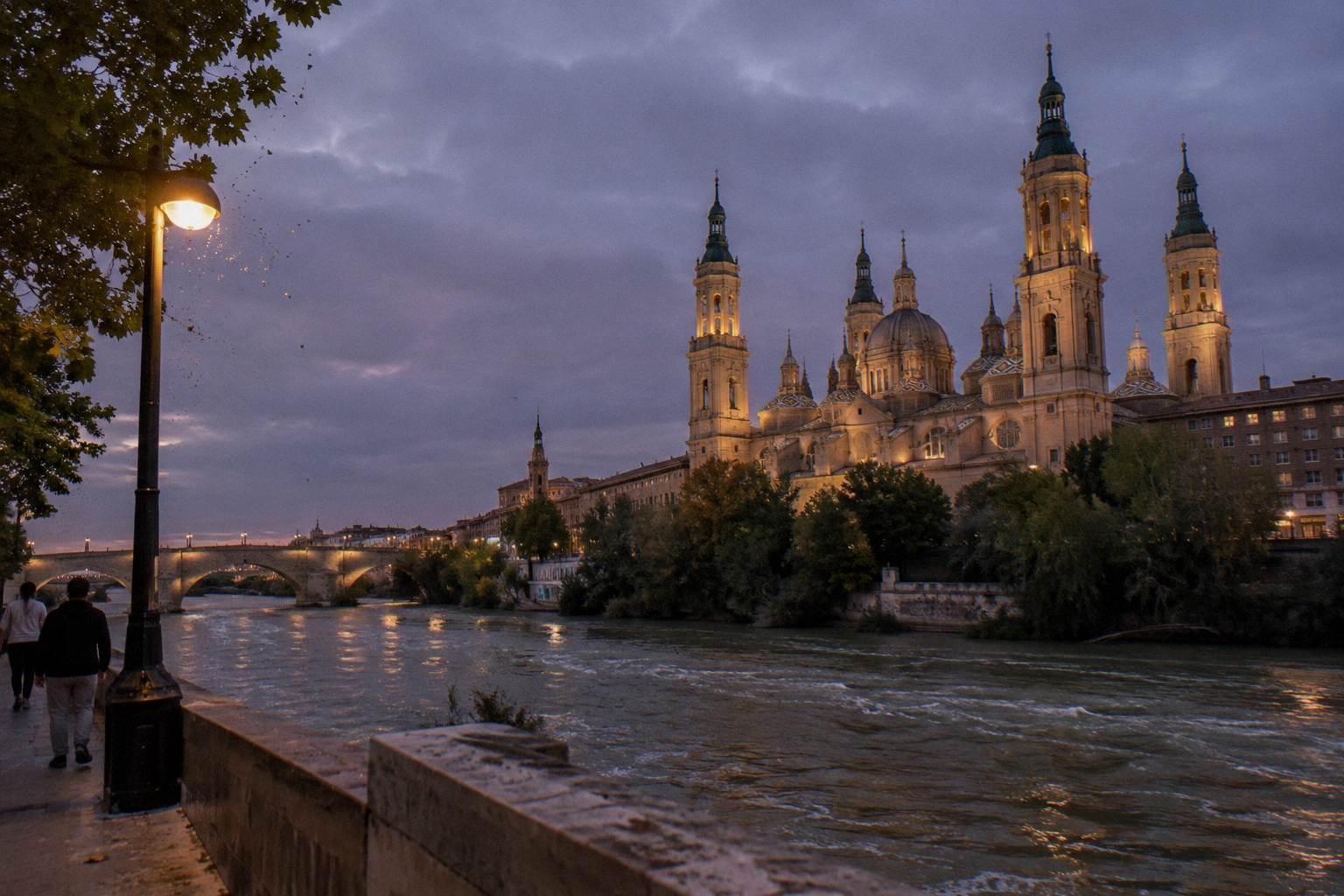
Zaragoza has no verified switch-on date for its Christmas lights; the city sets the date each year, so treat any schedule as announced locally rather than fixed. The displays hang over the Plaza del Pilar, the Plaza de Espana and the Paseo de la Independencia, public spaces that cost nothing to enter whenever the lights come on.
That is a careful answer to a simple question, and the care is the point. Seasonal displays move every year, and a page that printed a fixed date would be wrong within twelve months. What can be stated without a date is the underlying structure: those three spaces are public square, public square and public promenade, always open, free, and no light display changes that.
Winter also carries the city's two big free street events in the wider season, and the same rule applies to both. The Fiestas del Pilar, whose Ofrenda de flores on 12 October and most street events are free to watch, run on dates set each year, and some concerts are ticketed. Semana Santa processions are free to watch on public streets, with dates set each year. Neither belongs to deep winter in every year, and neither has a confirmed date this page can print.
What winter does offer is exhibition seasons rather than festivals. The Centro de Historias runs exhibitions to 10 January, La Lonja's current show runs 19 November to 24 January, and the Palacio de Sastago's runs to 31 January. If the lights are the reason for the trip and the date is uncertain, the exhibitions are the certain part of the same visit, and all three halls are free.
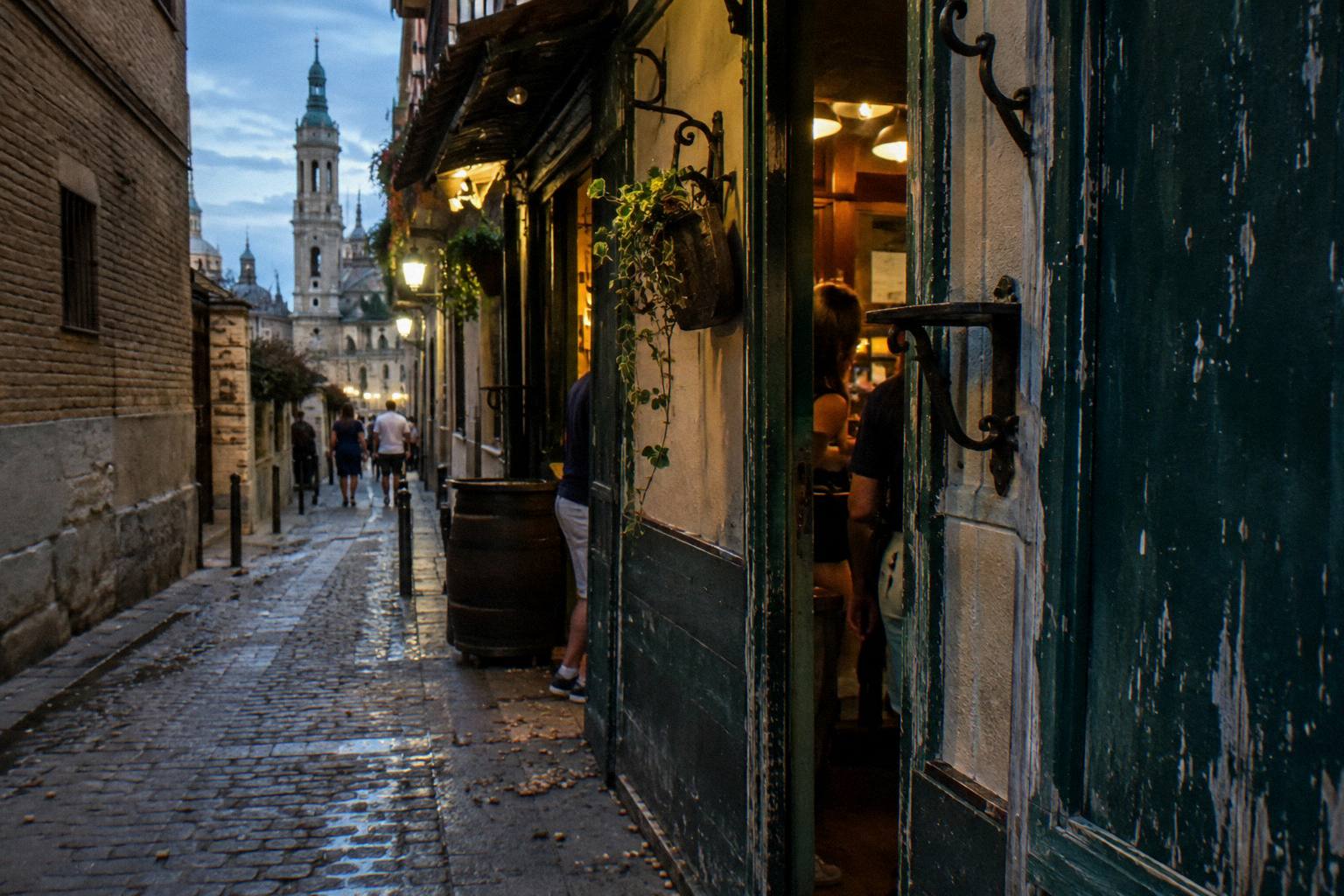
The Mercado Central belongs in any winter-visit list as well: entry to the covered market is free, with food purchases paid, so check the opening hours before going far out of your way. El Tubo, the old-town tapas streets, is free to walk with food and drinks paid, and it sits inside the same loop as the Lonja and the Plaza de la Seo, which makes it the natural evening half of a cold day.
For visitors weighing the walks against the lights, one practical note from the roster: all three English walks meet outdoors, at the Statue of Caesar Augustus, at the Plaza de la Seo, and at El Caballito de la Lonja, and each runs between 1 hour 45 minutes and 2 hours 30 minutes. A full listing of meeting points and booking mechanics is in free walking tour routes, stops and guides.
Which Sights Change Their Hours In Winter?
The sights that genuinely vary by day of week rather than by season include the Basilica del Pilar's main altar area, which runs different Sunday hours and shorter Saturday hours when weddings occur, and the Torre Mirador del Pilar, which keeps different windows on weekdays than weekends. The free venues mostly hold one timetable across the week, and the Museo de Zaragoza and the Mercado Central have hours the data does not confirm.
The distinction matters because almost nothing in the verified records is labelled a winter schedule. What the records show is weekly rhythm, and a visitor in December reads the same lines as a visitor in June. The trap is assuming Sunday works like Saturday, and at several venues it does not.
The Torre Mirador del Pilar is the clearest example, and it is a paid one: 6 EUR general, with reduced prices for over 65s, disability over 33 percent, Zaragoza residents, ages 13-18, under 26 with a youth card or student card and groups of 20 or more, free under 12 and disability over 50 percent, open Monday to Thursday 10:30-14:00 and 15:00-19:30 with different Friday-to-Sunday windows on its own page. The tower is the paid part of the Basilica pairing; the temple below it is free, and its hours are listed in the section above.
| Sight | Free or paid | What varies by day |
|---|---|---|
| Basilica del Pilar temple | Free | Main altar area Mon-Sat 7:30-13:30 and 16:30-20:15, Sun 7:30-13:30 and 16:30-21:30; Saturday weddings shorten the day |
| Torre Mirador del Pilar | 6 EUR general | Mon-Thu 10:30-14:00 and 15:00-19:30, different Fri-Sun windows |
| Aljaferia | 7 EUR general | Mon-Sat 10-18, Sun 10-14, last entry 45 min before close |
| Centro de Historias | Free | Tue-Sat 10-14 and 17-21, Sun 10-14:30 |
| Torreon de la Zuda | Free | Mon-Sat 10-14 and 16:30-20, Sun 10-14 |
| La Seo | 10 EUR general | Free for Aragon residents on the 5th, 10th, 17th and 24th of the month |
The Torreon de la Zuda is the free counterweight to the paid tower: it holds a tourist office and the Mirador de las cuatro culturas on its 5th floor, is open Monday to Saturday 10-14 and 16:30-20 and Sunday 10-14 with last entry 15 minutes before closing, and costs nothing. For a winter visitor who wants a view without the 6 EUR tower ticket, the Zuda is the verified free option, and its hours are the thing to plan around.
The municipal Caesaraugusta museums, the Foro, the Puerto Fluvial, the Termas Publicas and the Teatro, are conditional rather than free: 3 to 4 EUR general, free on the first Sunday of each month, and free always for under 16, teachers, unemployed visitors, disability of 33 percent or more and over 65s, opening 10-14 and 17-21 Tuesday to Saturday and 10-14:30 on Sundays and holidays. A winter Sunday that happens to be the first of the month turns four paid ruins into four free ones, and only that specific alignment does it.
Two churches carry winter-relevant conditions from the same official sheet. The Iglesia de San Pablo is 4 EUR general and free only on Mondays 18:00-19:00 during worship hours. The Iglesia de la Magdalena is free to enter during worship, with guided visits at 8 EUR on Thursday and Saturday at 11:00 booked through the Alma Mater museum. Neither is simply free, and neither should be written into a plan as if it were.
Mistakes That Trip People Up At Zaragoza In Winter
The winter mistakes in Zaragoza are assuming one free label covers a whole site and one free day covers the whole city. The Basilica temple is free but the Torre Mirador costs 6 EUR, the Centro de Historias is free but the Origami museum costs 3 EUR outside its two free days, and municipal museums' first-Sunday rule is not the Ibercaja venues' first-Wednesday rule, so planning around a generic free day means paying for a stop.
The first mistake is merging the free-pair sites. The Parque del Agua is free to enter, and the Acuario de Zaragoza inside the wider Expo site is 20 EUR general, 14 EUR for children 4-14, seniors and visitors with a disability, 17 EUR for youth card, students and large-family adults, with free entry only for ages 0-3. A winter family walk in the park and a winter aquarium visit are two different budgets, and only the first is on this page's side of the ledger. The same split applies to the Pabellon Puente, free to walk, and Mobility City inside it at 10 EUR.
The second mistake is trusting a free day that belongs to somebody else. The first Sunday of the month frees the municipal Caesaraugusta museums, the Museo del Fuego y de los Bomberos and the Museo del Origami. The first Wednesday frees the Ibercaja venues, the Museo Goya Coleccion Ibercaja at 14 EUR otherwise, and the Patio de la Infanta at 3 EUR otherwise, and also Mobility City. La Seo's free days, the 5th, 10th, 17th and 24th, apply only to residents of Aragon. These are three different calendars, and stacking them into a single free day for the city is how a 10 EUR cathedral ticket arrives as a surprise.
The third mistake is printing an Aljaferia free day from memory. The official wording is ambiguous, this site does not publish it, and a visitor who plans a palace visit around a remembered Sunday risks a 7 EUR ticket and a wasted trip. The safe plan is the ticket price, the free groups, and the palace's own hours, all stated above.
The fourth mistake is assuming the walks hibernate. Nothing in the roster states a seasonal closure: all three English walks, the GuruWalk Old Town walk and the freetour.com Monumental and Secrets walks, are listed, running in English and Spanish, between 1 hour 45 minutes and 2 hours 30 minutes, free to join, pay what you want, reserved on their own pages. Winter changes what you wear, not what they cost.
The fifth mistake is taking food for granted on a walk. No English walk on this site carries any listed food stop, and nothing about food on any walk is stated here, because nothing about it is confirmed. El Tubo and the Mercado Central are the verified free-to-enter places to eat in, with everything consumed paid, and they are places, not walk stops. For how the pay-what-you-want model actually works, see are free walking tours in Zaragoza really free?.
The sixth mistake is waiting on a published lights date. The switch-on is set each year, no date is printed here, and the visitor who books around a guessed date has built a trip on a blank. Build it instead on the parts this page can state: the free squares, the free museums, the exhibition seasons running through the winter months, and the three English walks, all listed on Free Things To Do In Zaragoza.
Common Questions About Zaragoza In Winter
What Is Free To Do In Zaragoza In Winter?
The Plaza del Pilar, the Plaza de Espana, the Paseo de la Independencia, the Puente de Piedra, the Puente de Hierro, the Roman walls, the Puerta del Carmen, El Tubo, the Mercado Central, the Parque Grande and the Parque del Agua are all free public spaces. The Basilica temple, six museums and exhibition halls, the Torreon de la Zuda and the 3 free walking tours in English cost nothing to enter or join.
How Cold And Windy Does It Get?
No temperature or wind figure for Zaragoza is published in the verified facts this site works from, so none is printed here. What the records do show is which venues run split opening windows and which spaces, the bridges, the walls and the squares, are open around the clock regardless of weather.
Which Free Indoor Places Help On Cold Days?
The Centro de Historias, the IAACC Pablo Serrano, the La Lonja exhibitions, the Palacio de Sastago exhibitions, the Sala de Etnologia y Ceramica and the Museo de Zaragoza are the free indoor venues. The Origami museum under the Centro de Historias roof is 3 EUR except on the first Tuesday and first Sunday of the month.
When Do The Christmas Lights Switch On?
No switch-on date appears in the verified data, and the date is set each year by the city, so check the city's own channels before travelling for the lights. The squares and promenades where they hang, the Plaza del Pilar, the Plaza de Espana and the Paseo de la Independencia, are free public spaces whenever the date arrives.
Which Sights Change Their Hours In Winter?
Almost nothing in the records is labelled a winter schedule; what varies is the day of the week. The Basilica's main altar area runs different Sunday hours, the Torre Mirador del Pilar keeps different weekday and weekend windows, and the Aljaferia opens 10-18 Monday to Saturday but only 10-14 on Sunday.
Do The Free Walking Tours Run In Winter?
Nothing in the roster states a seasonal closure. All 3 free walking tours in English, 1 on GuruWalk and 2 on freetour.com, are listed in English and Spanish, run between 1 hour 45 minutes and 2 hours 30 minutes, and are free to join, pay what you want, reserved on their own pages.