Fiestas Del Pilar In Zaragoza: Free Events And How To Join In
The Fiestas del Pilar fill Zaragoza's old town with street events that cost nothing to watch. Here is what is free, what is ticketed, and how the dates work.
In Short
Most Fiestas del Pilar street events are free to watch, including the flower offering on 12 October and the processions on public streets. Some concerts are ticketed. The programme runs roughly ten days in October, and the dates are set each year by the city. The Basilica del Pilar temple stays free to enter, while the tower lift at 6 EUR and La Seo at 10 EUR remain ticketed.
The Fiestas del Pilar turn Zaragoza's old town into a ten-day street party, and the striking thing for a visitor on a budget is how much of it costs nothing at all. The flower offering alone fills the Plaza del Pilar with tens of thousands of people in regional dress, and every part of it that happens on a public street is free to watch. This guide sets out which events are free, when the flower offering happens, which parts are ticketed, and which other festivals through the year fill the same squares. Part of the Free Things To Do In Zaragoza guides series.
Quick Facts
| Question | Answer |
|---|---|
| Are the street events free? | Yes, the flower offering on 12 October and most street events are free to watch |
| Are any fiestas events ticketed? | Some concerts are ticketed |
| When do the fiestas run? | Roughly ten days in October; the dates are set each year |
| Is the Basilica del Pilar free during the fiestas? | Temple entry is free; the tower lift is 6 EUR |
| Is La Seo free during the fiestas? | No, general entry is 10 EUR, free for Aragon residents on the 5th, 10th, 17th and 24th of the month |
| Do the processions of Semana Santa cost anything? | No, processions are free to watch on public streets |
| Are there free walking tours during the fiestas? | Yes, 3 free walking tours in English (1 on GuruWalk, 2 on freetour.com) |
What Free Events Run During The Fiestas Del Pilar?
The Fiestas del Pilar are mostly a free, open-air festival: the flower offering on 12 October, the street performances, and the gatherings on the Plaza del Pilar and the surrounding old town all cost nothing to watch. The city programme is set each year, so exact events and schedules change from one edition to the next. Only some concerts are ticketed, and those are the exception rather than the pattern.
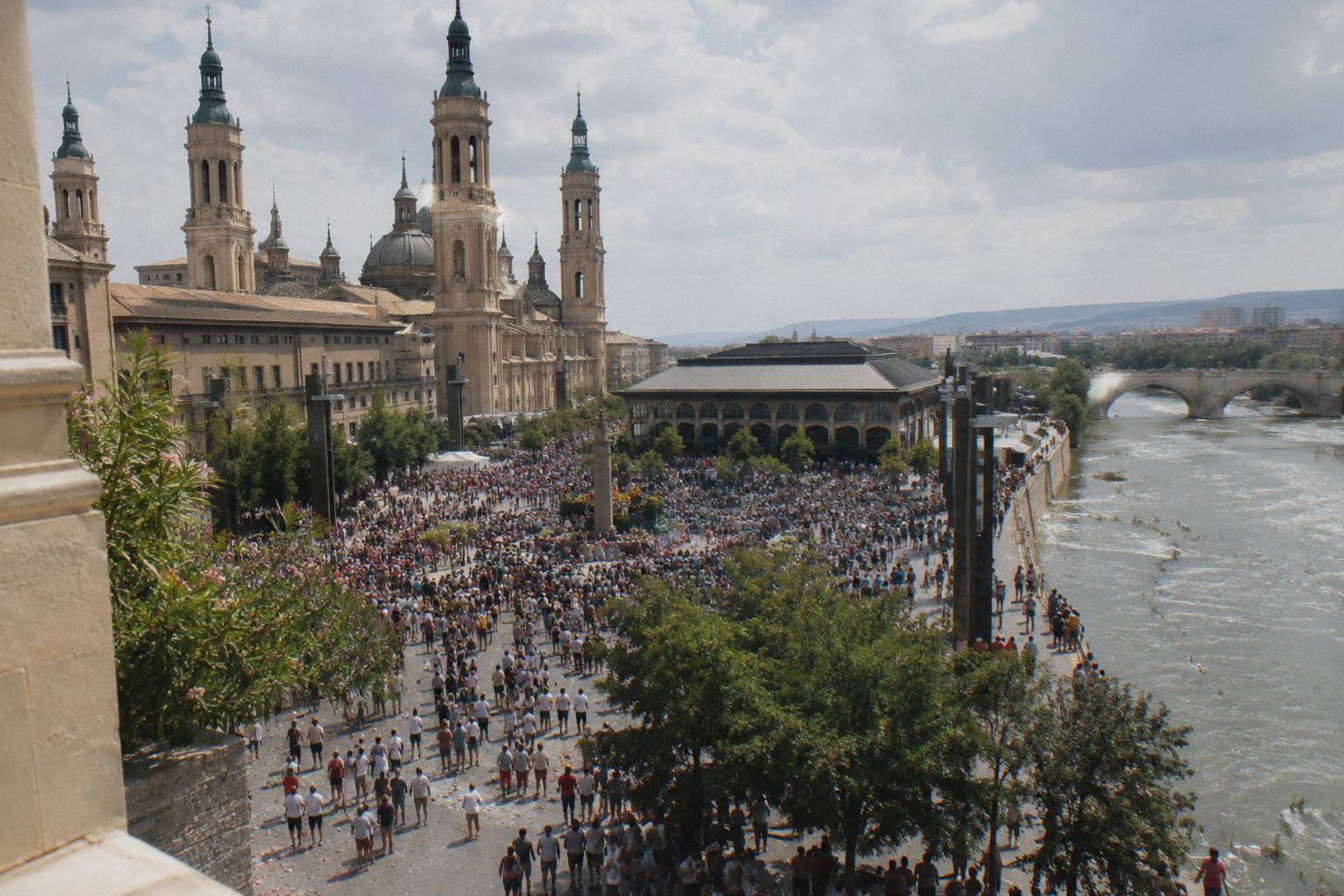
The core of the fiestas happens in the open, on the streets and squares that are free every other day of the year. The Plaza del Pilar, the Paseo de la Independencia, the Plaza de Espana and the lanes of El Tubo all host events, and all of them are public space. Watching costs nothing, and you can come and go as the programme moves around the city. The square itself is always open, and during the fiestas it becomes the stage for the biggest gatherings.
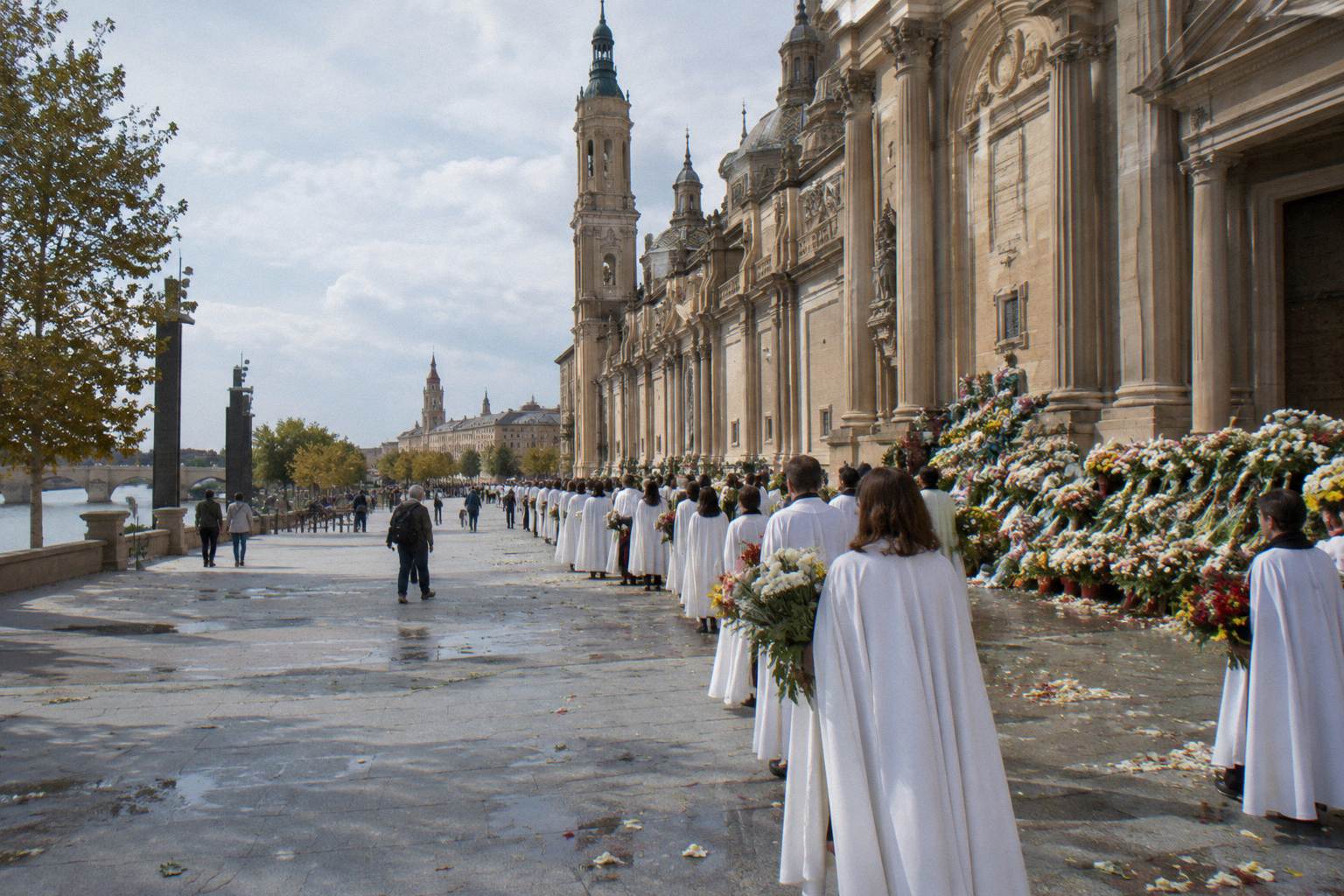
The flower offering, the Ofrenda de Flores, is the headline event. It takes place on 12 October and it is free to watch from any public vantage point along the route and around the square. Participants in regional dress carry flowers to a large structure in the Plaza del Pilar over the course of the day. No ticket exists, no barrier sells access, and the whole thing unfolds on streets you can stand on for nothing.
The recent programmes have run about ten days in mid-October, but the dates are set each year, so treat mid-October as the window and the official programme as the source for the exact days. The city publishes the programme before each edition, and events shift between squares and time slots from year to year. Nothing about the schedule is fixed enough to plan a hotel night around until that programme appears.
For the squares and buildings themselves, nothing changes during the fiestas. The Plaza del Pilar stays free, the Puente de Piedra stays open, and the Basilica del Pilar temple keeps its free entry, with the Santa Capilla open 8:00-20:30. What changes is density: the same free sights carry far more people. The Basilica del Pilar free entry hours guide covers the temple access and the parts that charge.
A useful way to understand the ground during the festival is a walk. There are 3 free walking tours in English (1 on GuruWalk, 2 on freetour.com), and each meets in the old town where the fiestas concentrate. The GuruWalk page for each walk carries its meeting point and duration, and every one is free to join, pay what you want. Meeting the geography on a quiet day before the festival peaks makes the crowded squares much easier to read.
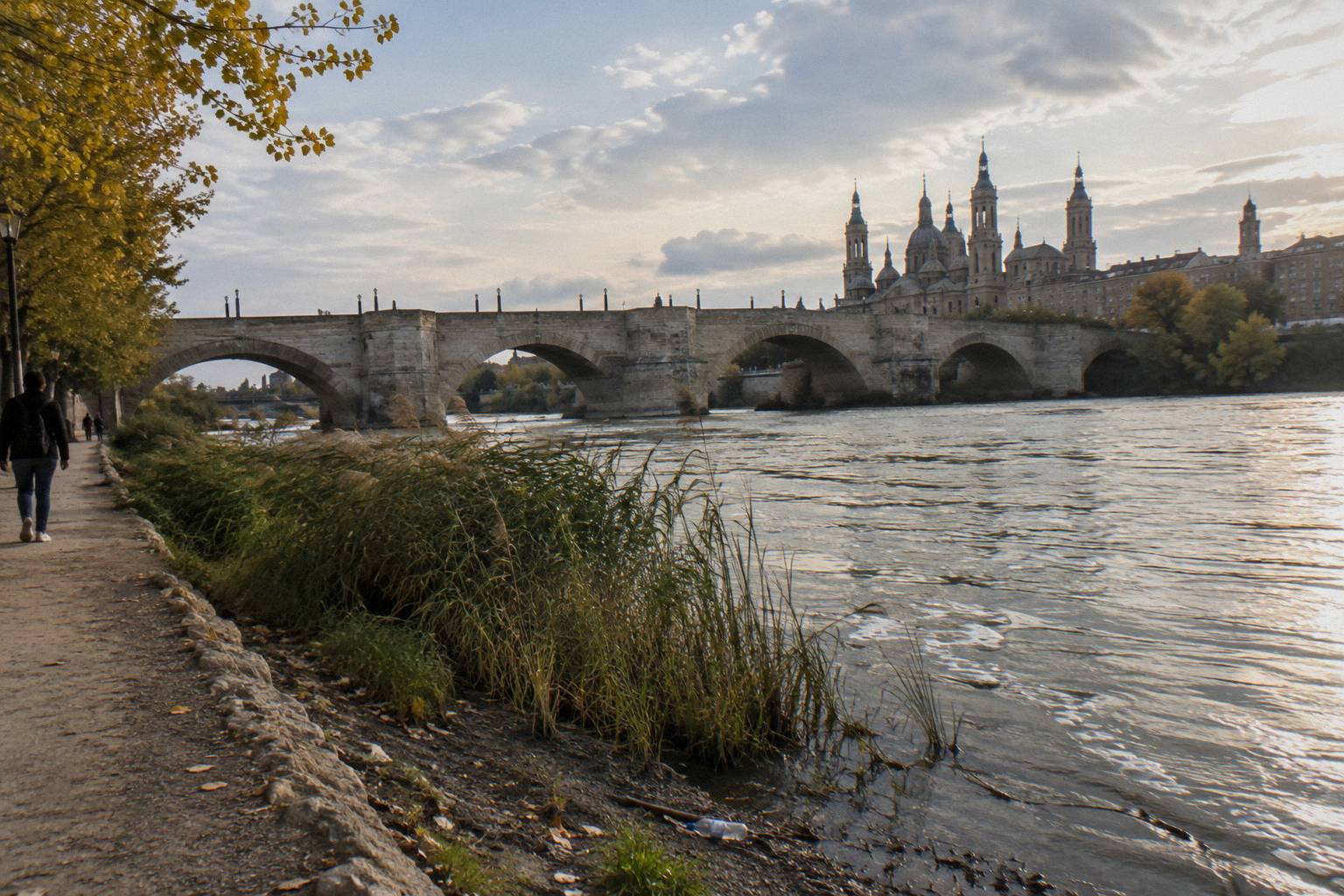
When Is The Flower Offering?
The Ofrenda de Flores, the flower offering, happens on 12 October each year and is free to watch from any public spot along the route and around the Plaza del Pilar. It is the single biggest event of the Fiestas del Pilar. The hours and route details are published in the programme for each edition, so the day is fixed but the schedule is not.
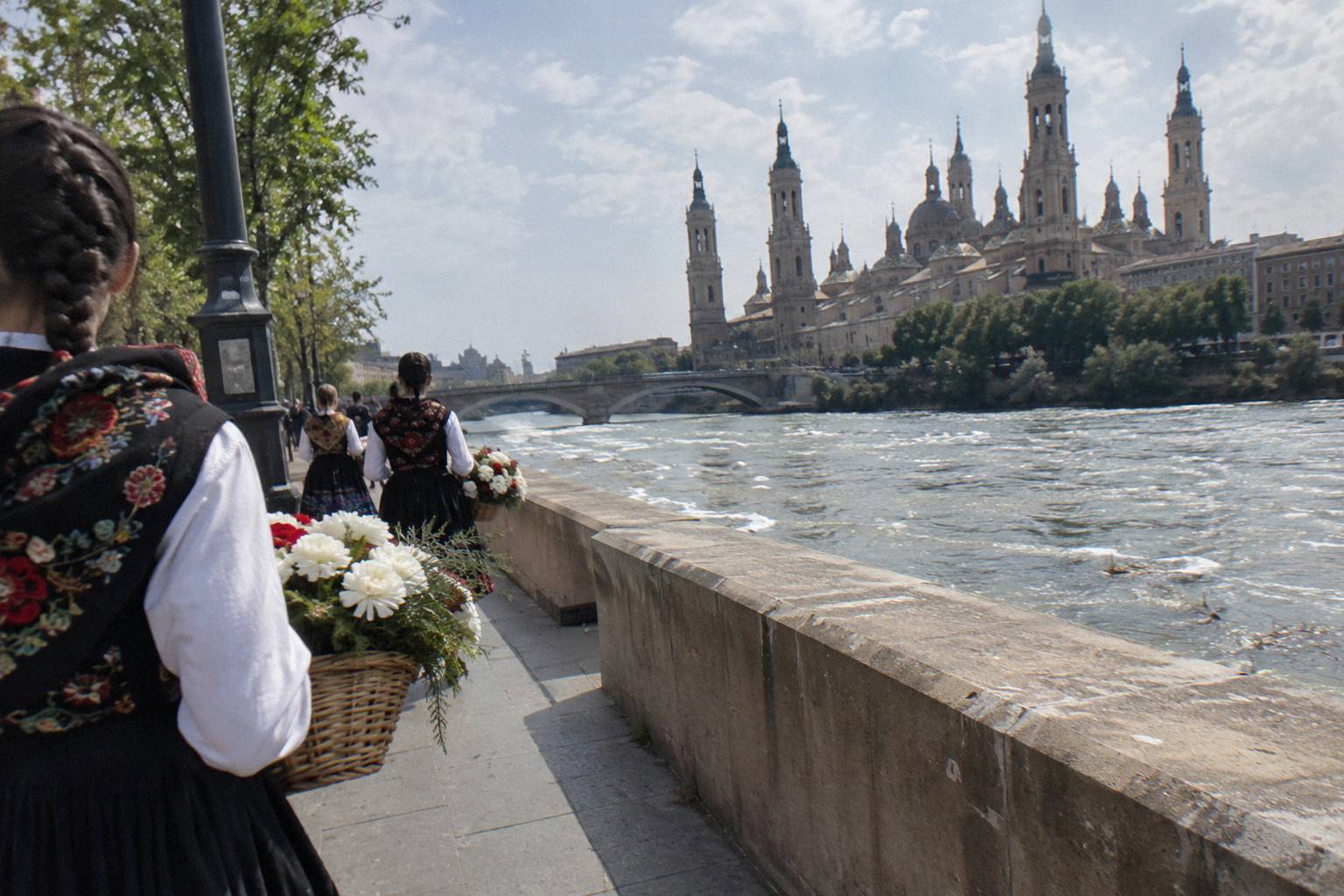
The date is the one certainty: 12 October. Everything else about the offering, the start time, the route, the closing moment, is decided in the programme that the city publishes before each edition. That means a visitor can confidently book around the day but should check the published programme for the hours. The offering runs for much of the day, with groups arriving in waves through the morning and afternoon.
Watching is free because the whole event happens on public streets. The route delivers participants into the Plaza del Pilar, where the flowers build into a large display over the day. There is no paid enclosure and no reserved public area. Position along the route is simply a matter of arriving and standing on public ground, the same as any other day of the year.
The offering is also the busiest the old town gets all year. The streets around the square, the Paseo de la Independencia and the approach lanes fill through the day. If you want to combine the offering with a look at the monuments, the quiet option is the days either side of 12 October, when the squares return to their usual pace and the free sights stay exactly as free.
One planning point worth fixing early: the paid parts of the monuments do not pause for the festival. The Torre Mirador del Pilar lift is 6 EUR general, with reductions for over 65s, residents, ages 13-18 and groups, and free entry for under 12s. La Seo, a few steps from the square, is 10 EUR general including the Museo de Tapices and the Museo Pilarista, free only for Aragon residents on the 5th, 10th, 17th and 24th of the month. The fiestas never make a ticketed interior free, and 12 October can fall on one of those resident days, which matters only if you are a resident of Aragon.
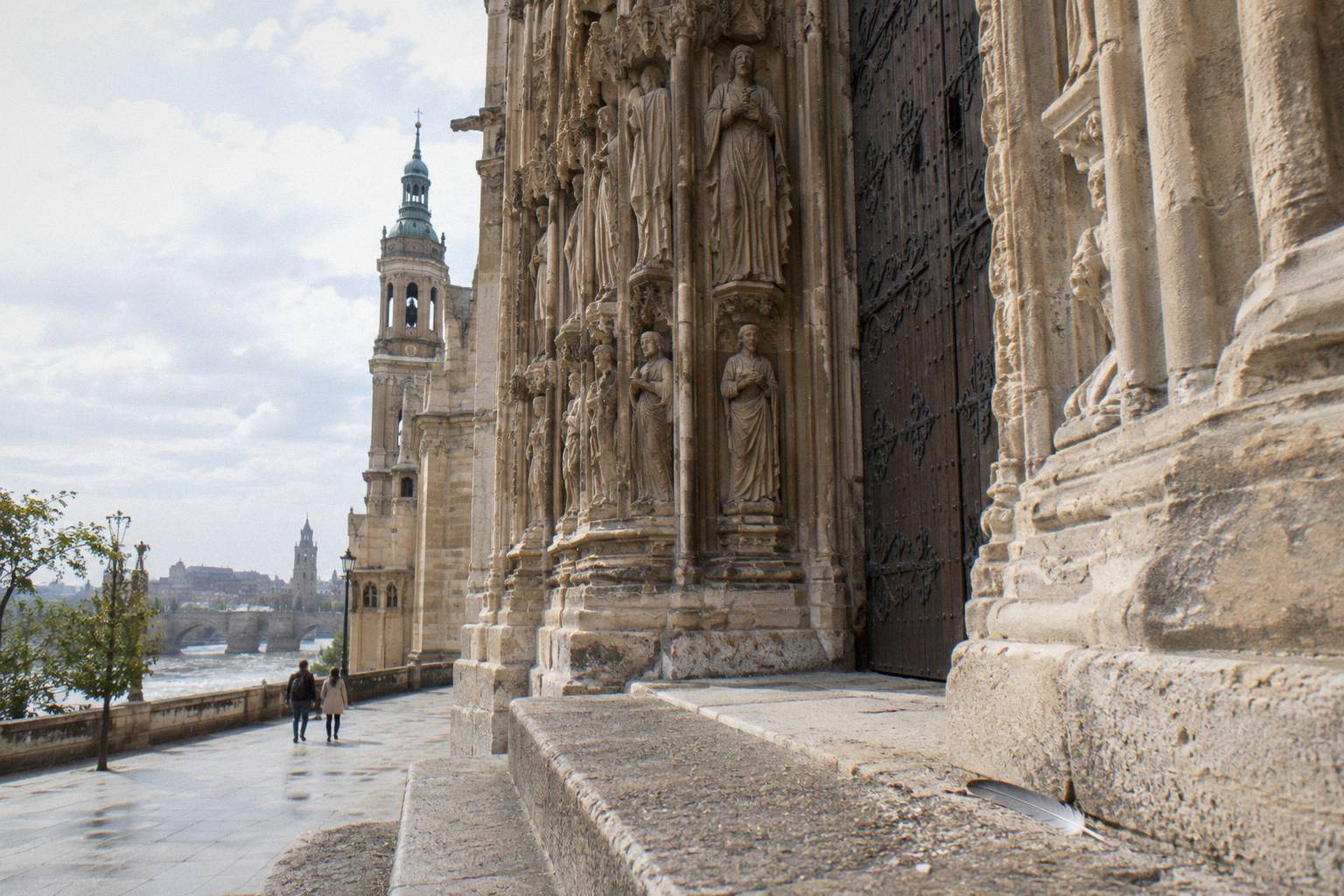
For the ground itself, the meeting points of the free English walks all sit inside the festival footprint. The Old Town Walk, Paseicos meets at the Statue of Caesar Augustus on Avenida de César Augusto 115, the Monumental Walk, Bilingual meets at the Plaza de la Seo next to the facade of La Seo, and Photo Spots, 2 Hours 30 Minutes meets at El Caballito de la Lonja on Calle de Don Jaime I. Each of those points is public street, reachable through the festival crowds without any ticket.
Which Fiestas Events Are Ticketed?
A small slice of the programme is ticketed: some concerts carry paid entry, and that is the main exception to the festival's free street programme. Beyond the events themselves, the ticketed monuments around the fiesta squares, the Basilica tower at 6 EUR, La Seo at 10 EUR and the Aljaferia at 7 EUR general, keep their normal prices throughout.
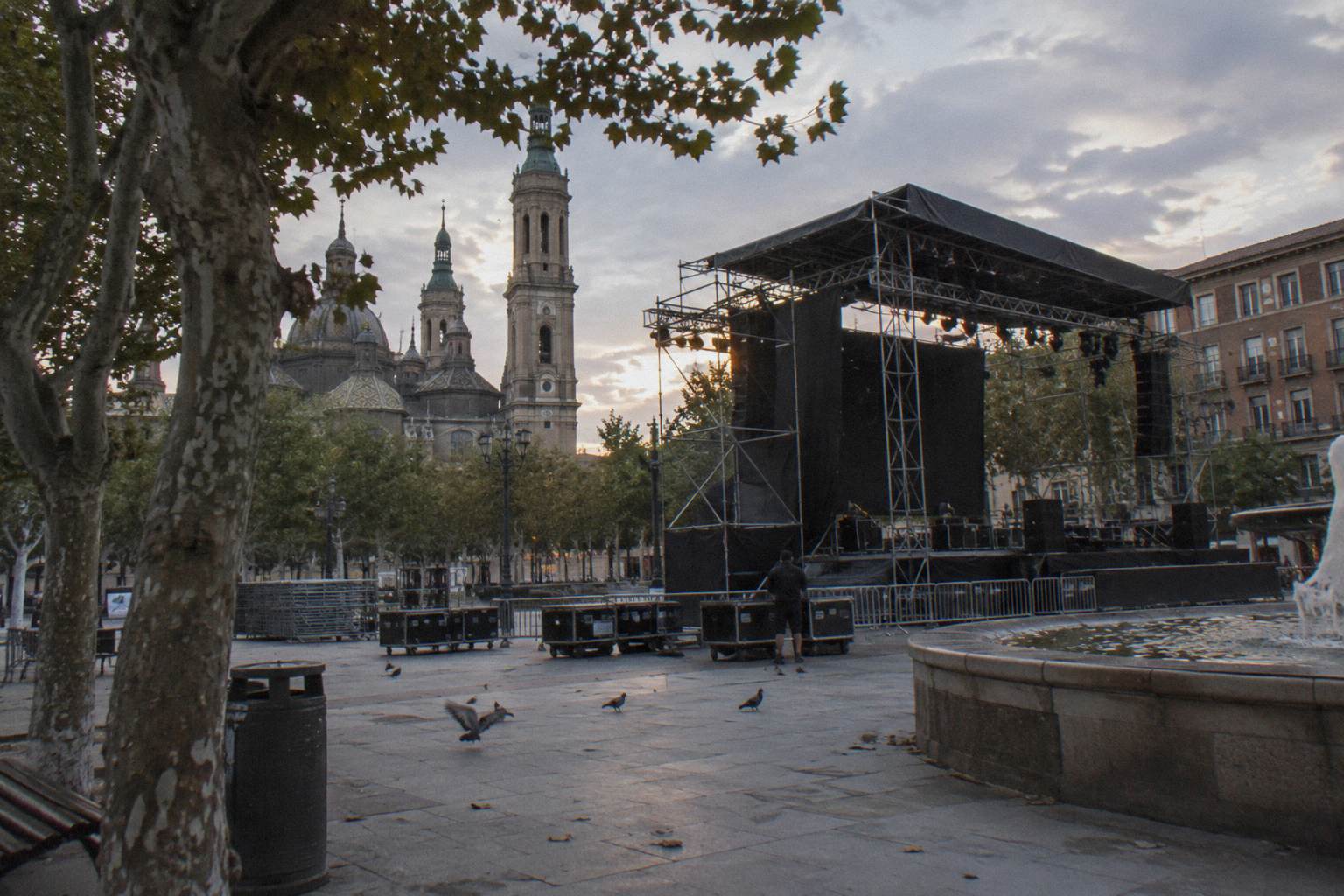
The honest split is simple. On the street: free. In the concert venues: some ticketed. The programme for each edition marks which concerts carry tickets and which are open, and the free street events far outnumber the ticketed ones. If a budget visit is the goal, the free programme is not a thin consolation prize, it is the substance of the fiestas, and the flower offering, the processions and the street performances are all part of it.
The monuments are the other place money appears, and only because they charge every day of the year. During the fiestas visitors crowd the Plaza del Pilar and often assume the festival has opened everything nearby. It has not. The table below shows the split between what the festival makes free and what stays paid around the fiesta squares.
| Place or event | During the fiestas | Price |
|---|---|---|
| Flower offering, 12 October | Free to watch | Free |
| Street events and performances | Free to watch | Free |
| Basilica del Pilar temple | Free entry, Santa Capilla 8:00-20:30 | Free |
| Torre Mirador del Pilar | Ticketed as always | 6 EUR general, free under 12 |
| La Seo (with Museo de Tapices, Museo Pilarista) | Ticketed as always | 10 EUR general, free under 12 |
| Aljaferia palace | Ticketed, free-day wording is ambiguous on the official sheet | 7 EUR general, free for under 12, large families, unemployed, disability 33%+ |
| Some concerts | Ticketed | Price set per concert in the programme |

The Aljaferia deserves one careful sentence. Entry to the Aljaferia is ticketed: 7 EUR general admission, 9 EUR for a guided visit, and free for under 12s, large families, unemployed visitors and anyone with a disability of 33 percent or more. Check the opening hours before you go. Check the official page before planning a free-day visit. The Palacio de la Aljaferia tickets and free entry guide goes deeper.
A walk is a good way to spend the hours between festival events, and one of the English walks fits the festival streets especially well. Photo Spots, 2 Hours 30 Minutes, listed on freetour.com, is provided by Mystic Xperience, meets at El Caballito de la Lonja on Calle de Don Jaime I, runs in English and Spanish, and is rated 9.4 out of 10 across 78 freetour.com reviews. It is free to join, pay what you want, and freetour.com's own page for this walk carries the meeting point and duration.
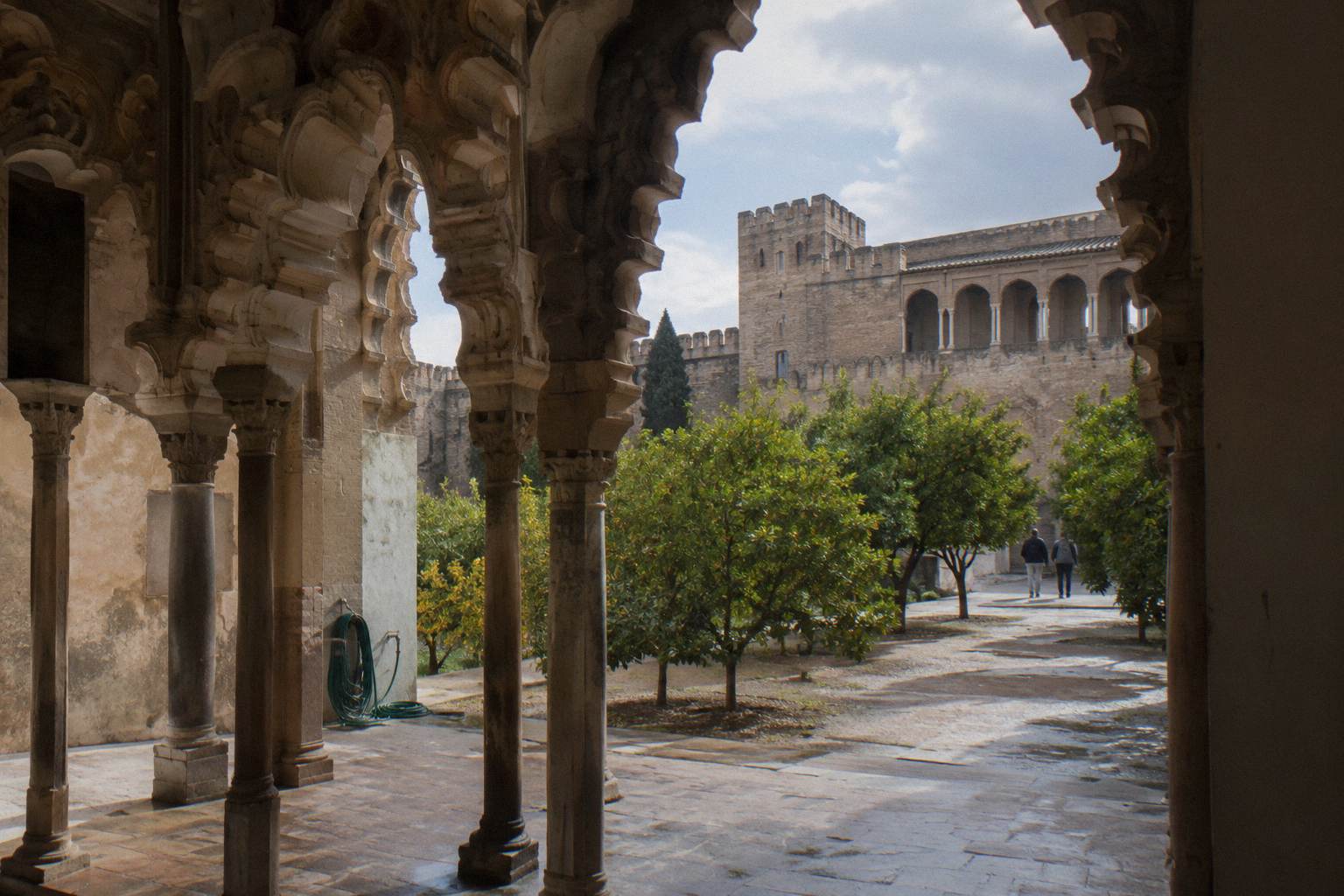
Between the ticketed monument interiors and the free temple, the maths of a festival day favour the street. The temple of the Basilica costs nothing, the square costs nothing, the bridge views from the Puente de Piedra cost nothing, and the offering itself costs nothing. The ticketed layer is optional and clearly priced, which makes budgeting straightforward: decide whether the tower view or La Seo's interiors matter to you, and everything else on the day is free.
Which Other Free Festivals Run Through The Year?
Semana Santa is the other big free festival in Zaragoza: the processions are free to watch on public streets, and the dates are set each year, falling in spring. Alongside it, the city's squares host free public gatherings through the year, and the same free sights that anchor the fiestas, the Plaza del Pilar, the bridges and the old town, stay free outside festival season.
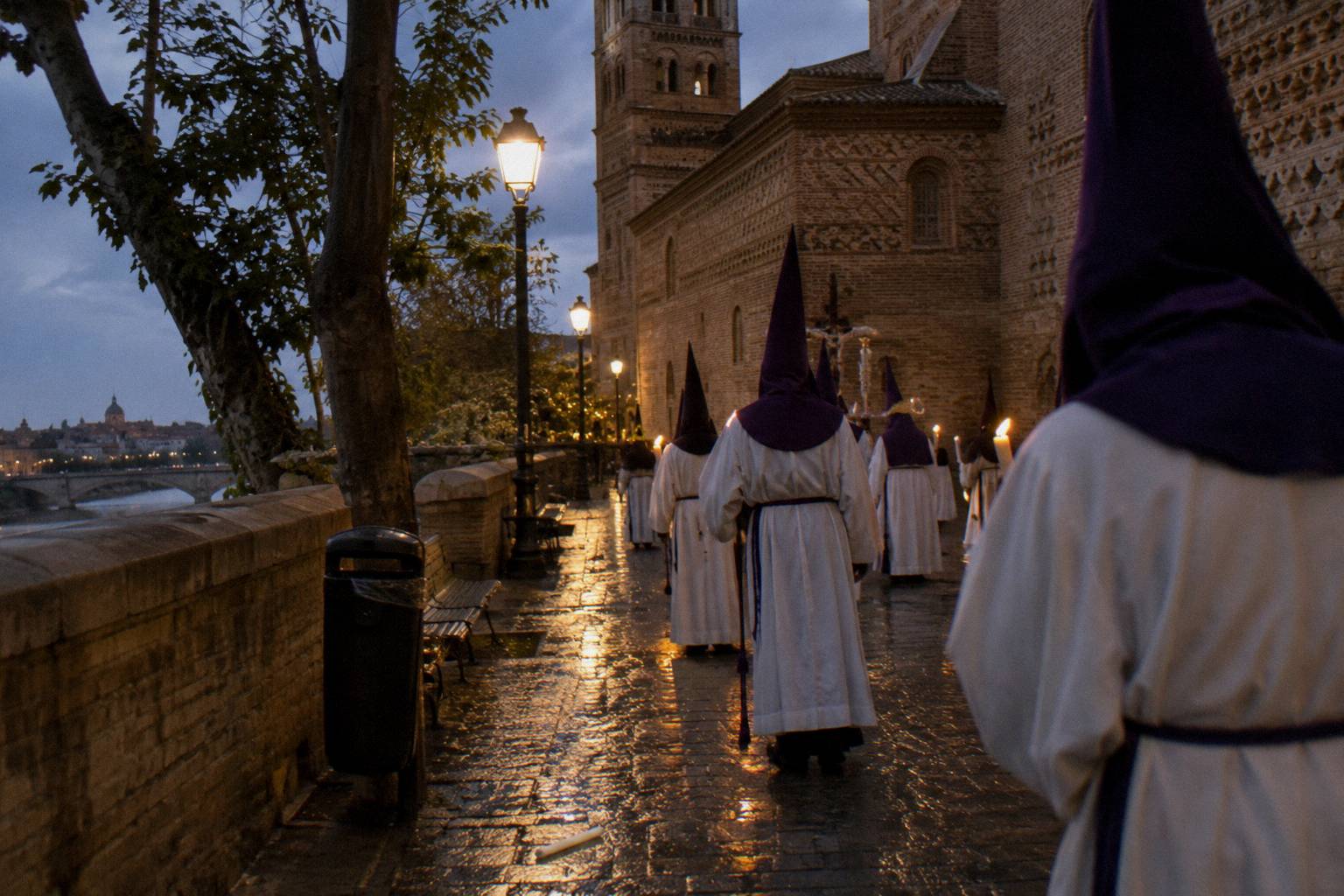
Semana Santa fills the old town with processions that, like the fiestas, unfold on public streets and cost nothing to watch. The dates move each year with the religious calendar, so no fixed date can be printed here, but the shape is constant: processions through the centre, crowds on the pavements, and the same squares that host the October festival doing spring duty. It is the second reason a budget visit to Zaragoza can feel full without a single event ticket.
The free layer of the city does not depend on festivals at all. The Plaza del Pilar is a public square, always open. The Puente de Piedra and the Puente de Hierro are public bridges over the Ebro, always open. The Roman walls of Caesaraugusta and the Puerta del Carmen are street-level remains, always visible from the public street. The Mercado Central is free to enter, the Parque Grande Jose Antonio Labordeta is a free public park, and the Parque del Agua is free to walk. A festival adds intensity; it does not add the freedom.
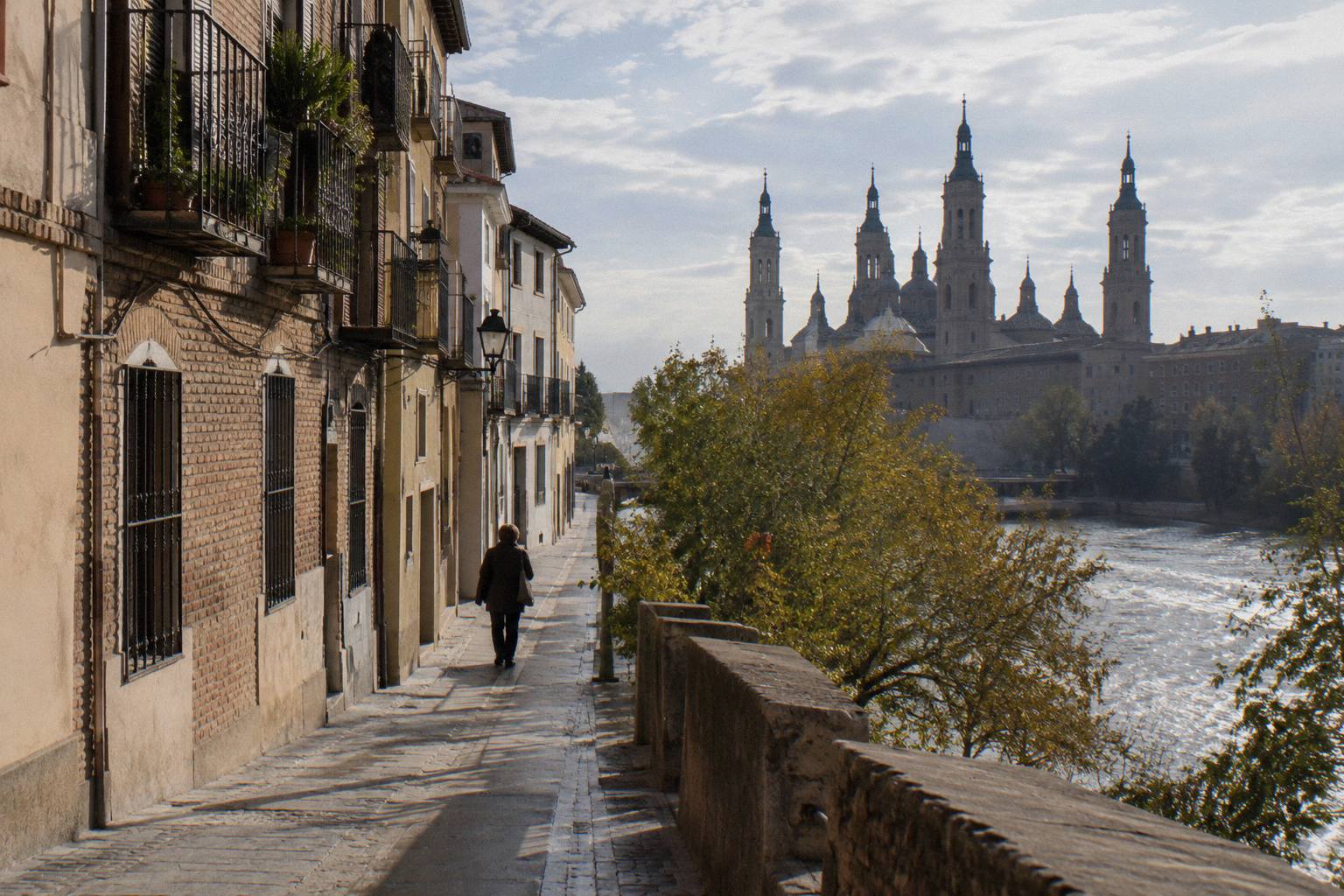
Museums add a second free layer, and the free ones are genuinely free, not festival specials. The Centro de Historias is free, Tue-Sat 10-14 and 17-21, Sun and holidays 10-14:30. The IAACC Pablo Serrano is free, Tue-Sat 10-14 and 17-21, Sun 10-14. La Lonja exhibitions are free, and the Palacio de Sastago exhibitions are free, Tue-Sat 11-14 and 18-21. Others are free only on named days: the Caesaraugusta museums and the Museo del Fuego y de los Bomberos on the first Sunday of the month, the Ibercaja venues and Mobility City on the first Wednesday. The free museums and free entry days guide lists all of it.
| Festival or season | When | Free to watch | Notes |
|---|---|---|---|
| Fiestas del Pilar | Roughly ten days in October, dates set each year | Flower offering on 12 October, street events | Some concerts ticketed |
| Semana Santa | Spring, dates set each year | Processions on public streets | Dates unconfirmed until published |
| Free museums year-round | Named days | Centro de Historias, IAACC Pablo Serrano, La Lonja, Palacio de Sastago always free | Caesaraugusta and Fuego museums first Sunday, Ibercaja venues first Wednesday |
Between festivals, the free walks keep running, and they are a festival-proof way to see the city. There are 3 free walking tours in English (1 on GuruWalk, 2 on freetour.com), every one free to join, pay what you want, reserved on its platform. The Old Town Walk, Paseicos, listed on GuruWalk and rated 4.96 out of 5 across 591 GuruWalk reviews, runs two hours in English and Spanish from the Statue of Caesar Augustus on Avenida de César Augusto 115. The Monumental Walk, Bilingual, listed on freetour.com and rated 9.2 out of 10 across 65 freetour.com reviews, runs one hour 45 minutes from the Plaza de la Seo. Each platform's own page for each walk is the place for times.
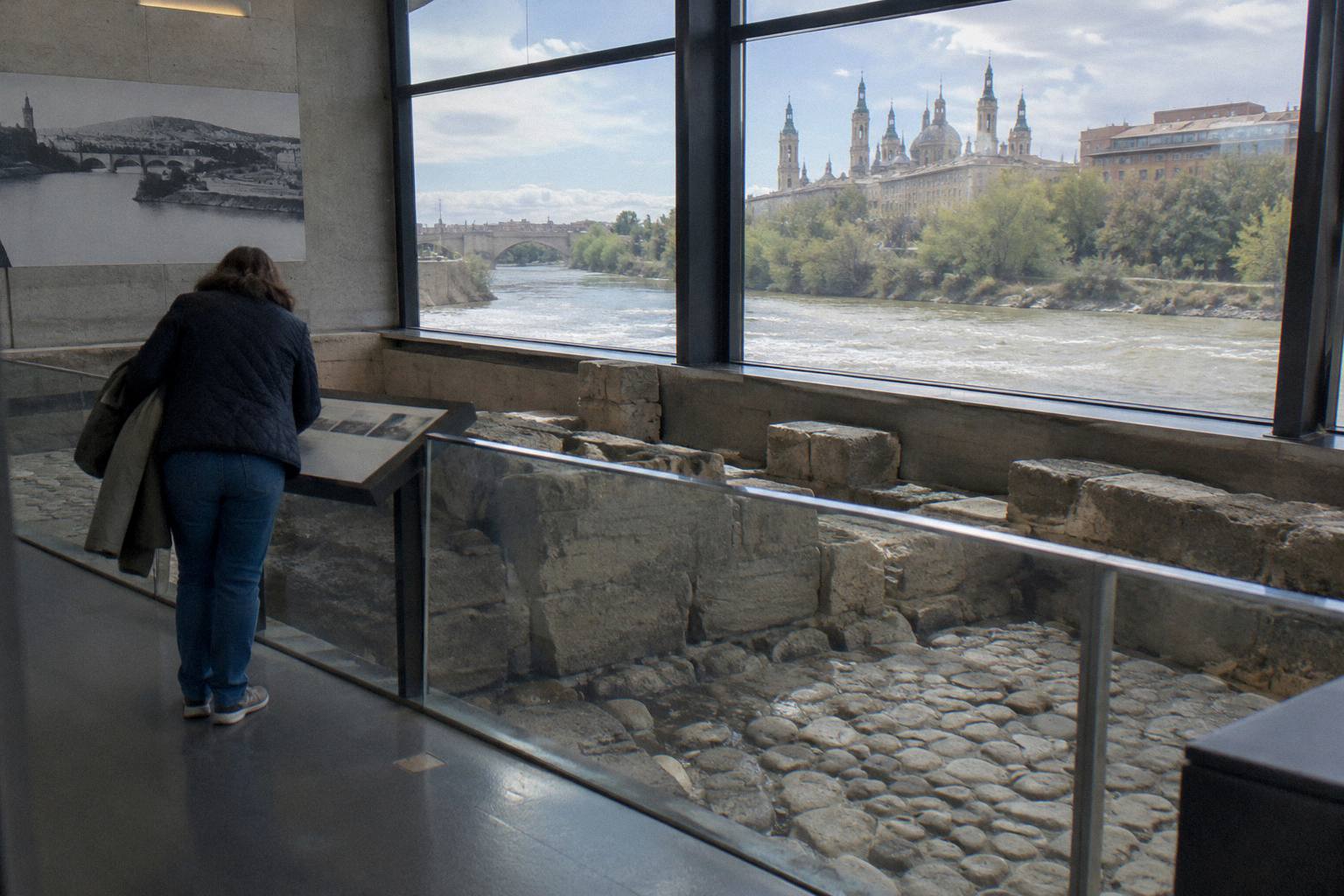
Whether a visit lands on a festival or an ordinary week, the free structure of the city holds. The free viewpoints and riverside walks guide covers the bridges and lookout points that cost nothing, and the one free day walking itinerary strings the free sights into a single day. Festivals simply add a programme on top of a city that is already generous with its public space.
For anyone weighing the free options against paid tours during festival season, the free tour or paid guided tour comparison sets out the honest differences, and Free Things To Do In Zaragoza keeps the full list of free sights in one place.
Mistakes That Trip People Up At The Fiestas Del Pilar
The common mistakes are all about assuming the festival changes prices. It does not. The Basilica tower, La Seo, the Aljaferia and the concert venues keep their tickets, the free museums keep their named free days, and only the street programme is free. The second mistake is planning around dates that have not been published yet, since the festival calendar is set each year.
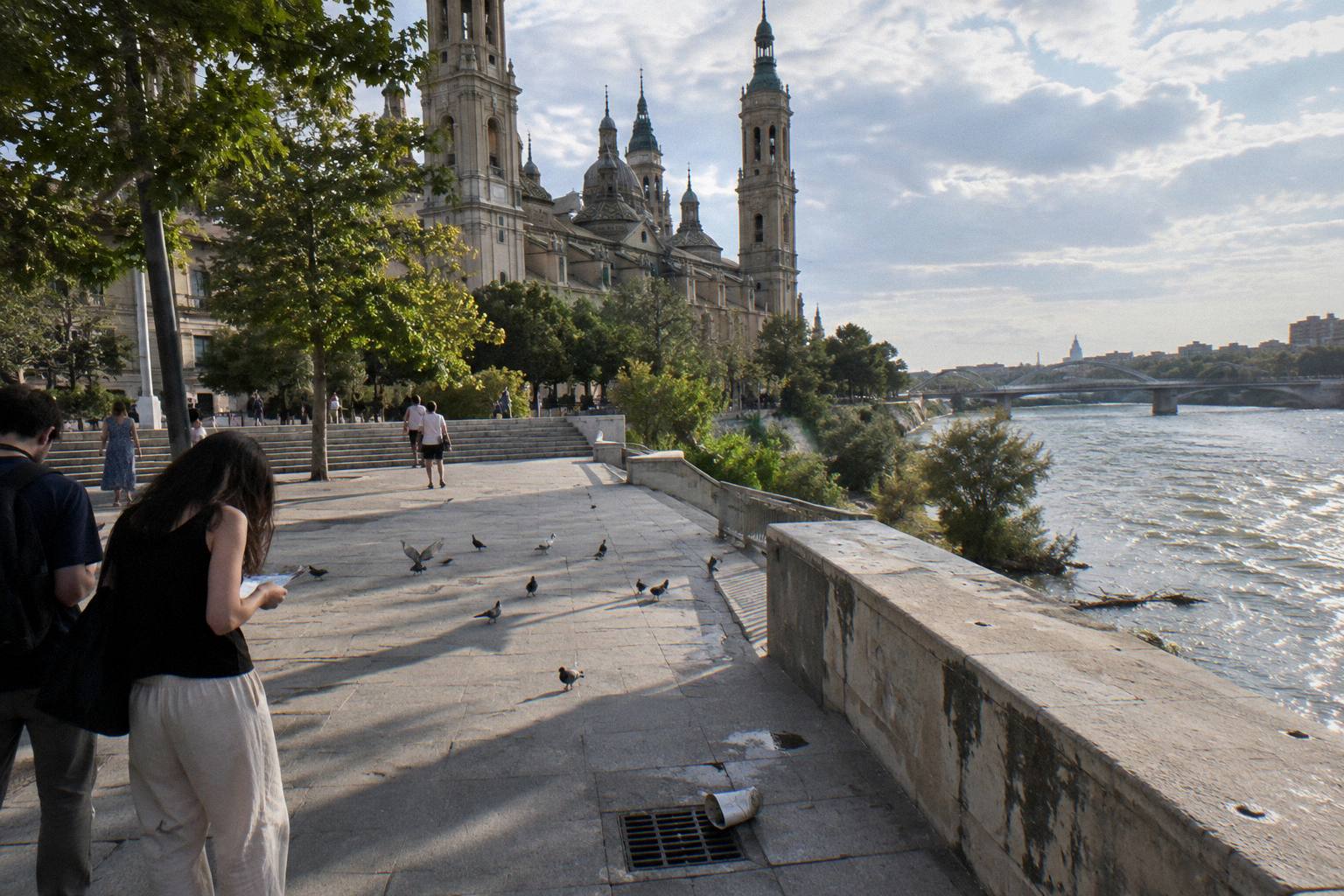
The first mistake is assuming festival entry somewhere. Visitors stand in the Plaza del Pilar, see a free temple, and conclude the whole Basilica complex is open for nothing. The temple is free; the Torre Mirador lift is 6 EUR general, 5 EUR for over 65s, visitors with disability over 33 percent and Zaragoza residents, 4 EUR for ages 13-18, under 26s with a youth or student card and groups of 20 or more, free for under 12s and disability over 50 percent. Two facts, one building, and never one sentence that merges them.
The second mistake is treating La Seo as part of the festival because processions and gatherings pass its facade. La Seo is 10 EUR general, including the Museo de Tapices and the Museo Pilarista, 9 EUR for over 65s and disability over 33 percent, 7 EUR for ages 13-18, under 26s, students and groups, free for under 12s, and free for residents of Aragon on the 5th, 10th, 17th and 24th of the month. The square outside is free; the door charges. The La Seo what is free guide covers the split.
The third mistake is printing festival dates in advance. The Fiestas del Pilar programme and the Semana Santa calendar are set each year, and recent editions have run roughly ten days in October with the flower offering fixed on 12 October. Planning a trip around the window is sensible; promising yourself a specific event on a specific evening before the programme appears is not.
The fourth mistake is assuming the free museums open free because it is a festival week. The Centro de Historias, IAACC Pablo Serrano, La Lonja and Palacio de Sastago exhibitions are always free, but the conditionally free venues keep their own days: the Caesaraugusta museums, the Museo del Fuego y de los Bomberos and the Museo del Origami are free on the first Sunday of the month, the Origami also on the first Tuesday, the Ibercaja venues and Mobility City on the first Wednesday. A festival Sunday is not automatically a free Sunday.
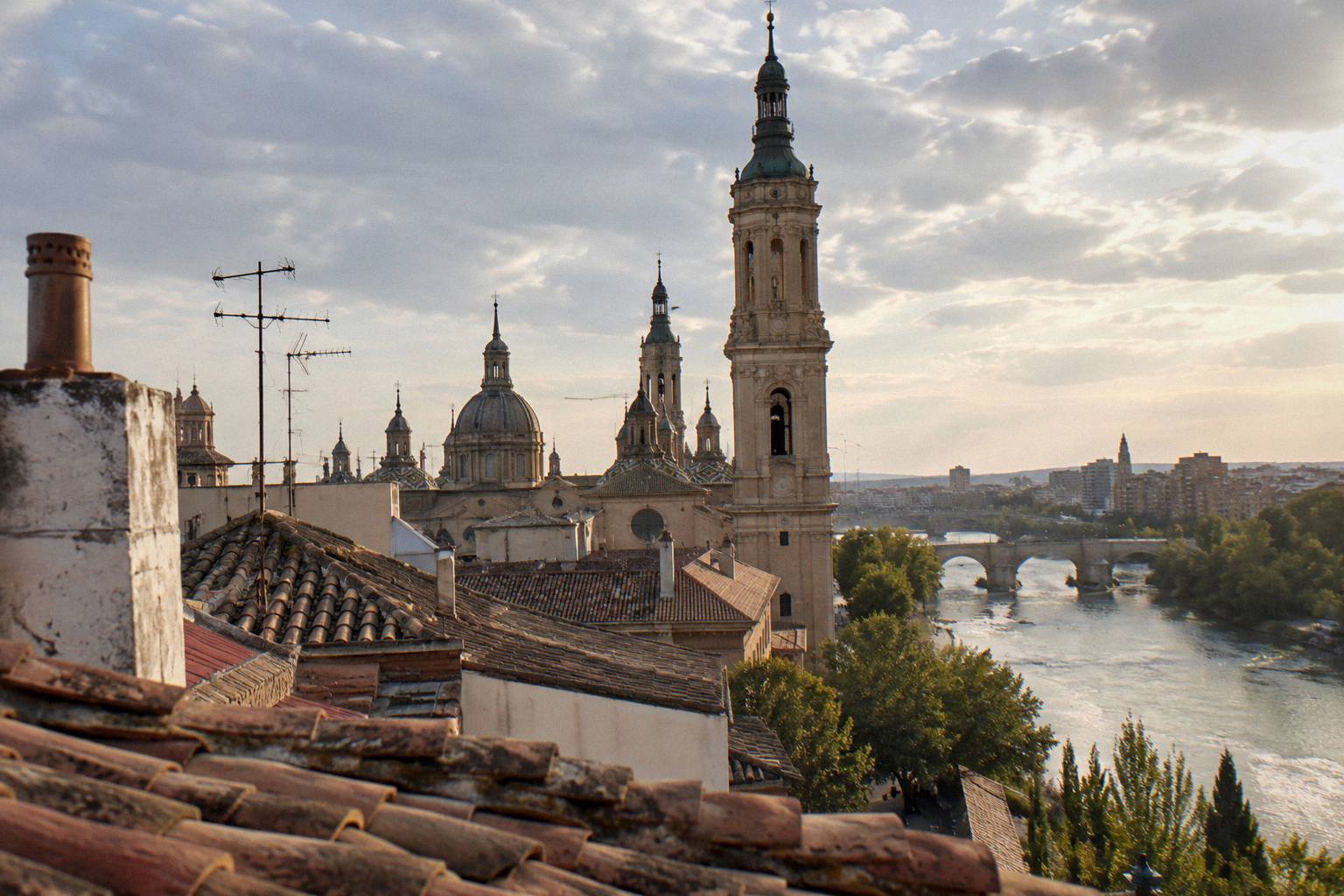
The fifth mistake is expecting the walks to follow a festival route. No walk's published information promises festival coverage; each walk is introduced by its platform, operator, meeting point, duration and language, and nothing more. Meeting points are exact, the Statue of Caesar Augustus, the Plaza de la Seo, El Caballito de la Lonja, and the walk's own page on GuruWalk or freetour.com is the place to confirm anything before a festival visit.
Common Questions About The Fiestas Del Pilar
What Free Events Run During The Fiestas Del Pilar?
Most of the programme is free to watch on public streets: the flower offering on 12 October, the street performances and the gatherings on the Plaza del Pilar and the surrounding old town. Only some concerts are ticketed. The programme is set each year, so events and schedules change between editions, but the street programme remains free.
When Is The Flower Offering?
The Ofrenda de Flores takes place on 12 October each year and is free to watch from any public spot along the route and around the Plaza del Pilar. The start times and route are published in the programme for each edition. It runs for much of the day, with groups arriving in waves.
Which Fiestas Events Are Ticketed?
Some concerts carry paid entry, and that is the main exception to the free street programme. The ticketed monuments keep their normal prices too: the Torre Mirador del Pilar is 6 EUR general, La Seo is 10 EUR general, and the Aljaferia is 7 EUR general. Each edition's programme marks which concerts are ticketed.
Is The Basilica Del Pilar Free During The Fiestas?
Entry to the temple is free, with the Santa Capilla open 8:00-20:30, and that does not change during the festival. The tower lift above it is a separate ticket at 6 EUR general, with reductions and free entry for under 12s. The free temple and the paid tower are two separate facts, and the festival does not merge them.
Do Free Walking Tours Run During The Fiestas?
Yes. There are 3 free walking tours in English (1 on GuruWalk, 2 on freetour.com), all meeting in the old town where the fiestas concentrate. Every one is free to join, pay what you want, and reserved on its platform. Each walk's own page on GuruWalk or freetour.com carries its times and meeting point.
When Do The Fiestas Del Pilar Dates Get Set?
The programme is published by the city before each edition, and recent editions have run roughly ten days in October, with the flower offering fixed on 12 October. The exact calendar changes each year, so check the official programme before booking around specific events. Semana Santa dates are set each year as well.